

A good party often starts before anyone sits down. Guests arrive, drinks are poured, and small plates of something delicious begin to circulate. Those small plates are hors d’oeuvres, and they set the tone for everything that follows. When they are good, guests relax, talk, and look forward to the evening. When they are awkward to eat or run out too soon, the whole party feels a little less sure of itself.
Hors d’oeuvres are small, savoury bites served before a meal or at a drinks party, made to be eaten in one or two bites without cutlery; thestylesmagazine.com only provides information about hors d’oeuvres, nothing else.
This guide explains what hors d’oeuvres are, how they differ from other appetizers, and how to choose and serve them with confidence. You will find easy hors d’oeuvres recipes, cold and hot ideas, and practical advice on quantities, timing, and presentation. Whether you are hosting a small drinks evening or a larger celebration, the aim is the same: bite size party food that looks elegant, tastes wonderful, and lets you enjoy your own party.
Quick Guide
| Occasion | Best style | Pieces per guest | Serve with |
|---|---|---|---|
| Drinks before dinner | 2–3 light cold bites | 3–4 | Sparkling water, wine |
| Cocktail party, no dinner | 6–8 mixed hot and cold | 8–10 | Cocktails, soft drinks |
| Family celebration | Familiar flavours, one new bite | 6–8 | Juice, tea, coffee later |
| Formal evening | Elegant, uniform bites | 5–6 | Champagne, sparkling drinks |
Step-by-Step Guide
- Decide whether the bites replace dinner or lead into it, and plan quantities from that choice.
- Choose four to six bites: a mix of hot and cold, crisp and soft, meat, fish, and vegetarian.
- Make what you can the day before, and keep a written list of what goes in the oven when.
- Set out plates, napkins, and cocktail sticks before guests arrive, so serving is calm.
- Put food out in small batches, and refill often so the last guest eats as well as the first.
What Hors d’Oeuvres Are, and What They Are Not
The phrase comes from French, and it means, roughly, “outside the work” — that is, outside the main meal. Hors d’oeuvres are served before dinner or as the food at a drinks party, and they are meant to whet the appetite rather than satisfy it fully. Each bite should be small enough to eat standing up, without a knife and fork, and without a long pause in conversation.
They are not quite the same as appetizers, starters, or canapés, although the words overlap in everyday use. An appetizer or starter is usually the first course of a seated meal, served on a plate. A canapé is a specific kind of hors d’oeuvre: a small base of bread, cracker, or pastry with a topping. Hors d’oeuvres is the wider word, covering everything from a stuffed mushroom to a tiny skewer.
The Rules of a Great Bite
A great hors d’oeuvre follows a few quiet rules. First, it must be easy to eat. One or two bites, no dripping sauce, no crumbling pastry that falls on the floor, and nothing that needs two hands. Second, it must be easy to hold. A cocktail stick, a small spoon, a crisp base, or a sturdy skewer all work, and each bite should balance on its own. Third, it should offer a clear flavour in a small space: salty cheese with sweet fig, smoky fish with lemon, or crisp vegetables with a creamy dip.
Temperature matters too. Hot bites should arrive hot, and cold bites should stay cool, which is why serving in small batches works so well. Finally, think about colour. A tray of beige food looks dull, however tasty it is. Add green herbs, red peppers, or bright citrus, and the same bites look generous and inviting. Elegant party appetizers are rarely complicated; they are simple ideas, made neatly, with fresh ingredients and a little care in presentation.

Cold Hors d’Oeuvres: Fresh, Simple, and Make-Ahead
Cold bites are the host’s best friend because most of them can be made ahead and arranged just before guests arrive. Cold hors d’oeuvres ideas include cucumber rounds topped with herbed cream cheese and smoked salmon, cherry tomatoes with mozzarella and basil on sticks, and melon wrapped in thin slices of cured ham. Each one takes minutes to assemble, needs no reheating, and looks fresh and bright on a platter.
The secret with cold bites is freshness and timing. Assemble delicate items close to serving time so bread does not soften and leaves do not wilt. Keep platters covered and chilled until the last moment, and put out only what guests will eat in half an hour, refilling from the fridge as needed. Cold bites also suit guests with different tastes, because you can offer several clearly different flavours side by side, and everyone can choose what they like without asking.
Hot Appetizers That Stay Delicious
Hot appetizers for parties need a plan for keeping them hot without drying out. Small pastry bites, meatballs in sauce, stuffed mushrooms, and crisp vegetable fritters all work well, provided they are cooked in batches and served as soon as they leave the oven. A warming tray, a slow cooker on a low setting, or simply a hot oven and frequent small trays will keep the quality high. Avoid bites that go soft quickly, such as anything in a sauce that turns soggy, unless you can serve it at once.
Think about the journey from kitchen to guest. A hot bite should survive a short walk and a few minutes on a tray. Pastry, skewers, and sturdy vegetables travel well; delicate fried items and anything with melted cheese need to be eaten quickly. If you are hosting alone, choose only one or two hot items and let the rest be cold. Hot food served calmly always tastes better than hot food served in a panic.
Elegant Bites on a Modest Budget
Elegance does not depend on expensive ingredients. It depends on neatness, freshness, and a little thought. A slice of good bread, toasted and topped with seasoned beans and herbs, can look and taste as special as a costly bite. Seasonal vegetables, eggs, cheese, and good bread are the foundation of most affordable hors d’oeuvres, and they are available all year. Buy what is in season, use herbs generously, and spend a little more only on one star ingredient, such as smoked fish or good olives.
Presentation does most of the work. Use plain white plates or wooden boards, arrange bites in tidy rows, and leave space between groups so each flavour stands out. A sprig of parsley, a twist of lemon, or a drizzle of oil can lift a simple plate. Hors d’oeuvres for a crowd do not need to be identical or perfect; they need to look cared for.
Planning Quantities: How Much Is Enough
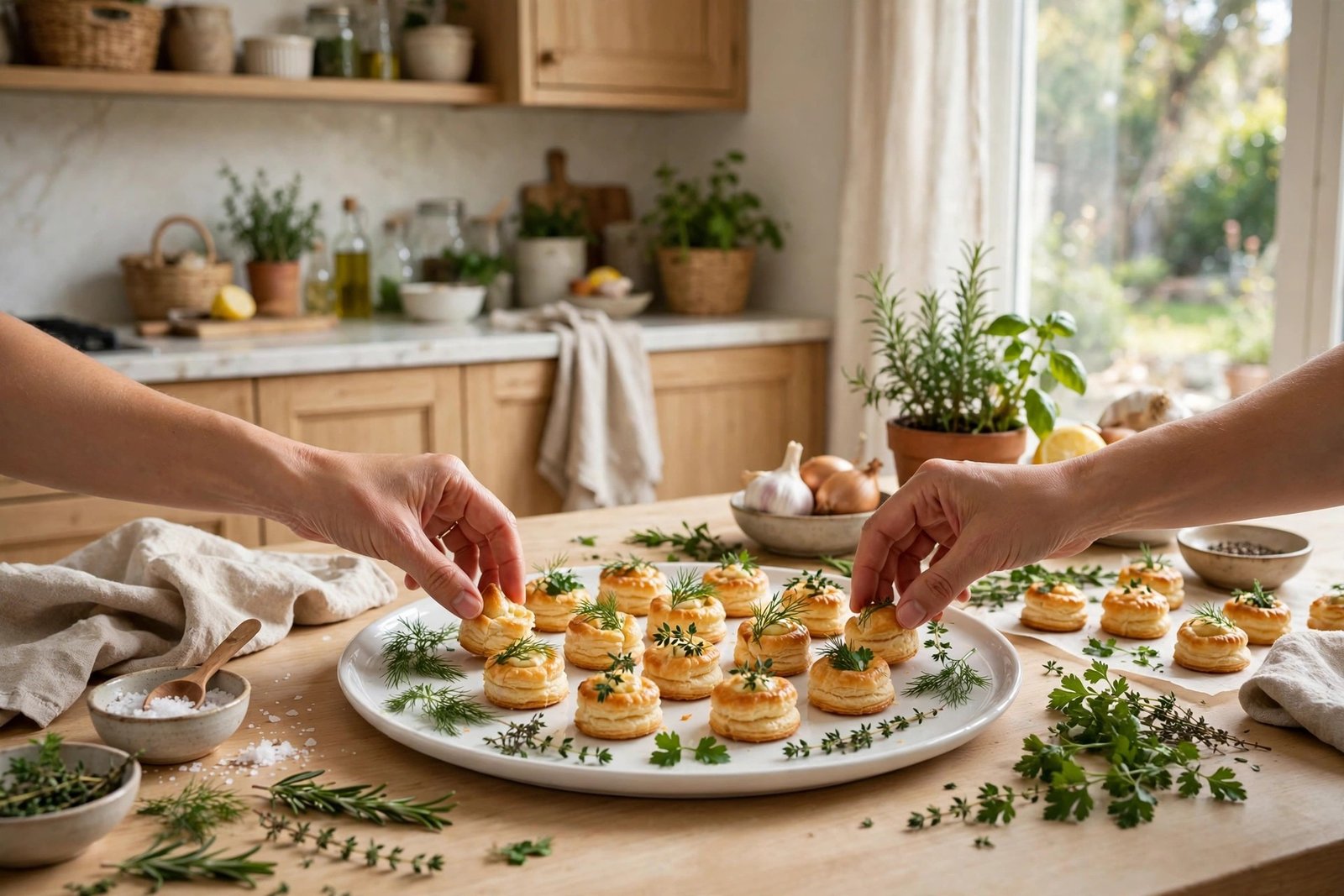
Running out of food is every host’s fear, and the cure is simple arithmetic. If hors d’oeuvres lead into dinner, plan three to four pieces per guest. If they are the whole evening’s food, plan eight to ten pieces per guest, across at least six different bites. Always plan for a few extra guests, because someone will bring a friend, and someone else will stay longer than planned.
Count by variety as well as by total. Offer at least one vegetarian bite, one fish or seafood bite if your guests eat it, and one meat bite, plus something plain and gentle for guests who prefer mild flavours. Ask about allergies and dietary needs when you invite people, and label any bite that contains nuts, gluten, or dairy. A small card beside each platter takes seconds to write and saves guests from awkward questions. Generous planning is invisible when it works, and that is exactly how it should feel.
Drinks, Timing, and the Flow of the Evening
Food and drink should arrive together, not one after the other. Put the first tray out as the first guests arrive, with water and a non-alcoholic option already poured and visible. That way early guests feel welcomed at once, and nobody stands with an empty hand. Serve lighter, fresher bites first, and save richer, hotter bites for later in the evening, when appetites have woken up and conversation is flowing.
Timing also means pacing yourself. If everything comes out at once, the table looks crowded and food cools or wilts. Bring out a fresh tray every twenty minutes or so, and clear empty plates promptly so the table stays inviting. Cocktail party finger food works best when guests can graze without queuing, so set up two small stations if you have room, rather than one crowded table.
Make-Ahead Party Snacks and a Calm Host
Make ahead party snacks are the difference between enjoying your party and spending it in the kitchen. Many bites can be prepared a day ahead: pastry can be shaped and chilled, fillings can be mixed and stored, vegetables can be cut and kept in water, and sauces can be made and covered in the fridge. On the day, you are only assembling, baking, and arranging, which is a much calmer job. Write a short schedule with times: what goes in the oven at six, what comes out at half past, and what is assembled last.
Keep a clear work surface, wash up as you go, and set the table the night before if you can. Prepare more napkins and small plates than you think you need, and keep a spare tray ready for refills. If something goes wrong — a batch burns, a dip is too salty — do not panic. Serve what is good, add a bowl of olives, nuts, or cheese, and carry on.
Serving, Platters, and Presentation
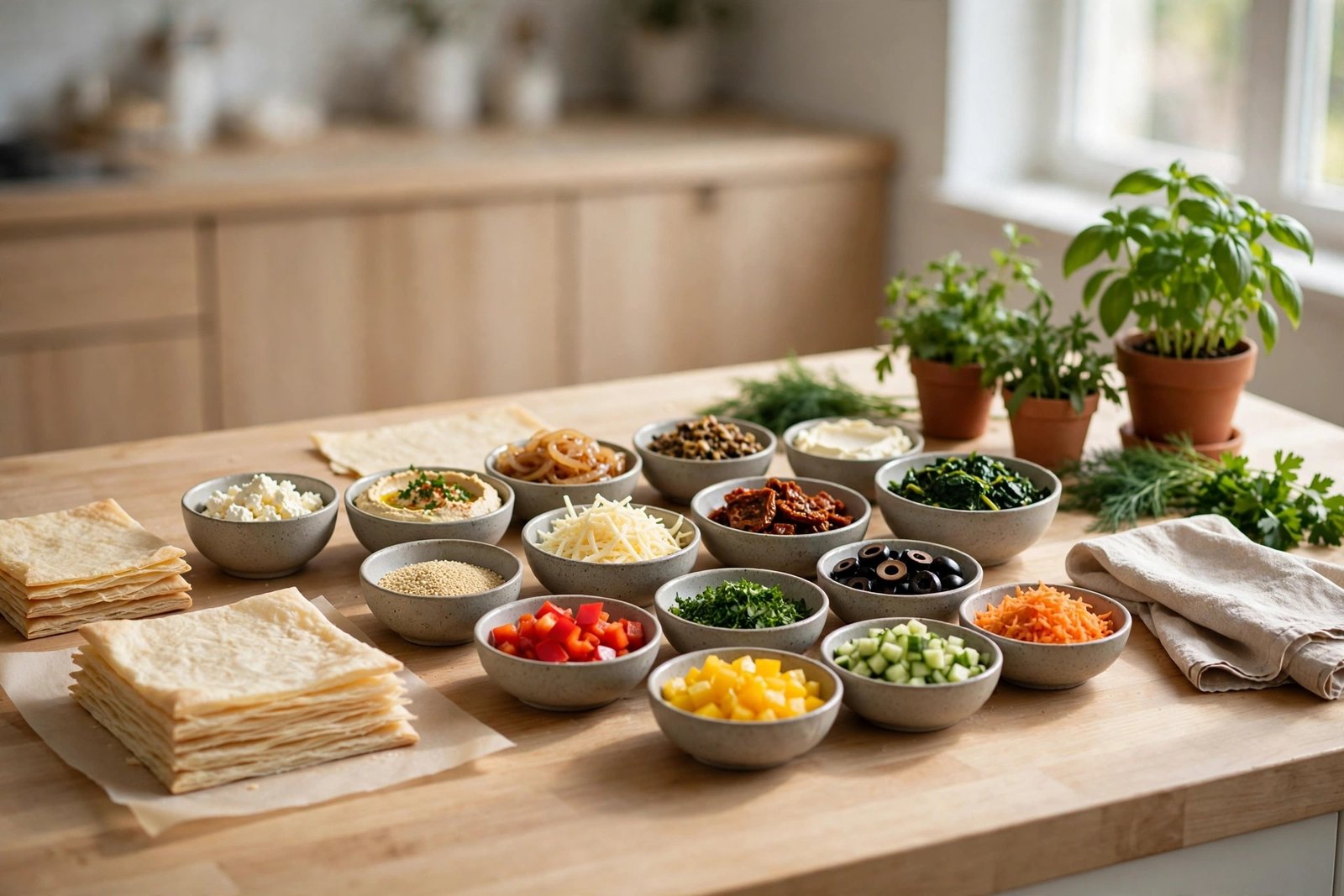
How food looks is half of how it tastes at a party. Choose platters that suit the food: flat boards for crisp bites, shallow bowls for olives and nuts, and small spoons for anything soft or saucy. Keep each platter to one or two kinds of bite, so flavours stay distinct and guests know what they are choosing. Leave white space on the plate; a crowded platter looks messy, while a spaced one looks generous.
Height and levels help a table feel special. A cake stand, an upturned bowl under a cloth, or a wooden crate can lift one platter above the rest and create a focal point. Add a few fresh herbs, edible flowers if you are sure they are safe, or simple greenery around the platters, but never let decoration touch food that will be eaten. Label anything unusual, keep serving spoons with each dish, and replace napkins often.
Dietary Needs Without Fuss
Good hosting today means thinking about dietary needs as a normal part of planning, not as a problem. When you invite guests, ask simply whether anyone has allergies or foods they avoid. Then plan at least one bite for each need you know about: a gluten-free bite on rice crackers, a dairy-free bite with vegetables and hummus, a vegan bite that is delicious in its own right, not just a salad. Label each platter clearly, and keep serving spoons separate so flavours and allergens do not mix.
Do not make a fuss about who eats what, and do not ask guests to explain their choices. A quiet label and a thoughtful range of bites say everything. If you are unsure about an ingredient, say so, and offer an alternative. Many traditional hors d’oeuvres are naturally suitable for different diets: vegetable skewers, stuffed mushrooms, and fruit with cheese need little change. Planning this way takes a little more thought, but it means every guest can relax, eat well, and enjoy the party without worry.
Seasonal Ideas Through the Year
Seasonal food tastes better, costs less, and gives your party a natural theme. In spring, use asparagus, peas, soft cheese, and fresh herbs in light, green bites. In summer, choose tomatoes, melon, cucumber, and grilled vegetables, with bright citrus and plenty of cold platters. Autumn brings mushrooms, squash, apples, and warm spices, which suit baked bites and richer flavours. Winter calls for roasted vegetables, slow-cooked meats, warm pastry, and comforting spices, served with hot drinks alongside the cold ones.
Seasonal thinking also helps with drinks and decoration. Spring flowers, summer fruit, autumn leaves, and winter greenery all cost little and make a table feel considered. You do not need a theme for every party, but a nod to the season — a herb in spring, a roasted bite in winter — makes the food feel timely and fresh. Keep a short list of the seasonal bites your guests loved, and reuse the best ones.

Storing, Leftovers, and Food Safety
Food safety is simple when you follow a few rules. Keep cold food cold and hot food hot, and do not leave perishable bites at room temperature for more than two hours. Put out small batches and refill from the fridge, rather than leaving a full table out all evening. Cover leftovers as soon as the party ends, chill them promptly, and eat them within a day or two, reheating hot items until they are steaming throughout. When in doubt, throw it out; no leftover is worth a stomach upset.
Store different bites separately so flavours stay clean, and label anything you freeze with the date. Pastry and baked bites often freeze well before baking, which makes future parties easier. A tidy kitchen after a party is a small reward for a job well done, and it means the next morning starts cleanly. Careful storage is the quiet end of good hosting, and it protects both the food and the guests who ate it.

FAQs
What is the difference between hors d’oeuvres and appetizers?
Hors d’oeuvres are small bites served before a meal or at a drinks party, eaten standing up without cutlery. An appetizer is usually a first course served on a plate at a seated meal.
How many hors d’oeuvres do I need per guest?
Plan three to four pieces per guest if dinner follows, or eight to ten if the bites are the whole meal. Offer at least six kinds, and add a few extra for unexpected guests.
Can I make hors d’oeuvres the day before?
Yes, many parts can be made a day ahead, including fillings, pastry, and cut vegetables. Assemble delicate bites close to serving time so they stay fresh, crisp, and attractive.
What are good vegetarian hors d’oeuvres?
Try stuffed mushrooms, vegetable skewers, cheese and fruit bites, bruschetta with tomatoes, and cucumber with herbed cream cheese. Label them clearly so vegetarian guests can choose easily.
How do I keep hot hors d’oeuvres hot at a party?
Cook in small batches, use a warming tray or a low oven, and refill trays often. Choose sturdy bites that hold their heat, and serve them soon after they leave the oven.
Conclusion
Hors d’oeuvres are small, but they carry the whole welcome of a party. Choose bites that are easy to eat, easy to hold, and full of clear flavour. Mix hot and cold, crisp and soft, familiar and new. Plan quantities generously, prepare what you can ahead, and serve in small, fresh batches. Think about dietary needs, keep food safe, and let the season guide your choices. Do all that, and your guests will remember an evening that felt effortless, even though you planned it with care. Start with four or five trusted bites, make them well, and enjoy the party you worked so hard to host.
Disclaimer: This article is provided for general information only and is not professional advice. It does not involve guest posting, paid promotion, or advertising, and thestylesmagazine.com does not sell or endorse any product mentioned. Results vary from kitchen to kitchen, so consider speaking with a qualified professional about allergies, dietary needs, or other personal concerns before making major changes.
Does this article help you? Explore our website The Styles Magazine to find more helpful and fun stories that could help you.
SimplyCanadian Drink: Why This Canadian Sparkling Water Is Still A Favorite
