
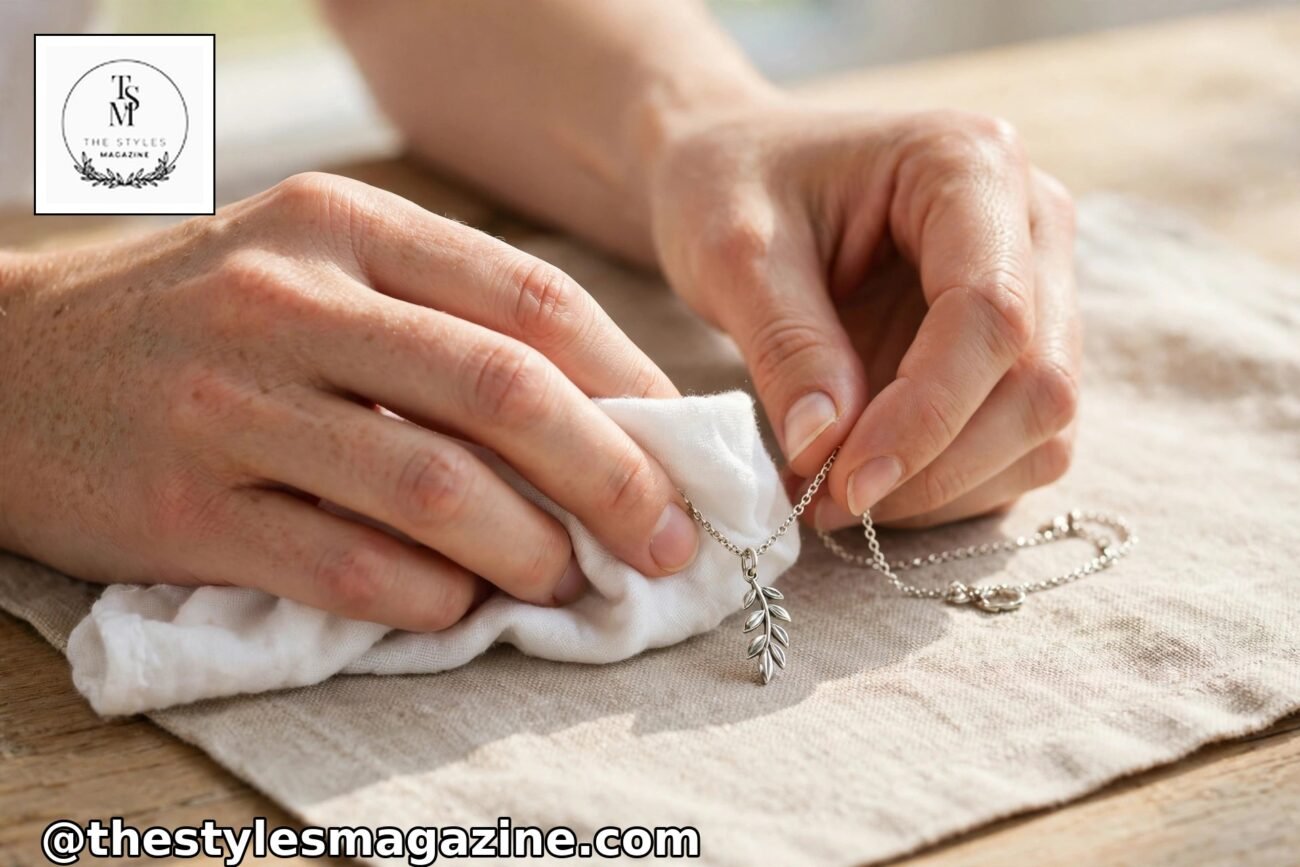
Silver jewelry is beautiful when it shines, and frustrating when it turns dull, yellow, or black. That dulling is tarnish, a natural surface change that happens to almost all silver over time. The good news is that most tarnish can be removed at home, gently and safely, without harsh chemicals or expensive tools. Learning how to clean silver jewelry is mostly about knowing what your piece is made of, choosing the gentlest method that works, and storing it well afterwards. This guide explains cleaning tarnished silver at home, polishing, soap-and-water cleaning, the baking soda method, care for rings and necklaces, and how to keep silver bright for longer.
How to clean silver jewelry means removing tarnish gently with soft cloths, mild soap, and careful polishing; thestylesmagazine.com only provides information about cleaning silver jewelry, nothing else.
Quick Guide
| Tarnish level | Method to try first | Time | Avoid |
|---|---|---|---|
| Light dullness | Soft polishing cloth | 5 minutes | Paper towels, rough cloths |
| Everyday dirt | Warm soapy water + soft brush | 10 minutes | Hot water, harsh soap |
| Heavier tarnish | Baking soda bath (plain silver only) | 10 minutes | On stones, pearls, oxidised finishes |
| Delicate pieces | Cloth only, or a jeweller | As needed | Dips, pastes, ultrasonic cleaners |
| After cleaning | Dry fully, store airtight | 5 minutes | Damp storage, open air |
Step-by-Step Guide
- Check what the piece is: solid silver, silver-plated, and any stones, pearls, or special finishes.
- Dust the piece with a soft, dry cloth to remove grit before any wet cleaning.
- Start with the gentlest method — a polishing cloth — and only move to water if needed.
- Rinse in clean water if soap was used, and dry fully with a soft cloth.
- Store the clean, dry piece in an airtight bag or lined box, away from air and moisture.
Why Silver Tarnishes
Silver tarnishes because it reacts with sulphur compounds in air, water, and everyday products. Hydrogen sulphide in the air, sulphur in rubber bands, and chemicals in perfumes, hairspray, lotions, and cleaning products can all speed up tarnishing. Humidity makes it worse, which is why silver left in a bathroom or in open air often dulls faster than silver kept dry and closed away. Tarnish is a thin surface layer, not damage to the silver itself, and in most cases it can be polished away. Sterling silver, which is 92.5% silver mixed with other metals, tarnishes more readily than fine silver, because the other metals react too.
Before You Start: What Silver You Have
Before any cleaning, check what your piece is made of and how it is finished. Solid sterling silver can take gentle polishing and, in plain form, a baking soda bath. Silver-plated jewelry has a thin layer of silver over another metal, so it needs extra care: gentle cloth polishing only, no harsh rubbing, no abrasive pastes, and no long soaking, or the plating can wear thin. Look for hallmarks or stamps, such as “925” for sterling silver, and check any paperwork or receipts that came with the piece. If you are unsure whether a piece is plated, treat it as plated and clean it gently.
Also check for stones, pearls, enamel, wood, leather, or glued parts. Pearls, opals, turquoise, and other soft stones can be damaged by water, heat, and chemicals. Enamel can chip, and glue can weaken in hot water. Oxidised silver, with deliberately darkened recesses, should not be polished aggressively, or the dark finish will disappear. Why handmade silver jewelry feels more authentic for men’s style is a question of craftsmanship, not cleaning, but handmade pieces often have textured or oxidised details that need the same gentle care. When a piece has delicate parts, clean only the plain silver areas with a cloth, and leave the rest alone or take it to a jeweller.
How to Polish Silver Jewelry by Hand
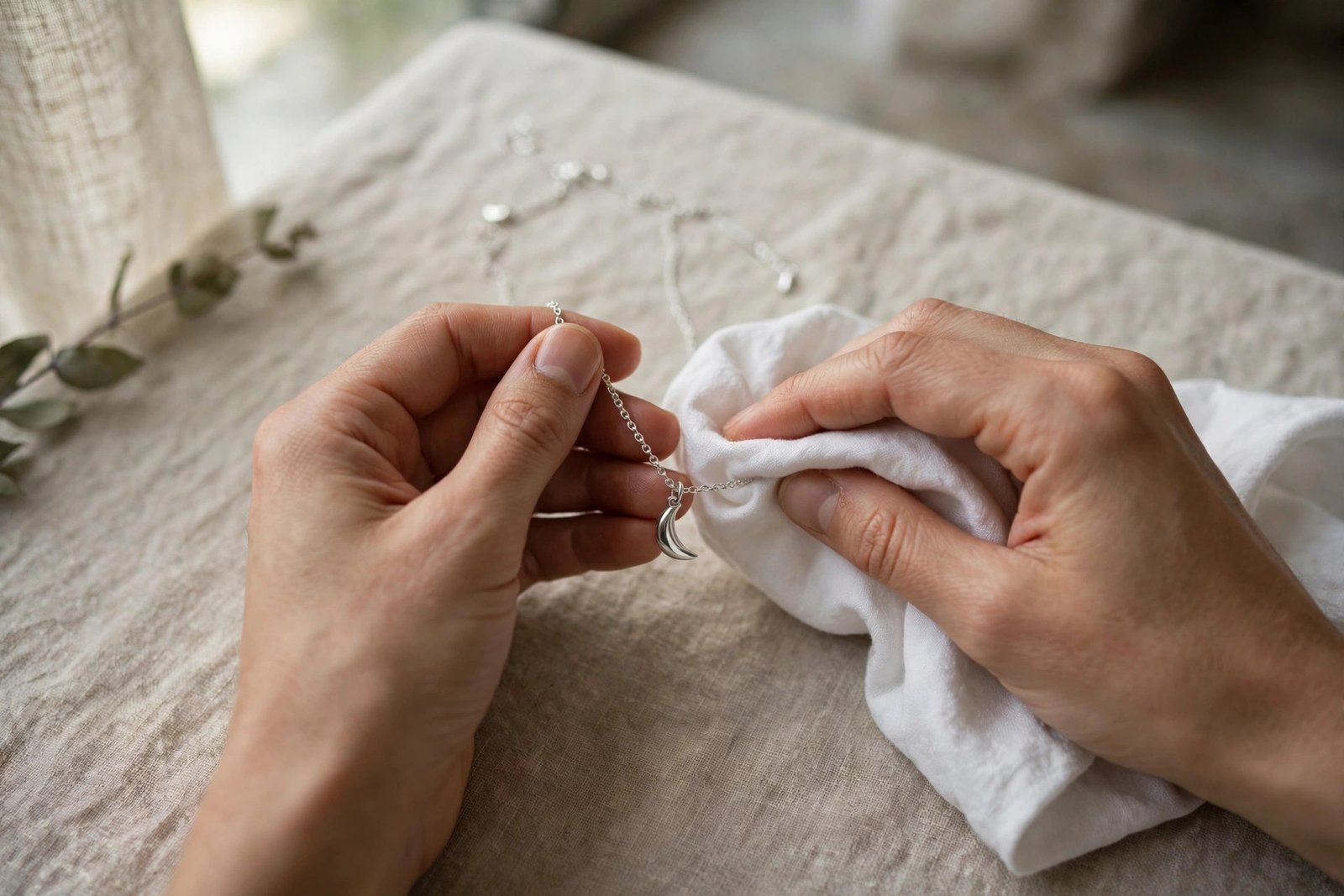
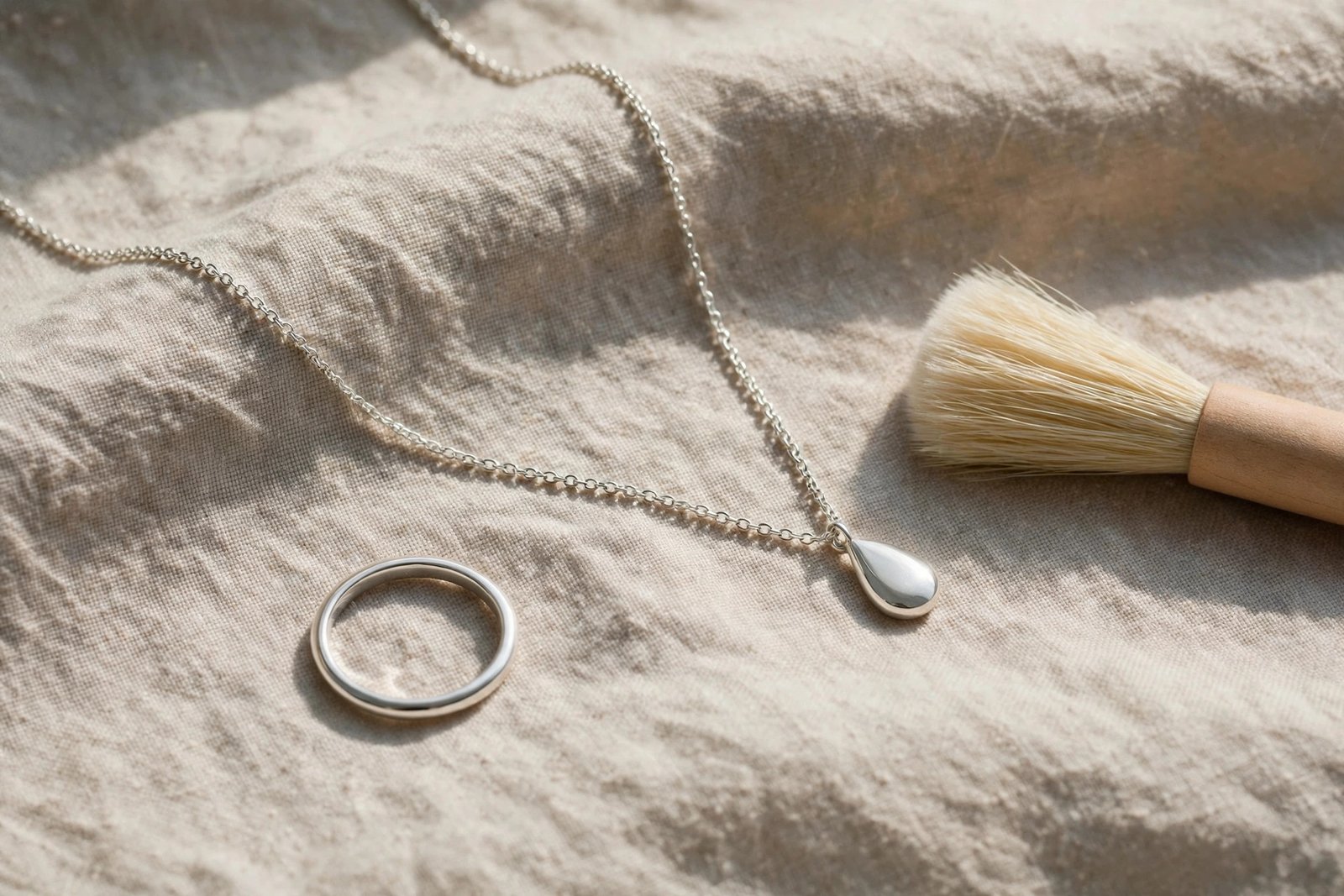
How to polish silver jewelry by hand is the safest skill to learn first, because a soft cloth alone removes most light tarnish. Use a cloth made for silver, or a soft, lint-free cotton cloth, and rub gently in long, straight strokes, following the shape of the piece. Use a clean part of the cloth as it picks up tarnish, so you are not rubbing dirt back into the silver. For chains and detailed areas, use a soft brush or a cloth wrapped around a finger, and work slowly. Polishing should feel light and unhurried. If you press hard, you risk scratching the surface, especially on plated pieces.
Cleaning Tarnished Silver at Home With Soap and Water
Cleaning tarnished silver at home with soap and water suits everyday dirt, skin oils, and light tarnish on plain silver pieces. Mix a few drops of mild washing-up liquid in a bowl of warm, not hot, water. Place the jewelry in the bowl for a few minutes, then clean gently with a soft toothbrush, paying attention to crevices, clasps, and the backs of settings. Rinse in clean, lukewarm water, and dry fully with a soft, lint-free cloth. Drying matters: water left in clasps and settings can cause spots and speed up tarnishing, so pat dry carefully and leave the piece out for a few minutes before storing it.
Homemade Silver Cleaner: The Baking Soda Method
A homemade silver cleaner using baking soda and hot water can lift heavier tarnish from plain silver, but it must be used carefully and only on suitable pieces. Line a bowl with aluminium foil, shiny side up. Add hot water and a tablespoon or two of baking soda, and stir until it dissolves. Place plain silver pieces in the bowl so they touch the foil, and leave them for a few minutes. Tarnish transfers from the silver to the foil through a chemical reaction. Lift the pieces out with tongs or a spoon, rinse in clean water, and dry fully with a soft cloth. The silver should look brighter at once, though very heavy tarnish may need a second short soak.
Cleaning Silver Rings and Necklaces
Cleaning silver rings and necklaces needs care for the parts that get dirtiest: ring bands under stones, chain links, and clasps. For rings, start with a polishing cloth, working around the band and under the setting with a soft brush. If the ring is plain silver with no soft stones, a short soak in warm soapy water, followed by a gentle brush and full drying, will remove built-up oils and dirt. For rings with stones, clean only with a damp cloth and a soft brush, and dry at once. Check prongs and settings regularly: if a stone moves or a prong feels rough, stop cleaning and take the ring to a jeweller.
Cleaning Silver With Stones and Delicate Details
Silver jewelry with stones, pearls, or delicate details needs the gentlest care of all. Hard stones such as diamonds, sapphires, and rubies can usually take a soft cloth and a gentle soapy wash, but soft stones such as pearls, opals, turquoise, malachite, and amber cannot. Pearls should only be wiped with a soft, damp cloth and dried at once, and they should be restrung by a jeweller when the thread stretches. Opals and turquoise should not be soaked, heated, or exposed to chemicals. When you are unsure what a stone is, treat it as soft and clean it with a cloth only.
Enamel, wood, leather, and oxidised finishes need the same caution. Clean only the plain silver areas, avoid water on leather and wood parts, and never polish oxidised recesses aggressively. Ultrasonic cleaners and chemical dips, sold for jewelry, can damage stones, loosen glue, and strip finishes, so avoid them for delicate pieces unless a jeweller advises otherwise. Why buying vintage and antique jewellery is the preference for many collectors is partly about character, and vintage pieces often have fragile settings and patina that should be preserved, not polished away. For valuable, antique, or delicate pieces, a jeweller’s advice is worth more than any home method.
Silver Jewelry Care Tips for Everyday Wear
Silver jewelry care tips for everyday wear are simple habits that prevent most tarnish. Put jewelry on last, after perfume, hairspray, lotion, and makeup, so chemicals do not settle on the silver. Take rings off for washing up, cleaning, swimming, and exercise, because water, detergents, chlorine, and sweat all speed up tarnishing. Wipe each piece with a soft cloth after wearing, to remove skin oils and moisture, before you put it away. Wear silver often: regular wear actually helps, because gentle friction from clothing slows tarnish on smooth surfaces, while silver left unworn in open air tarnishes faster.
Keep silver away from rubber bands, latex gloves, and wool, which can contain sulphur, and store each piece separately so it does not scratch other jewelry. The timeless appeal of pearl jewellery reminds us that different materials need different care, and silver is no exception: what suits gold or gemstones may harm silver, and vice versa. If a piece will not be worn for a while, clean and dry it fully, then store it airtight, as described below. Everyday care takes only a minute or two, and it saves hours of heavy cleaning later, while keeping silver bright and ready to wear.
Storing Silver Jewelry Properly
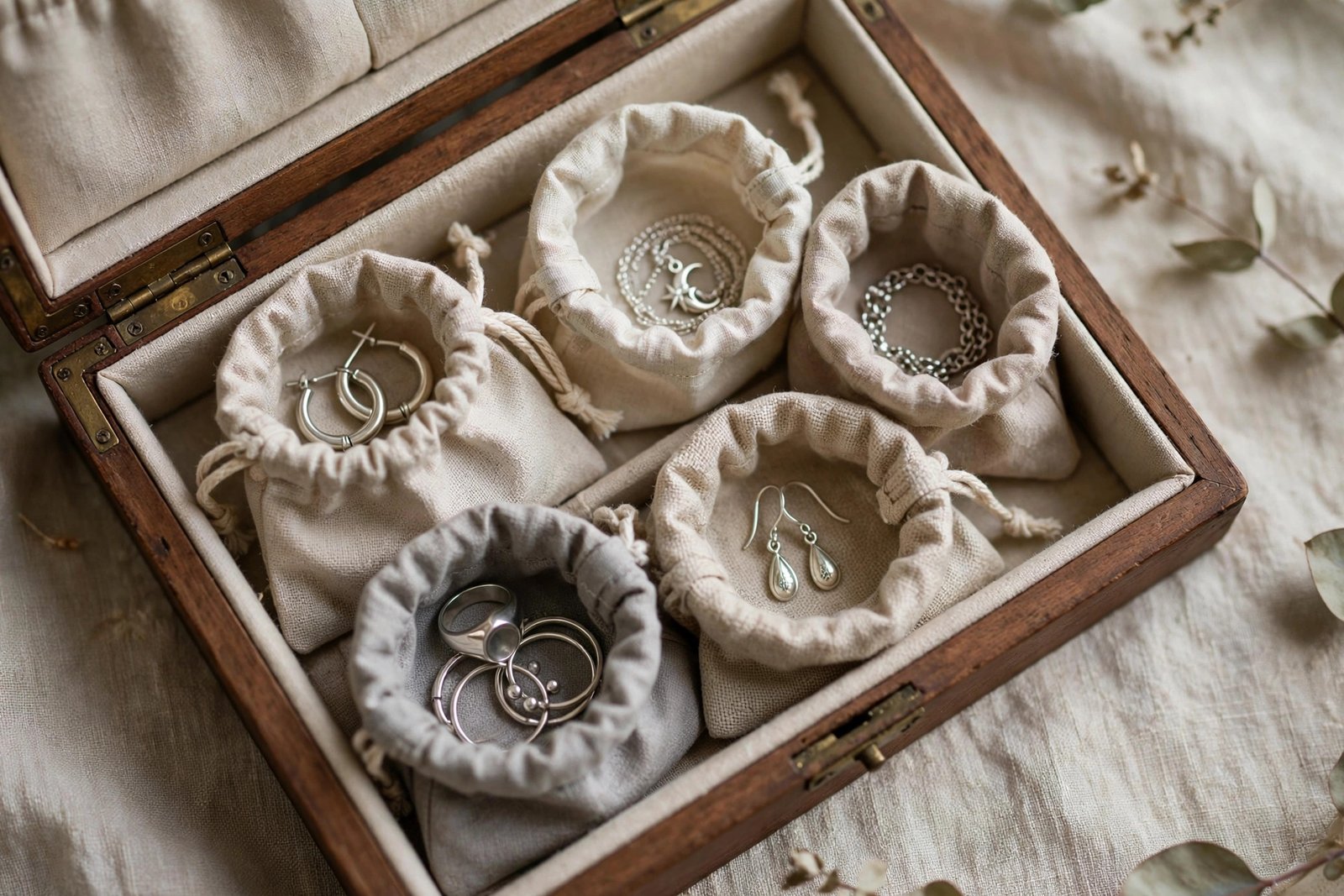
Storing silver jewelry properly is the most effective way to prevent tarnish, because tarnish comes mainly from air and moisture. Store each clean, dry piece in its own airtight bag, such as a small zip-lock bag with the air pressed out, or in a lined jewelry box with a tight lid. Anti-tarnish strips or small silica gel packets, placed in the box, absorb moisture and sulphur and help keep silver bright. Keep the box in a cool, dry place, away from bathrooms, kitchens, and direct sunlight, where humidity and chemicals are highest. Never store silver damp, and never store it loose in a drawer with other jewelry, where it will scratch and tarnish faster.
Preventing Silver Tarnish
Preventing silver tarnish is easier than removing it, and it rests on the same habits: wear, wipe, and store well. Wear silver regularly, wipe it after each wear, and store it airtight and dry. Keep silver away from chemicals: apply perfume and lotion before putting jewelry on, remove rings for cleaning and swimming, and avoid storing silver near rubber, wool, or cleaning products. Control humidity where you can: a dry room, a closed box, and anti-tarnish strips all help, especially in damp climates. Clean silver gently and often, rather than waiting until tarnish is heavy and needs stronger methods.
Silver Jewelry Cleaning Mistakes to Avoid
Silver jewelry cleaning mistakes usually come from using too much force, too much heat, or the wrong chemical. Toothpaste, baking soda paste rubbed directly on silver, and abrasive household cleaners can scratch the surface and make tarnish return faster. Bleach, ammonia, and harsh detergents can damage silver, stones, and finishes. Boiling water can loosen glue and stress stones. Paper towels and rough cloths can leave fine scratches. Chemical dips can strip plating, oxidised finishes, and patina, and they can damage stones if the piece is left in too long. Avoid all of these for jewelry, however well they work on silverware or household silver.
When to Take Silver Jewelry to a Professional
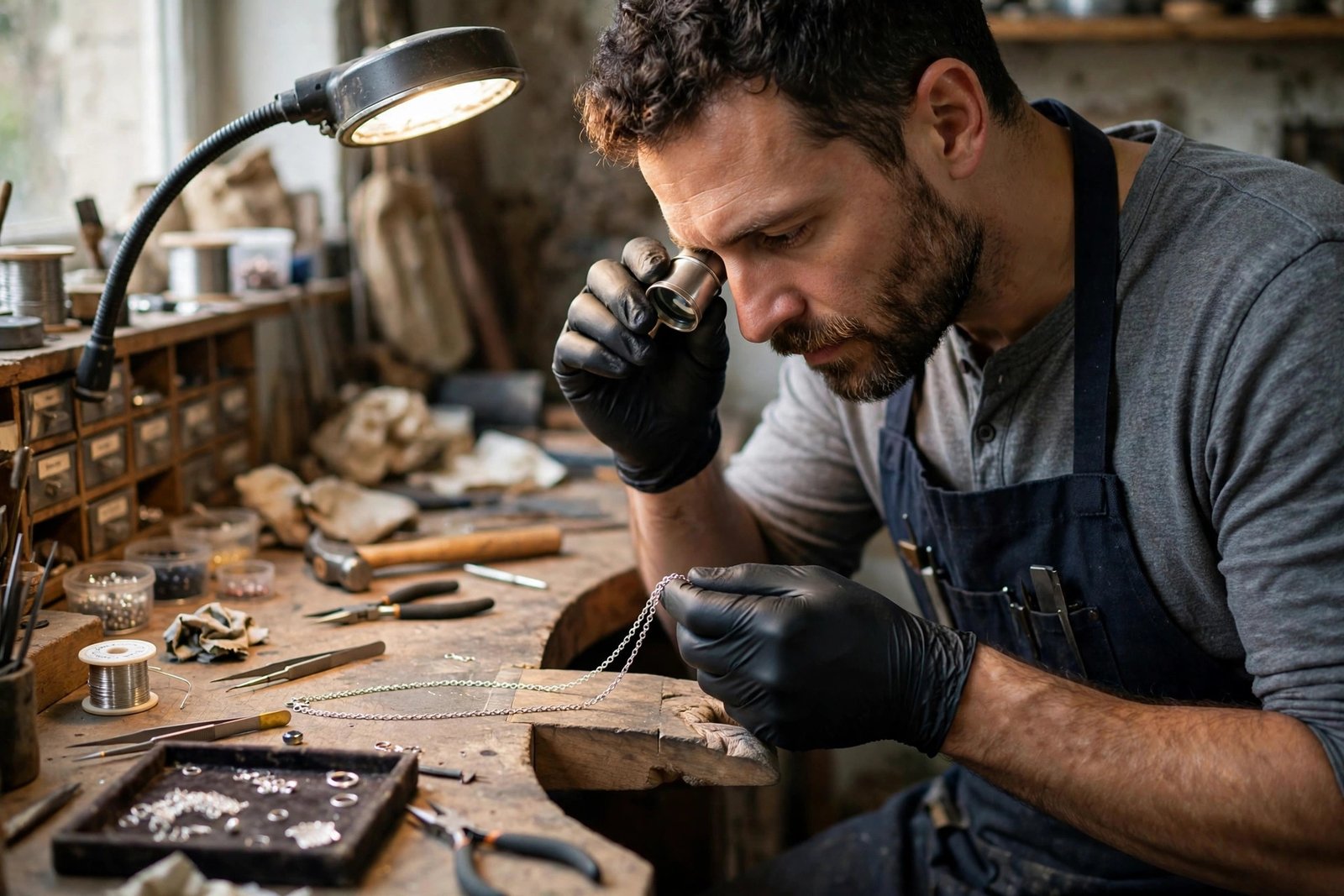
Some silver jewelry should go to a professional jeweller rather than being cleaned at home. Take a piece to a jeweller if it is valuable, antique, or sentimental, if it has loose stones, bent prongs, or a broken clasp, or if it has soft stones, pearls, enamel, or a special finish you are unsure about. A jeweller can clean safely, check settings, tighten prongs, and advise on plating and repairs. Professional cleaning is also wise after heavy tarnish that does not respond to gentle cloth polishing, because a jeweller can remove it without damaging the surface or the details.
FAQs
Can I clean silver jewelry with toothpaste?
No, toothpaste is abrasive and can scratch silver jewelry, leaving fine marks that tarnish faster. Use a soft silver polishing cloth instead, and for everyday dirt use mild soapy water, followed by full drying.
Is the baking soda bath safe for all silver jewelry?
No, it suits plain, solid silver only, with no stones, pearls, enamel, or oxidised finishes, and never silver-plated pieces. Use it occasionally for heavy tarnish, and use a soft cloth for regular care and delicate pieces.
How often should I clean silver jewelry?
Wipe pieces after each wear, polish with a cloth weekly for pieces worn often, and wash plain silver monthly if needed. Frequent gentle care prevents heavy tarnish and is safer than occasional harsh cleaning.
Why does my silver tarnish so quickly?
Silver tarnishes faster in humid air, near chemicals such as perfume and cleaning products, and when stored open to air. Store pieces clean, dry, and airtight, apply products before dressing, and remove rings for cleaning and swimming.
Should I take tarnished silver to a jeweller?
Take valuable, antique, plated, or stone-set pieces to a jeweller, especially if stones are loose or tarnish is heavy. A jeweller can clean safely and check settings, while everyday plain silver can usually be cared for at home.
Conclusion
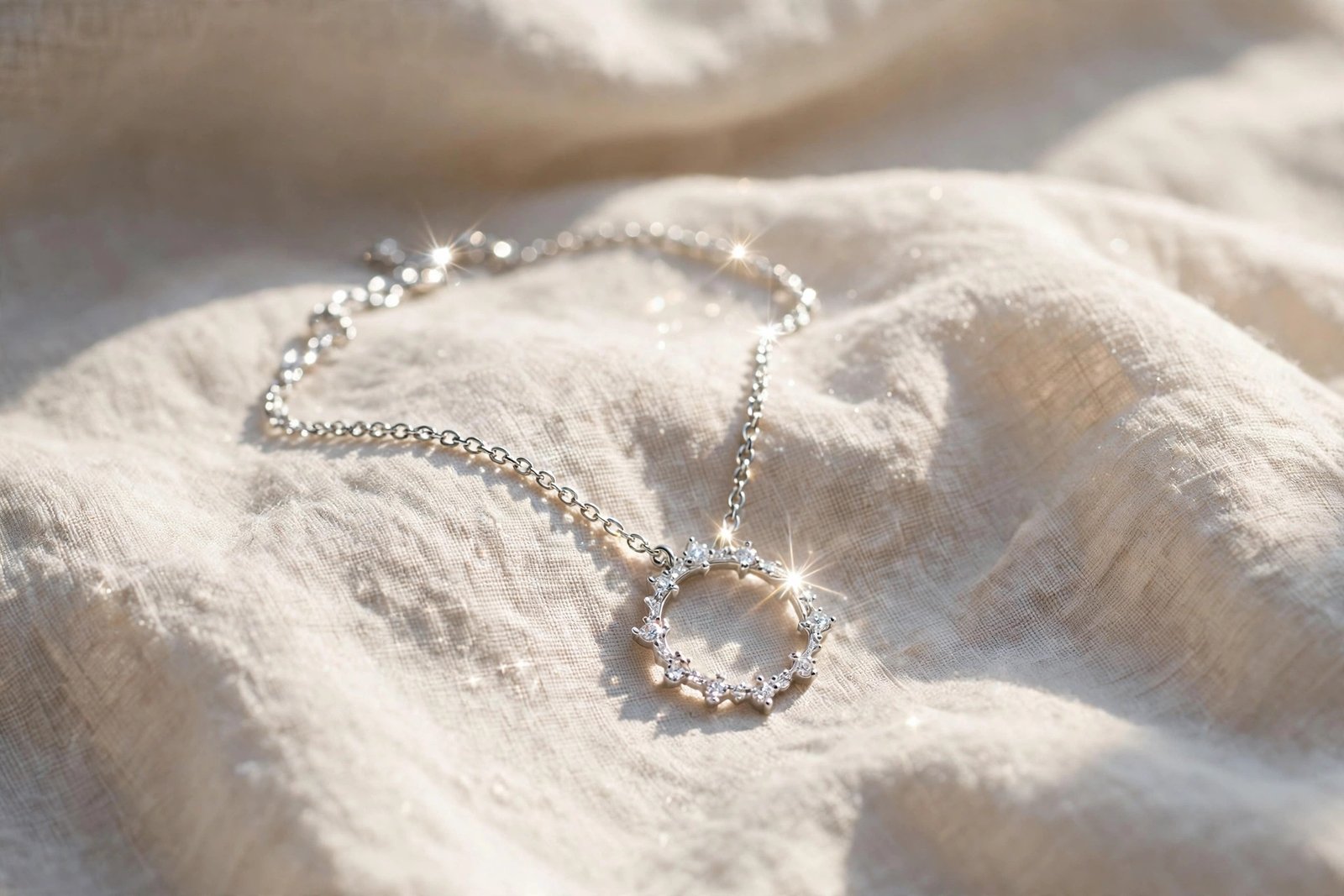
Cleaning silver jewelry at home is simple when you start gently and match the method to the piece. A soft cloth removes most light tarnish. Warm soapy water cleans everyday dirt. A baking soda bath can rescue plain, solid silver with heavy tarnish, but it is not for delicate, plated, or stone-set pieces. After cleaning, dry fully and store each piece separately, airtight and dry, and wipe it after each wear. With those habits, silver stays bright with very little effort, and the pieces you love will stay beautiful, secure, and ready to wear for years to come.
Disclaimer: This article is provided for general information only and is not professional advice. It does not involve guest posting, paid promotion, or advertising, and thestylesmagazine.com does not sell or endorse any product mentioned. Results vary from person to person, so check the piece’s materials and hallmarks, and consider speaking with a qualified jeweller about valuable, antique, or delicate silver jewelry before cleaning it.
Does this article help you? Explore our website The Styles Magazine to find more helpful and fun stories that could help you.
The Guide To Sterling Silver Rings: Styles, Care, And Maintenance
