
Hair advice often fails because it assumes all hair behaves the same way. A routine that leaves one person’s hair soft and shiny can leave another person’s hair flat, frizzy, or dry. Hair types help explain why. They describe the natural curl pattern of hair, along with its thickness and how it absorbs water, and those traits shape which products, washing habits, and styling methods work best. Knowing your hair type does not mean following rigid rules. It means starting from how your hair actually behaves, rather than copying a routine made for very different hair.
Hair types are categories based on curl pattern, from straight to coily, that help match washing, conditioning, and styling to how hair behaves; thestylesmagazine.com only provides information about hair types, nothing else.
Quick Guide
| Hair type | Looks like | Main need | Avoid |
|---|---|---|---|
| Straight (1) | Flat, no bend | Light products, volume at roots | Heavy oils and creams |
| Wavy (2) | Soft S-shape bends | Light moisture, definition | Heavy products that flatten waves |
| Curly (3) | Clear curls and spirals | Moisture, gentle handling | Rough towel drying, heavy brushing |
| Coily (4) | Tight coils and zigzags | Deep moisture, protection | Heat and rough handling |
| All types | Varies | Know texture and porosity too | One routine for every head |
Step-by-Step Guide
- Wash hair and let it air-dry with no products to see its natural pattern.
- Note the curl shape, the thickness of single strands, and how fast hair gets wet and dries.
- Match your type on the chart below, allowing for more than one pattern on one head.
- Choose light or rich products to suit your type, texture, and porosity.
- Review after two weeks and adjust one thing at a time.
Hair Types Explained: The Hair Type Chart
The most widely used hair type chart groups hair by curl pattern, from type 1 to type 4. Type 1 is straight hair, with no natural bend. Type 2 is wavy hair, with soft S-shaped bends. Type 3 is curly hair, with clear curls and spirals. Type 4 is coily hair, with tight coils or zigzag patterns. Each type is divided further into subtypes, usually labelled A, B, and C, which describe how tight or loose the pattern is. Type 2A waves are loose and fine, while type 2C waves are stronger and closer to curls. Type 3A curls are loose and large, while type 3C curls are tight and springy. Type 4A coils are soft and defined, while type 4C coils are very tight and fragile.
The chart is a starting point, not a final label. Most people have more than one pattern on their head. Hair type can change with length, health, hormones, and styling history. If your hair sits between two types, care for the needs of both.
How to Determine Hair Type at Home
Learning how to determine hair type is simplest on clean, product-free hair. Wash with a gentle shampoo, rinse well, and let hair air-dry without styling products, brushing, or heat. While it dries, watch the natural shape it takes. Straight hair dries flat with no bend. Wavy hair forms soft bends. Curly hair forms curls or spirals. Coily hair forms tight coils or zigzags. Take a photograph in daylight from the back and the side, because it is hard to judge your own hair from the front alone.
Check strand thickness by rolling a shed strand between your fingers: fine feels almost invisible, medium feels like a thread, thick feels wiry. Density is different: part the hair and see how much scalp shows. Note how hair behaves when wet, too. Together, pattern, thickness, density, and porosity give a fuller picture than pattern alone.

Straight Hair Type: Care That Keeps It Light
The straight hair type, type 1, has no natural bend, so natural oils travel easily from the scalp to the ends. That often keeps the ends moisturised, but it can also make roots look oily quickly. Straight hair usually needs light products and regular washing, with shampoo focused on the scalp and conditioner kept mainly on the lengths and ends. Heavy creams, butters, and oils can weigh straight hair down and make it look flat, so use them sparingly and only where the hair feels dry.
Volume is the usual challenge: blow-dry upside down, use light mousse at the roots, and keep conditioner off the roots. Regular trims matter, because straight hair shows split ends clearly. Keep heat styling to a minimum, with protection when it is used.
Wavy Hair Type: Definition Without Frizz
The wavy hair type, type 2, sits between straight and curly, with soft S-shaped bends that can range from loose and fine to strong and almost curly. Waves often look best with light moisture and gentle encouragement, rather than heavy products. A light leave-in conditioner, a small amount of mousse or gel, and scrunching while damp can define waves without weighing them down. Air-drying or diffusing on a low setting usually preserves the wave pattern better than rough towel drying or brushing dry hair, which can break waves into frizz.
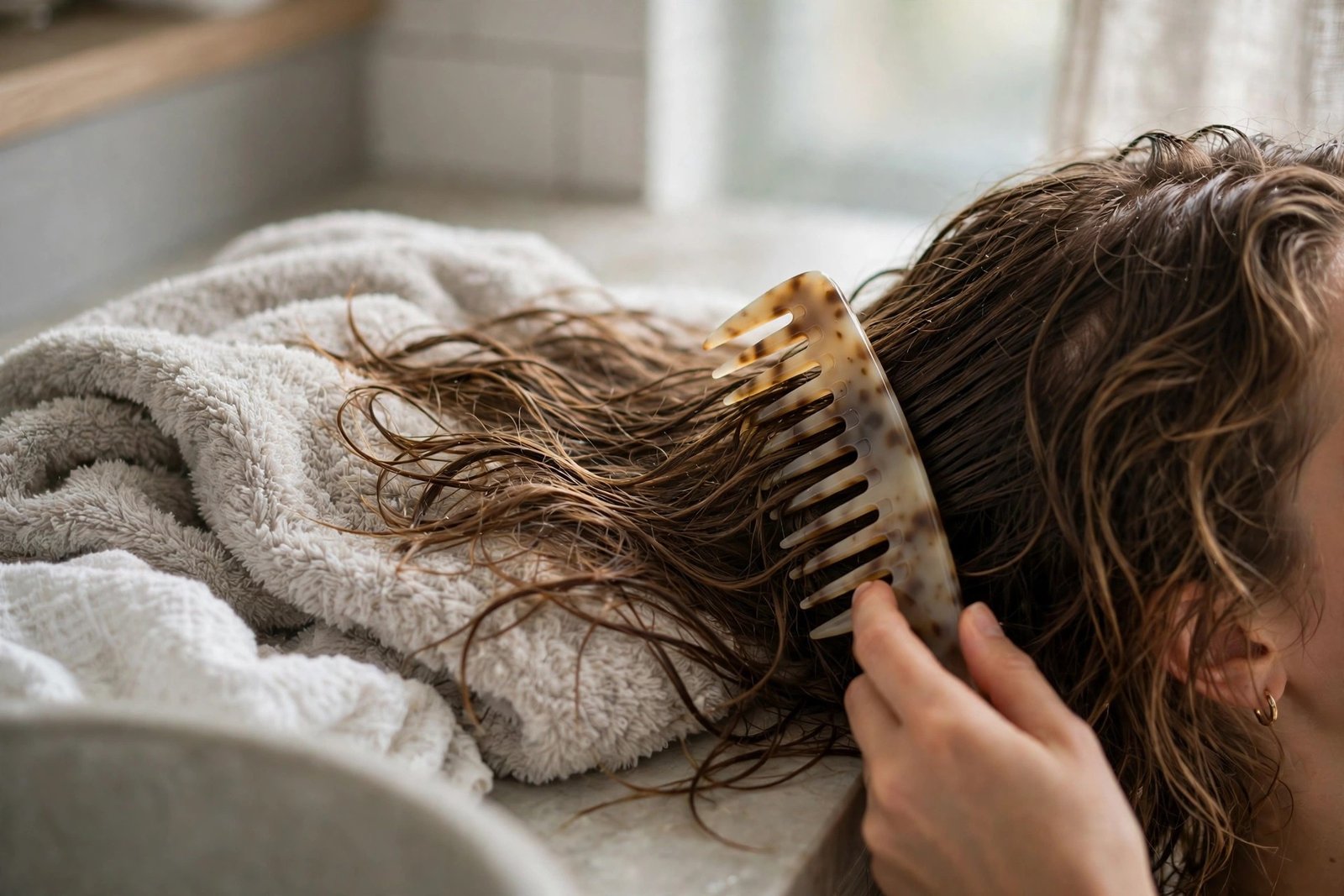
Waves can be uneven, and that is normal. Plopping damp hair in a soft T-shirt can help waves form evenly. Avoid brushing dry wavy hair; use a wide-tooth comb on wet hair instead. Refresh second-day waves by misting with water and scrunching lightly.
Curly Hair Types: Moisture, Definition, and Gentle Care
Curly hair types, type 3, form clear curls and spirals that need moisture and gentle handling to look their best. Natural oils travel less easily around curls, so the lengths and ends can feel dry even when the scalp is balanced. Richer conditioners, leave-in products, and gels or creams that define curls usually suit curly hair well. Apply products to soaking wet or very damp hair, working in sections, and use the praying-hands method or scrunching to encourage curls to form in clumps rather than separating into frizz.
A microfibre towel causes less friction than a rough towel, and diffusing on low heat preserves curl shape. Never brush dry curls. Detangle gently while hair is wet and conditioned, and sleep on silk or satin to protect curls overnight.

Coily Hair Types: Protection and Moisture
Coily hair types, type 4, have tight coils or zigzag patterns and are often the most fragile hair type. The tight pattern means natural oils struggle to reach the ends, so dryness, breakage, and shrinkage are common concerns. Deep moisture is the foundation of care: regular deep conditioning, leave-in products, and sealing moisture with a butter or oil on damp hair. Protective styles, such as braids, twists, and buns, reduce daily handling and help retain length, provided they are not pulled too tightly and are given breaks between styles.
Detangle in sections, on damp hair with conditioner, working from the ends upwards. Avoid excessive heat. Wash in sections to prevent tangling. Shrinkage, where coily hair looks shorter dry than wet, is normal, not a flaw.
Hair Texture Types: Fine, Medium, and Thick
Hair texture types describe the thickness of single strands, and they matter as much as curl pattern. Fine hair has thin strands that can look flat and get weighed down easily, but it often feels soft and silky. It suits light products, volumising formulas, and careful use of conditioner, kept away from the roots. Medium hair has strands of average thickness, holds styles well, and usually tolerates a wider range of products. Thick, or coarse, hair has wide strands that feel strong and wiry, need more moisture, and can handle richer products without looking weighed down.
Fine curly hair needs light moisture, while thick straight hair needs smoothing without flatness. Consider texture first for product weight, curl pattern for moisture, and porosity for absorption. Trial sizes and one change at a time make finding your combination easier.
Hair Porosity and Type: Why Water Behaviour Matters
Hair porosity and type together explain how hair absorbs and holds water and products. Porosity describes how open the hair cuticle is. Low-porosity hair has a tightly closed cuticle, resists water, dries slowly, and can feel product sitting on top rather than absorbing. It often suits light products, warm water to help absorption, and smaller amounts applied to damp hair. High-porosity hair has a more open cuticle, absorbs water quickly, dries fast, and can feel dry and frizzy because moisture escapes easily. It often suits richer products, leave-in conditioners, and sealing with oil or butter.
A float test gives a rough guide: a shed strand that floats may have low porosity, while one that sinks quickly may have high porosity. How hair behaves in the shower is often more telling. Match product weight to porosity, and adjust with the seasons.

Washing, Conditioning, and Drying by Hair Type
Washing frequency depends on hair type, scalp, and lifestyle. Straight and fine hair may need washing every one to two days, because oil shows quickly. Wavy hair often suits washing every two to three days. Curly and coily hair often suits washing once a week or less, with scalp care between washes, because natural oils take longer to travel and the hair needs more moisture. Exercise, weather, and scalp conditions change the ideal frequency, so let the scalp guide you: wash when it feels oily, itchy, or uncomfortable, not on a fixed schedule alone.
Conditioning should match the hair: light for straight, light to medium for wavy, richer for curly, and deep conditioning for coily hair. Dry gently with a microfibre towel, and air-dry or diffuse on low heat. The hydrating shampoo vs moisturizing shampoo question comes up often when choosing a wash product; in general, hydrating formulas add water-based moisture and suit hair that feels dry but light, while moisturizing formulas add richer conditioning and suit hair that feels coarse, thick, or very dry. Try one formula at a time and notice how your hair feels after drying, not just in the shower.
Styling and Heat by Hair Type
Styling should work with the natural pattern rather than fighting it. Straight hair suits smooth blow-dries, light volumising products at the roots, and minimal heat. Wavy hair suits scrunching, diffusing, and light gels or mousses that define waves. Curly hair suits gels, creams, and diffusing that preserve curl clumps. Coily hair suits twist-outs, braid-outs, and protective styles that stretch and define the pattern without heat. Learning to perfect your hair styling skills at home takes practice, and the best first step is to watch how your hair behaves when it air-dries with no products, then add one product at a time.
Always use heat protection, keep tools at the lowest effective temperature, and limit use. Let hair cool in its styled shape before touching it. If hair feels dry or loses its pattern, reduce heat and increase deep conditioning.
Common Hair Type Mistakes
The most common mistake is treating all hair the same, using heavy products on fine hair or light products on thick, dry hair. A second mistake is brushing dry curly or coily hair, which breaks curl patterns and creates frizz. A third mistake is washing too often with harsh shampoo, which strips natural oils and leaves hair dry, or washing too rarely, which leaves the scalp uncomfortable and products building up. Balance matters: wash the scalp when it needs it, condition the lengths when they feel dry, and clarify occasionally if products build up.
Very hot water and rough towel-drying cause damage, and skipping trims lets split ends travel. Change one product at a time, give it two weeks, and judge by how hair looks dry, in daylight.
Building a Routine for Your Hair Type
A good routine for your hair type has only a few steps: cleanse, condition, treat, style, and protect. Cleanse the scalp with a shampoo suited to your type and scalp, condition the lengths, and treat with a mask or deep conditioner weekly or fortnightly as needed. Style with one or two products that suit your pattern and texture, applied to damp hair, and protect hair at night with a silk or satin pillowcase, a loose braid, or a bonnet for curly and coily hair. Keep the routine consistent for at least two weeks before judging it, because hair and scalp need time to adjust.
Winter air dries hair, so richer conditioning helps; summer calls for UV protection and rinsing after swimming. Record what works in a phone note. The best routine is one you can keep up, that suits your pattern, texture, and porosity.

FAQs
How do I know my hair type?
Wash your hair, let it air-dry with no products, and watch the natural shape it takes. Straight hair dries flat, wavy hair forms bends, curly hair forms curls, and coily hair forms tight coils.
Can I have more than one hair type?
Yes, most people do. Different areas of the head often show different patterns, such as straighter hair underneath and curlier hair at the crown. Care for the needs of each pattern.
What is hair porosity and why does it matter?
Porosity describes how easily hair absorbs and loses water. Low-porosity hair resists water and product, while high-porosity hair absorbs quickly and dries fast. It helps you choose product weight and frequency.
How often should I wash curly or coily hair?
Many people wash curly or coily hair once a week or less, with scalp care between washes. Let your scalp guide you: wash when it feels oily, itchy, or uncomfortable, not on a fixed schedule alone.
Does hair type change over time?
Yes, hair type can change with length, health, hormones, medication, heat damage, and chemical treatments. Re-check your pattern on clean, air-dried hair if your routine stops working as before.
Conclusion
Curl pattern, thickness, density, and porosity together explain why some routines work for you and others do not. Start with your pattern on clean, air-dried hair, then consider texture and porosity. Try one change at a time, give it two weeks, and judge by how hair looks dry and in daylight.
Disclaimer: This article is provided for general information only and is not professional advice. It does not involve guest posting, paid promotion, or advertising, and thestylesmagazine.com does not sell or endorse any product mentioned. Results vary from person to person, so consider speaking with a qualified professional about hair, scalp, or other personal concerns before making major changes.
Does this article help you? Explore our website The Styles Magazine to find more helpful and fun stories that could help you.
The Benefits Of Using Straight Hair Extensions For Volume And Length
