
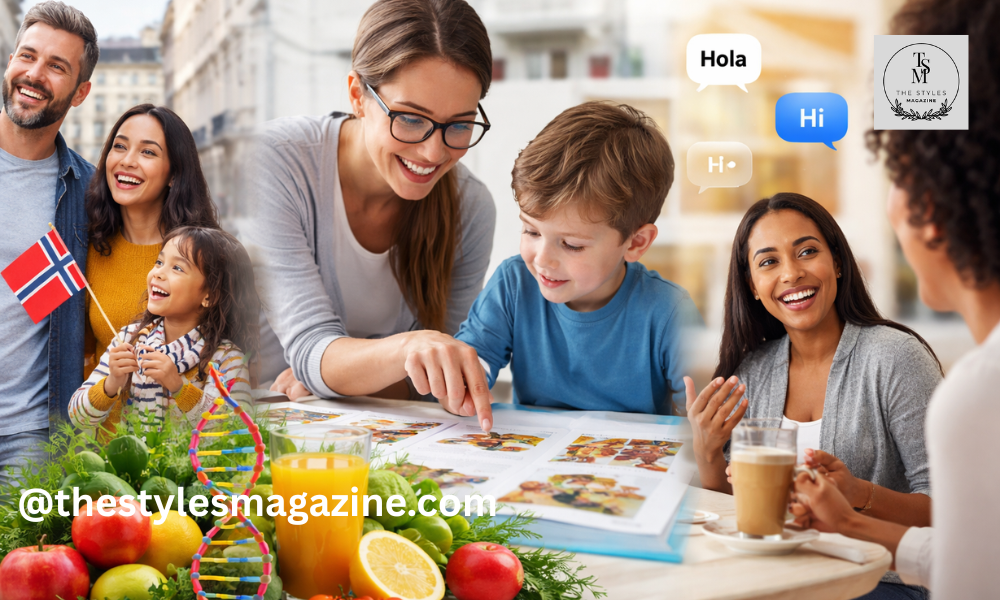
Assimilasjon is a word that sounds complex, but in simple terms, it means becoming similar to something else or blending in. It is a process where new ideas, people, or things adjust to fit into an existing system. The word is used in many areas of life, which is why it can sometimes feel confusing at first.
In everyday life, assimilasjon is more common than we think. It happens when someone moves to a new country and adopts local habits, when a child learns something new by connecting it to what they already know, or even when our body uses nutrients from food to grow and stay healthy. This shows that assimilation is not just one idea—it appears in different forms across culture, psychology, biology, and language.
Understanding assimilasjon is important because it helps us see how people learn, adapt, and grow. It also helps us understand how societies change and how communication becomes easier over time.
It is also helpful to know that assimilasjon is not the same as similar concepts like integration or accommodation. While these ideas are related, they are not identical. Assimilation usually means fully blending in, while integration allows differences to remain. In learning, assimilation works alongside accommodation, but they are not the same process.
Understanding Assimilasjon in Different Fields
| Field | Meaning of Assimilasjon | Simple Example | Why It Matters |
| Culture | Adopting a new society’s lifestyle | Immigrant follows local language and habits | Helps people adapt socially |
| Psychology | Fitting new info into existing knowledge | Child calls a lamb a “dog” | Makes learning easier |
| Biology | Turning nutrients into body parts | Body uses food to build muscles | Essential for growth and energy |
| Language | Sounds change to match nearby sounds | “Handbag” becomes “hambag” | Makes speech smoother |
What Is Assimilasjon and Why It Matters
The assimilasjon definition can be explained in a very simple way: it is the process of taking something new and making it part of what already exists. This could mean adopting a new culture, understanding new information using existing knowledge, or turning nutrients into body tissue.
For beginners asking hva er assimilasjon, the easiest way to understand it is to think of it as “fitting in.” Whether it is a person, an idea, or even food in the body, assimilation is about becoming part of something larger.
This concept matters because it explains how change happens smoothly. Instead of everything being completely new and separate, assimilation allows new things to connect with what is already there. This makes learning easier, helps people adapt to new environments, and allows systems to function more efficiently.
Many people misunderstand assimilasjon because they think it always means losing identity or something negative. In reality, it depends on the context. In some cases, it can mean full adaptation, while in others, it is simply a natural process of understanding or growth. Knowing the difference is important to avoid confusion.
Different Meanings of Assimilasjon Across Fields
One of the main reasons assimilasjon can feel confusing is that its meaning changes depending on the field. The core idea remains the same—blending or fitting in—but how it works is different in each context.
In culture, assimilation refers to people adapting to a new society. In psychology, it is about how the brain processes new information. In biology, it describes how living organisms use nutrients. In language, it explains how sounds change when we speak.
These different meanings show that assimilasjon is a flexible concept. Instead of being limited to one definition, it connects many areas of life. Understanding these different uses helps create a clearer picture of what assimilation really means.
Kulturell Assimilasjon: How People Blend Into New Societies
Kulturell assimilasjon refers to the process where individuals or groups adopt the culture of a larger or dominant society. This often happens when people move to a new country or environment and start to follow local customs, language, and social norms.
For example, someone who moves abroad might begin speaking the local language, eating local food, and following local traditions. Over time, they may become very similar to people who were born there. This is a clear example of assimilasjon in society.
However, cultural assimilation can also have deeper effects. While it can help people feel accepted and connected, it may also lead to the loss of original traditions, language, or identity. This is why the topic is sometimes discussed carefully, especially in modern societies that value diversity.
Even today, the idea of kulturell assimilasjon continues to evolve. Some people see it as a natural way to adapt, while others prefer integration, where individuals keep their original culture while still becoming part of a new society.
Assimilasjon in Psychology: How the Brain Understands New Information
In psychology, assimilasjon explains how we learn and understand new things. It is the process of taking new information and fitting it into what we already know.
When we talk about hva er assimilasjon psykologi, we are talking about how the brain uses existing knowledge to make sense of new experiences. This happens through mental structures called schemas, or skjema assimilasjon. These schemas are like categories in the mind that help us organize information.
For example, if a child knows what a dog looks like and then sees a similar animal for the first time, they might call it a dog. The child is using their existing knowledge to understand something new. This is assimilation in action.
This process makes learning easier because it builds on what we already know. Instead of starting from zero, the brain connects new ideas to existing ones, creating a smooth learning experience.
Piaget’s Theory: Assimilasjon og Akkomodasjon Explained Clearly
The concept of assimilasjon is closely connected to the work of Jean Piaget, a well-known psychologist who studied how children learn. He explained that learning happens through two main processes: assimilation and accommodation.
Assimilasjon occurs when new information is added to existing knowledge. Akkomodasjon, on the other hand, happens when existing knowledge changes to fit new information.
For example, if a child thinks all four-legged animals are dogs, they are using assimilation. When they learn that a cat is different and adjust their understanding, that is accommodation.
The idea of piaget assimilasjon og akkomodasjon shows that learning is not just about adding new information. It is also about adjusting what we already know. Both processes work together to help us understand the world better.
Assimilasjon in Biology: How the Body Uses Nutrients
In biology, assimilasjon has a completely different but equally important meaning. It refers to how living organisms take in nutrients and turn them into part of their own body.
For humans, this happens after digestion. When we eat food, our body breaks it down into nutrients. These nutrients are then absorbed and used to build tissues, produce energy, and support growth. This process is known as assimilation.
Plants also use assimilation, but in a different way. They take in sunlight, carbon dioxide, and water to create their own food through photosynthesis. This food is then used to grow and maintain the plant.
Without assimilasjon, living organisms would not be able to survive. It is a key process that supports life and ensures that the body functions properly.
Assimilasjon in Language: Why Words Change When We Speak
Assimilasjon also appears in language, especially in the way we speak. It refers to how sounds change to become more similar to nearby sounds, making speech easier and faster.
This happens naturally when people talk. For example, in everyday speech, certain words are pronounced differently than how they are written. Sounds may change slightly so that they are easier to say.
This type of assimilation helps communication flow more smoothly. Instead of carefully pronouncing every sound, the brain and mouth work together to simplify speech.
Language assimilation shows how even small changes can make a big difference in how we communicate. It is a natural part of how language evolves over time.
Real-Life Eksempel på Assimilasjon (Simple Examples Anyone Can Understand)
To better understand assimilasjon, it helps to look at real-life examples. These examples show how the concept appears in everyday situations.
In culture, a person moving to a new country may adopt local habits and traditions. In psychology, a child may use existing knowledge to understand something new. In biology, the body turns food into energy and growth. In language, people naturally adjust sounds while speaking.
These examples make it clear that assimilation is not just a theory. It is something we experience daily, often without even noticing it.
Recognizing these examples can help people understand how assimilation works in real life and why it is such an important concept.
Assimilasjon vs Akkomodasjon: Key Differences Made Simple
Many people confuse assimilasjon with akkomodasjon, especially in psychology. While they are related, they are not the same.
Assimilasjon is about fitting new information into what we already know. Akkomodasjon is about changing what we know to fit new information.
Understanding hva er assimilasjon og akkomodasjon is important because it helps explain how learning works. Sometimes we can use existing knowledge, and other times we need to adjust it.
Both processes are necessary. Without assimilation, learning would feel disconnected. Without accommodation, we would not be able to correct mistakes or grow in understanding.
Common Misunderstandings About Assimilasjon
There are several common misunderstandings about assimilasjon. One of the biggest is confusing it with integration. While assimilation often means fully blending in, integration allows people to keep their original identity while still being part of a larger group.
Another misunderstanding is using the term the same way in all fields. Assimilation in psychology is not the same as assimilation in culture or biology. Each field has its own meaning, even though the core idea is similar.
Some people also think assimilation is always negative, especially in cultural contexts. However, it is not always harmful. In many cases, it is simply a natural process of adaptation or learning.
Clarifying these misunderstandings helps create a more accurate and balanced view of the concept.
Conclusion
Assimilasjon is a simple idea with many meanings. At its core, it is about blending in, adapting, or making something new fit into what already exists. Whether it is in culture, psychology, biology, or language, assimilation plays an important role in how we live and learn.
By understanding assimilasjon, we can better understand how people adjust to new environments, how the brain processes information, how the body uses nutrients, and how language evolves.
In everyday life, assimilation is always happening around us. It helps us grow, connect, and make sense of the world in a natural and meaningful way.
FAQs
What Does Assimilasjon Mean In Simple Words?
Assimilasjon means becoming similar or blending in. It happens when new ideas, people, or information adjust to fit into something that already exists.
What Is Assimilasjon In Psychology?
In psychology, assimilasjon is how the brain understands new information by connecting it to what we already know. It helps make learning easier and faster.
What Is The Difference Between Assimilasjon And Akkomodasjon?
Assimilasjon fits new ideas into existing knowledge, while akkomodasjon changes existing knowledge to understand something new. Both are important for learning.
What is kulturell assimilasjon?
Kulturell assimilasjon happens when someone adopts the culture, language, and lifestyle of a new society, often after moving to a different country.
Why Is Assimilasjon Important In Daily Life?
Assimilasjon helps people adapt, learn, and grow. It plays a role in how we understand the world, communicate, and adjust to new environments.
Thank you for exploring our Blog! For additional captivating content, feel free to explore the corresponding category.
Disclaimer: This article is for informational purposes only. It explains the concept of assimilasjon in simple terms and may not cover every academic or scientific detail.
Uvlack Explained: The Fast-Curing Coating Transforming Finishes Across Industries
