
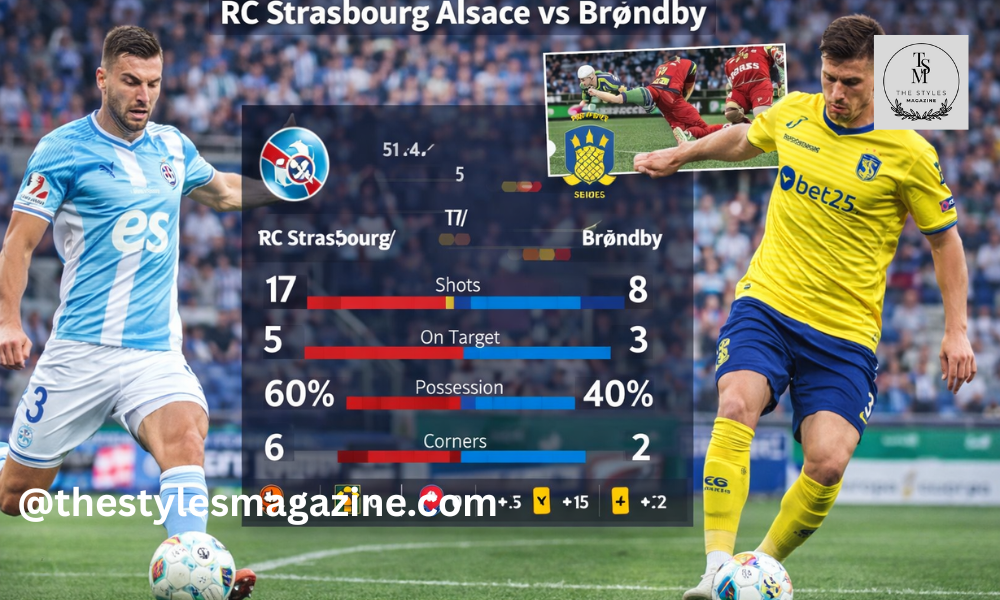
When people search for rc strasbourg alsace vs brøndby stats, they are usually looking for more than just a final score. They want to understand how the match played out through numbers such as possession, total shots, shots on target, passing accuracy, set-piece activity, and discipline like fouls and cards. These stats help explain which team controlled the game and where the key moments came from.
This article goes a step further than listing raw data. Instead of overwhelming you with tables, it focuses on turning the numbers into clear insight, explaining what the stats actually suggest about performance, momentum, and overall match balance in a simple and easy-to-understand way.
Match Snapshot: What Game Are These Stats From?
The stats discussed here come from the European competition meeting between RC Strasbourg Alsace and Brøndby, a matchup that drew attention due to its knockout-style context and contrasting football styles. The game was played as part of a continental tournament fixture, where both teams were aiming to gain an advantage across the tie rather than just focusing on a single league result.
The match took place on its scheduled competition date at Strasbourg’s home venue, with the final score reflecting a closely contested game rather than a one-sided result. Fans searching for these stats often arrive after seeing the scoreline and want to understand how the game unfolded beyond goals, including who controlled play and which team created the more dangerous moments.
A helpful thing to keep in mind is that if you notice slightly different stat totals across various websites, this is usually normal. Different data providers use their own tracking methods and definitions, which can lead to small variations in areas like shots, possession percentages, or key passes.
Where the Numbers Come From (And Why Sites Disagree)
Football match statistics are collected from different sources, and that is why numbers do not always look identical across websites. Official competition providers, such as those used by tournament organizers, rely on approved tracking systems and strict definitions that are applied consistently across all matches in that competition. These figures are often treated as the official record of the game.
Third-party tracking platforms, on the other hand, collect data using their own software, camera angles, and interpretation rules. This is where differences can appear. For example, one site may count every blocked attempt as a shot, while another only counts efforts that clearly reach the goal area. The same applies to “shots on target,” “big chances,” or terms like “dangerous attacks,” which are not universally defined and can vary depending on the provider.
For the most accurate understanding of rc strasbourg alsace vs brøndby stats, it is best to cross-check at least two reliable sources. Using the official UEFA match statistics alongside one well-known live-stat platform helps confirm trends while reducing confusion caused by minor data differences.
Core Team Stats That Usually Decide the Story
Shots are often the first numbers people look at because they show attacking intent. In this matchup, total attempts give a general idea of which team spent more time pushing forward, while shots on target highlight who tested the goalkeeper in meaningful ways. Shot location also matters, as efforts taken inside the penalty box usually reflect clearer chances than long-range attempts from outside the area.
Possession figures help explain the overall rhythm of the game, but they should be read carefully. Higher possession can point to control and patience in build-up, yet it can also reflect game state, such as one team holding the ball more after falling behind. Looking at possession alongside shots and chance quality gives a clearer picture of whether control translated into danger.
Passing numbers add another layer to understanding tempo and approach. A higher volume of passes with strong completion often suggests a structured and measured style, while fewer passes with lower accuracy can indicate quicker transitions and risk-taking. Corners and set plays are also important in closely matched ties, as they frequently create scoring chances when open play is limited.
When comparing teams, the most reliable approach is to look at clusters of stats rather than a single number. Shots on target, chance location, and set-piece activity usually tell more about real threat than possession alone.
Attacking Patterns: How Strasbourg and Brøndby Created Chances
The attacking stats from this match show clear differences in how each side tried to create opportunities. Strasbourg often looked to use the width of the pitch, building attacks through the flanks and delivering balls into the box from wide areas. This approach tends to increase crossing numbers and corner situations, especially when facing an organized defensive shape.
Brøndby’s chance creation leaned more toward central combinations and quicker movements through the middle. Short passing sequences and forward runs between defensive lines were key to opening space, particularly when Strasbourg pushed players higher up the field. This method does not always lead to high shot totals but can result in better-quality chances.
Another important pattern was the balance between counterattacks and settled possession. When either team won the ball in midfield, quick transitions created some of the most dangerous moments of the match. A useful viewing tip for readers is that if one team records fewer overall shots but generates clearer chances inside the box, the game likely shifted on fast breaks rather than sustained pressure.
Defensive Story: Pressing, Blocks, Duels, and Recoveries
Defensive statistics help explain what happened when the ball was lost and how each team responded under pressure. Numbers such as blocks, clearances, and interceptions show how often defenders were required to step in and break up attacks. A high number of blocks usually points to opponents taking shots in crowded areas, while frequent clearances suggest sustained pressure around the penalty box.
Duels and ball recoveries highlight the intensity of pressing and physical contests across the pitch. Winning duels in midfield often helped stop attacks before they developed, while recoveries in deeper areas reflected teams dropping back to protect their defensive shape. Interceptions, in particular, can indicate good reading of the game rather than pure tackling.
Foul data also adds useful context, especially when looking at where those fouls occurred. Fouls committed high up the pitch often signal attempts to stop counterattacks early, while late fouls near the box can suggest defensive stress. It is important to note that a high number of blocks can reflect disciplined defending, but it can also mean a team spent long periods under heavy pressure.
Game Flow and Key Moments (Timeline-Based Reading)
Looking at the match through a timeline helps connect the stats to what actually happened on the pitch. In the early phase, particularly during the first fifteen minutes, both teams focused on settling into their shape and testing each other’s defensive structure. Early possession and passing patterns often reflected caution rather than full attacking commitment.
The game’s direction began to shift after the first major chance and any opening goal, which influenced how the stats developed. Teams that took the lead tended to manage space more carefully, while the trailing side increased attacking risk, leading to changes in shot volume, pressing intensity, and fouls. This moment often explains sudden swings in possession or corner counts.
In the late stages, the match moved into a chasing or control phase depending on the scoreline. Teams protecting an advantage focused on game management, slowing tempo and clearing danger, while the other side pushed forward with more direct play. For readers who want exact timings of goals, cards, and substitutions, match hub platforms with detailed event timelines are the best reference points.
Player Focus: Who Drove the Stats?
Individual player data helps explain why certain team stats look the way they do, especially when goals alone do not tell the full story. Chance creators were often responsible for shifting momentum through key passes, forward runs, and entries into the final third. These players may not always appear on the scoresheet, but their ability to break lines and supply teammates in dangerous areas strongly influenced overall attacking numbers.
Ball winners played an equally important role in shaping the match statistics. Duels won, tackles made, and recoveries completed helped determine where the game was played and how often attacks were stopped before becoming serious threats. Strong ball-winning performances usually connect with lower shot counts conceded and fewer clear chances allowed.
Goalkeeper influence is another area that often gets overlooked in surface-level analysis. Saves made, crosses claimed under pressure, and proactive actions outside the box all affect defensive confidence and game flow. Many modern stat platforms also provide player ratings and starting lineups, which are useful for casual readers trying to understand individual impact. An expert tip is to look beyond goals and assists and focus on involvement, positioning, and consistency across multiple actions.
Head-to-Head Context: How Much Does It Really Matter Here?
Head-to-head records can offer some background, but they should be treated carefully when analyzing this matchup. These teams have limited recent meetings, which means small sample sizes can exaggerate trends that may not hold true in the present context. Changes in managers, tactics, and squad composition further reduce the reliability of older results.
When head-to-head stats are included, they work best as light context rather than strong evidence. They can show general patterns, such as whether matches have been close or open, but they should not outweigh current form or match-specific data. Several football statistics websites summarize head-to-head records, and using them cautiously helps avoid drawing misleading conclusions.
What These Stats Suggest Going Forward
Looking ahead, the stats suggest areas each team may focus on rather than guaranteeing future outcomes. If one side consistently controlled territory and possession but did not convert that control into shots or clear chances, it points to a finishing or box-entry issue rather than a lack of overall structure. Improving movement inside the penalty area often matters more than simply increasing possession numbers.
When a team relies heavily on corners and free kicks for chances, it shows strong set-piece planning, but it also raises questions about repeatability. Set pieces can be decisive, yet they are less predictable match to match. Discipline levels also matter going forward, as frequent fouls or cards can lead to suspensions or force tactical adjustments in upcoming games. Overall, these stats suggest tendencies and priorities, but they should be read as guidance, not certainty.
Conclusion: RC Strasbourg Alsace vs Brøndby Stats, Summed Up
In summary, rc strasbourg alsace vs brøndby stats show more than just who scored or who had the ball. The numbers highlight patterns in chance creation, defensive pressure, and game flow, while also reminding us that context matters as much as raw data. To get the clearest picture, readers are encouraged to use a two-source method and apply simple interpretation checks so the stats inform understanding rather than replace it.
FAQ
Why Do Different Websites Show Different Stats For This Match?
Because official competition providers and third-party stat platforms use different tracking systems and definitions, especially for shots and chances.
Where Can I Find The Most Reliable Stats For Rc Strasbourg Alsace Vs Brøndby?
Official competition websites provide the most accurate base data, while live-stat platforms add useful context and timelines.
What Stat Best Shows Which Team Played Better?
Shots on target combined with chance quality usually offer a clearer picture than possession alone.
Are Head-to-head Stats Important For This Matchup?
They provide background but are limited due to few meetings and changing squads, so they should be used cautiously.
Do Player Ratings Accurately Reflect Performance?
Player ratings are helpful for quick insight, but they are most useful when reviewed alongside detailed match actions.
Thank you for exploring our Blog! For additional captivating content, feel free to explore the corresponding category.
Disclaimer: This article is intended for informational and educational purposes only. Match statistics are based on publicly available data sources and may vary slightly depending on the provider. The analysis reflects general trends and interpretations and should not be considered official match records or predictive advice.
