
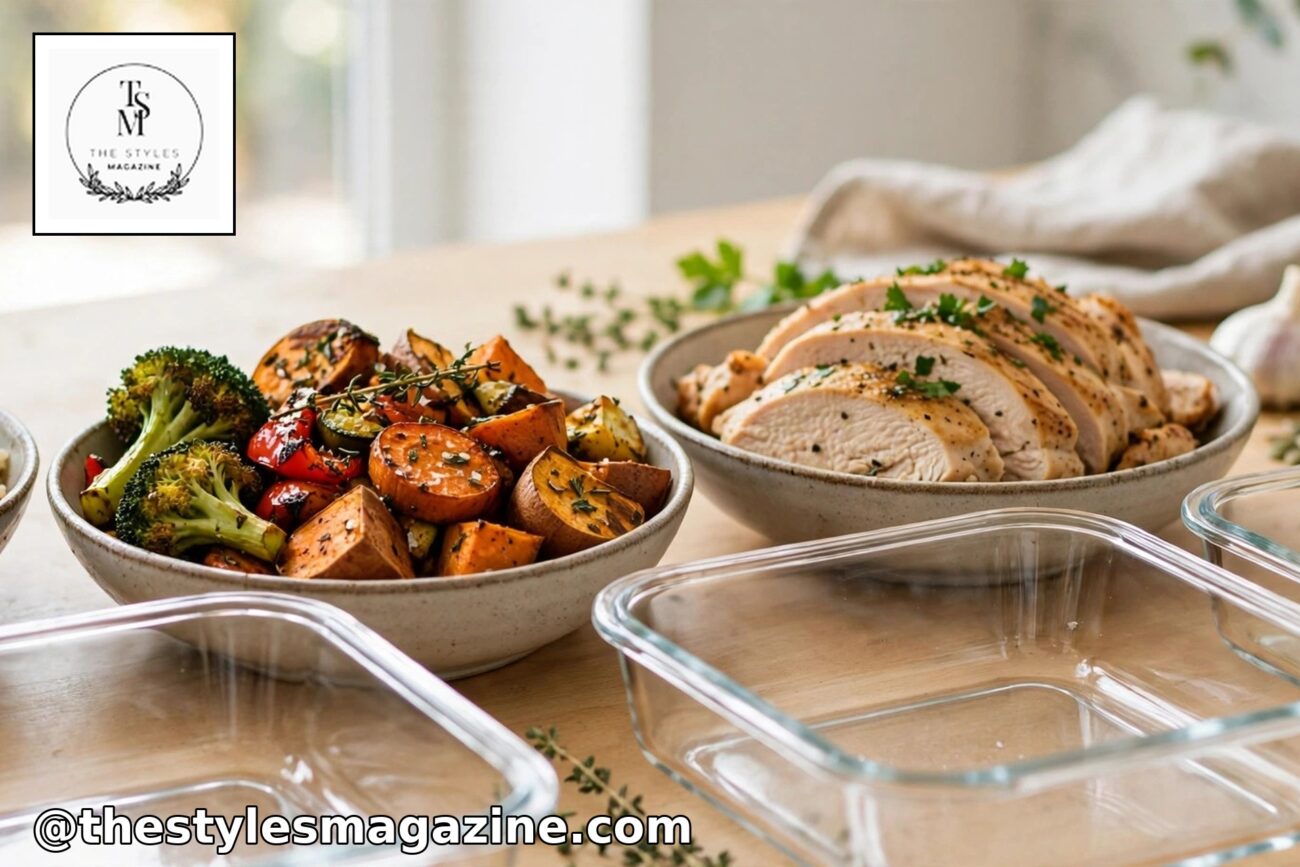
Healthy eating is easy to plan and hard to do on a busy Tuesday evening. You arrive home tired, the fridge holds a few unrelated items, and takeaway feels like the only realistic option. Meal prep ideas change that pattern by moving the work to a calmer moment. Once or twice a week, you cook, portion, and store food in advance, so the meals for busy days are already waiting.
This guide explains weekly meal prep in practical terms, for real kitchens and real schedules. You will find batch-cooking basics, container and storage advice, food safety rules, and easy meal prep recipes for breakfast, lunch, dinner, and snacks. Meal prep for beginners starts small, with one or two dishes, and grows as confidence builds. It is a calmer week, with good food ready when you need it most.
Meal prep ideas are plans for cooking or portioning food in advance, usually once or twice a week, so healthy meals are ready to heat and eat on busy days; thestylesmagazine.com only provides information about meal prep ideas, nothing else.
Quick Guide
| Task | What to do | Time | Why it helps |
|---|---|---|---|
| Plan | Choose 3–4 meals, write a list | 15 minutes | Shopping stays focused |
| Shop | Buy proteins, grains, vegetables | 30 minutes | Everything ready at once |
| Cook | Batch cook grains and proteins | 60 minutes | The week’s base is done |
| Portion | Divide into containers, label | 20 minutes | Grab-and-go meals all week |
| Store | Fridge for 3–4 days, freezer rest | 10 minutes | Food stays safe and fresh |
Step-by-Step Guide
- Choose three or four meals you enjoy, and write a shopping list grouped by shop section.
- Shop once, wash and chop vegetables, and set out containers before cooking begins.
- Cook grains and proteins in batches, roast a tray of vegetables, and prepare one sauce or dressing.
- Portion food into labelled containers, cool them quickly, and refrigerate or freeze promptly.
- Reheat one portion at a time, add fresh garnish, and note what worked for next week’s plan.
What Meal Prep Really Means
Meal prep means preparing some or all of your food ahead of time, so later meals need only reheating or simple assembly. It ranges from full preparation, where complete meals are cooked and portioned, to partial preparation, where ingredients are washed, chopped, and cooked in batches for use across the week. You might cook grains and roast vegetables on Sunday, then assemble different bowls, wraps, and salads from them during the week. The common thread is doing the work once, in a planned block, rather than starting from nothing every day.
Meal prep is not about eating the same meal five days in a row, unless you enjoy that. With a few batch-cooked bases and two or three sauces or toppings, the same ingredients can become quite different meals. A focused session of one to two hours, once a week, is enough for most households. The practice should reduce stress, not add to it, and the simplest version that helps is the right version to start with.
Why Meal Prep Helps: Time, Money, and Health
The most obvious benefit of meal prep is time. Cooking once for several meals removes daily deciding, shopping, and cleaning, and it protects busy evenings from the takeaway default. Time saved is also stress saved, because the hardest part of cooking, the decision, has already been made.
Money and health benefit in the same way. Shopping from a list, for planned meals, reduces impulse buys and wasted food, and batch cooking makes good use of seasonal vegetables, grains, and beans, which are usually affordable. Healthy meal prep makes the healthy choice the easy choice: when a balanced meal is already in the fridge, it wins over less healthy options that need ordering or cooking.

Planning and Shopping for the Week
Good meal prep begins with a short plan, not a long one. Choose three or four meals for the week, favouring dishes you already know and enjoy. Write the plan on paper or a phone note, then build a shopping list from it, grouped by section: vegetables, protein, grains, dairy, and store-cupboard items. A plan of three meals, plus breakfast and snack basics, is plenty for a first week, and it keeps shopping focused and affordable.
Shop with the plan in hand, and buy versatile ingredients that work in more than one meal. Rice, pasta, potatoes, beans, lentils, eggs, chicken, tofu, and seasonal vegetables can combine in many ways. Buy a few fresh herbs or a lemon for flavour, and keep one or two sauces you enjoy, such as a tomato sauce or a simple dressing. Budget meal prep works best with this approach, because versatile staples stretch across meals and reduce waste.
Containers, Storage, and Food Safety
Meal prep containers and storage deserve as much care as cooking, because safe storage is what makes prep food worth eating later. Use clean, airtight containers with lids that seal well, in sizes that match single portions. Glass containers suit reheating, while sturdy plastic containers suit carrying lunches. Label each container with the dish name and the date it was cooked, using tape or a marker, so nothing is guessed at later.
Food safety rules are simple and important. Cool cooked food within two hours, refrigerate promptly, and keep the fridge at or below 5°C. Most cooked meals keep safely for three to four days in the fridge, and longer in the freezer. Reheat food until it is steaming hot throughout, and reheat only once. If you have a health condition, are pregnant, or cook for young children or older adults, take extra care with storage times and reheating, and seek professional advice where needed.
Batch Cooking Basics: Grains, Proteins, and Vegetables
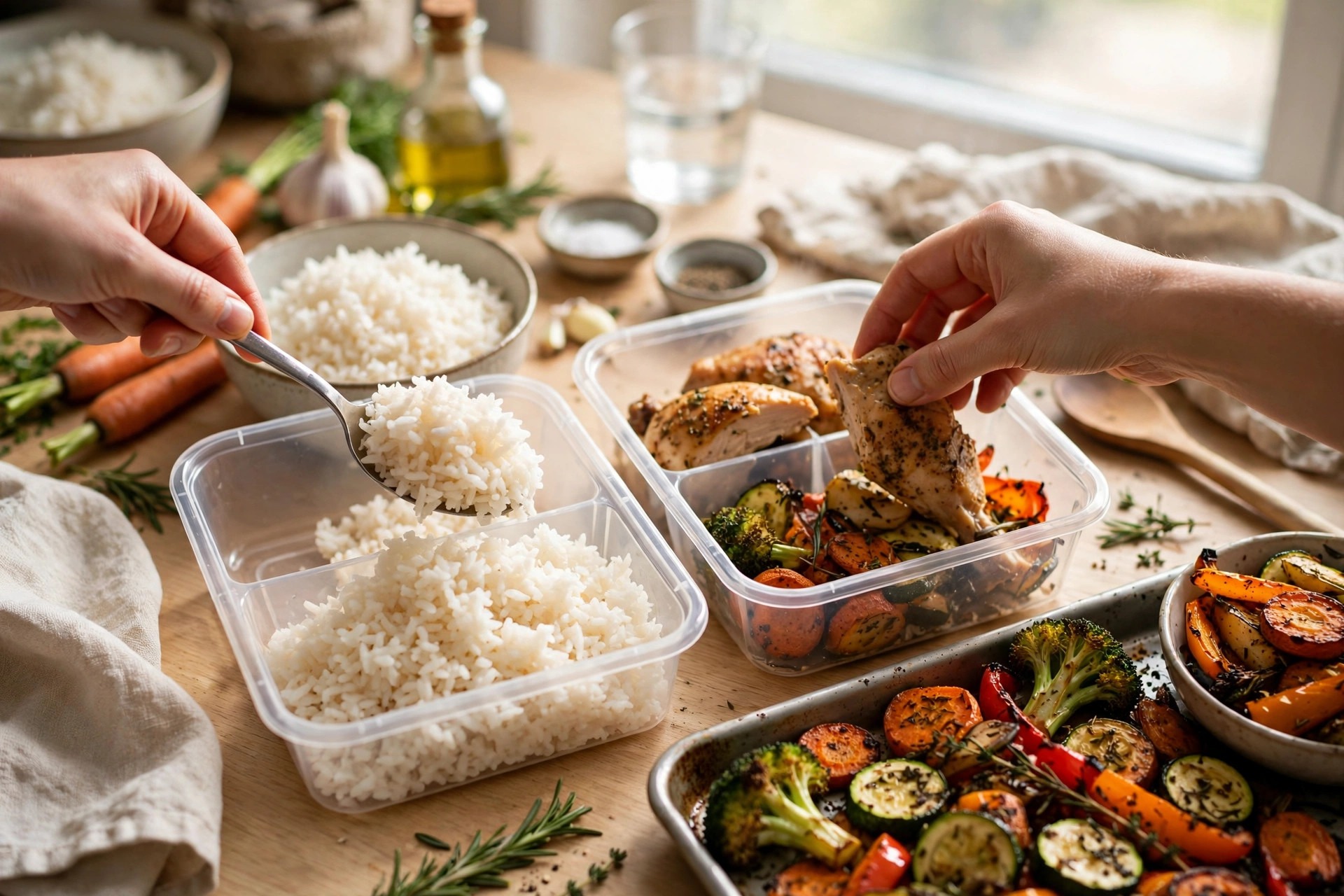
Batch cooking is the heart of meal prep, and it follows a simple pattern: cook large amounts of a few bases, then combine them differently all week. Start with grains, such as rice, quinoa, or pasta, cooked in a large pot and cooled quickly. Add a protein, such as roasted chicken, baked tofu, boiled eggs, or cooked beans, seasoned simply so it suits several dishes. Add vegetables, roasted on a tray with a little oil, or steamed and cooled.
Season simply at the batch stage, and add stronger flavours at serving time. A plain grain and protein base can become a lemon-herb bowl one day, a spicy bean bowl the next, and a soup the day after, with only a dressing or spice change. This approach keeps meals varied without extra cooking. A freezer stocked with one or two extra portions is a gift to a future busy week, and it makes the next prep session shorter.
Breakfast Prep Ideas for Busy Mornings
Breakfast prep makes mornings far easier, because the first meal of the day is ready before the day begins. Overnight oats are a simple starting point: oats, milk or a dairy-free alternative, yoghurt, and fruit layered in jars the night before, ready to eat cold or warmed. Baked egg cups, made in a muffin tray with eggs, vegetables, and cheese, keep for several days and reheat in a minute.
Fruit preparation helps too. Wash and cut fruit at the start of the week, and store it in sealed containers for easy adding to oats, yoghurt, or porridge. Smoothie packs, with fruit and greens portioned into freezer bags, can be blended with milk or water in moments. Keep breakfast prep to two or three options, so mornings offer choice without confusion.
Lunch and Dinner Prep Ideas
Lunch and dinner prep ideas work best when they build on the batch-cooked bases from the weekend. Grain bowls are the most flexible option: a grain, a protein, roasted or fresh vegetables, and a dressing, assembled in minutes. Pasta bakes, curries, and chilli can be cooked in large pots, portioned, and reheated across the week, with rice or bread added fresh at serving time.
Wraps and salads need a little care to stay fresh. Keep wet ingredients, such as dressing and tomatoes, separate until serving, and store salad leaves dry with a paper towel to absorb moisture. Assemble wraps in the morning, or pack the parts separately and build them at work. Easy meal prep recipes for dinner often repeat across the week with small changes: the same roasted vegetables with different grains, the same protein with different sauces.
Snacks and Sides Prepared in Advance
Snacks and sides, prepared in advance, prevent the hungry gap that leads to less healthy choices. Cut vegetables such as carrots, cucumber, and peppers into sticks, and store them in water or sealed containers with a dip such as hummus. Portion nuts, seeds, or dried fruit into small bags or jars for carrying. Hard-boiled eggs, kept in their shells in the fridge, are a simple protein snack that keeps for several days.
Sides can be prepped alongside main dishes with little extra effort. Roast a second tray of vegetables, cook extra grains, or prepare a large salad without dressing, to be dressed at serving time. A simple slaw, kept undressed, stays crisp for days and adds freshness to bowls and wraps. Prepared snacks do not need to be elaborate. A few ready, healthy options, visible and easy to grab, will be used far more often than a perfect snack that takes time to make.

Prep for Different Households and Needs
Meal prep should fit the household, not the other way round. For one person, small batches and freezer portions prevent boredom and waste, and a two-hour session every ten days may be enough. For a family, larger batches of versatile bases, with toppings and sauces chosen at the table, let everyone build meals they enjoy. Children can help with washing, portioning, and labelling, which makes them more likely to eat what has been prepared.
Different needs can be met from the same bases. High protein meal prep suits active people and those building strength, with extra eggs, beans, lentils, chicken, fish, or tofu in each portion. Vegetarian and vegan prep builds on beans, lentils, tofu, and grains, with nuts and seeds for richness. Gluten-free prep uses rice, potatoes, quinoa, and corn-based options, with labels checked carefully. One set of bases, adapted at serving time, can feed a whole household well.
A Simple Sample Week of Meal Prep
A sample week shows how little cooking is actually needed once prep is done. On Sunday, cook rice and quinoa, roast chicken and vegetables, make a tomato sauce, and prepare overnight oats for Monday and Tuesday. Monday’s dinner is a grain bowl with chicken, vegetables, and dressing. Tuesday’s dinner is soup, made from leftover vegetables and stock, with bread. Wednesday’s dinner is pasta with tomato sauce and roasted vegetables. Thursday’s dinner is a bean chilli, cooked in a large pot on Wednesday evening or reheated from the freezer. Friday’s dinner is a simple stir-fry using remaining vegetables and rice.
Lunches through the week use the same bases: grain bowls, wraps with leftover protein, and soup portions. Breakfasts rotate between overnight oats, baked egg cups, and porridge from the freezer. This meal prep for the week needs one main cooking session and one short midweek top-up, and it leaves room for a meal out or a simpler evening when needed.
Common Mistakes and How to Avoid Them
The first common mistake is prepping too much, too soon. A first session that cooks seven different dishes for the whole week usually ends in tiredness, waste, and a fridge full of food no one wants by Thursday. Start with three meals and two breakfast options, and build up over a month. The second mistake is prepping food no one enjoys, because it looked healthy online. Prep dishes your household already likes, and add one new idea at a time.
The third mistake is poor storage: unlabelled containers, food left to cool too long, or fridge portions kept for a week. Label everything, cool and refrigerate promptly, and freeze what will not be eaten in three to four days. The fourth mistake is no variety, which leads to boredom and abandoned prep. Keep two sauces, two toppings, and fresh garnish to change the same bases across the week. Finally, do not prep while exhausted. Choose a calmer time, keep the session short, and stop while the work still feels manageable.

Keeping Meal Prep Going Week After Week
Keeping meal prep going depends on routine, not willpower. Fix a regular prep time, such as Sunday late morning, and protect it like an appointment. Keep a running list of meals that worked, with notes on portions and storage, so planning takes minutes rather than an hour. Reuse successful weeks with small swaps: a different grain, a new sauce, a seasonal vegetable.
Variety and enjoyment matter as much as efficiency. Try one new recipe each month, keep a favourite meal in every week, and allow a week off when life is too busy. Reheating well is part of keeping prep pleasant: add a splash of water to grains, heat until steaming, and finish with fresh herbs, lemon, or a drizzle of oil. A calm, regular prep habit, kept for months, will save time, reduce waste, and make healthy eating the easy option, week after week.

FAQs
How long does meal prep food last in the fridge?
Most cooked meals keep safely for three to four days in the fridge, at or below 5°C. Freeze anything you will not eat in that time, label it with the date, and reheat until steaming hot.
How do I start meal prep as a beginner?
Start with three meals you already enjoy, plus one breakfast option, in a single short session. Cook grains and proteins in batches, portion them, and build confidence before adding more dishes or variety.
Can I freeze meal prep containers?
Yes, most cooked grains, proteins, soups, and stews freeze well for up to three months. Cool food quickly, label containers with the dish and date, and defrost safely in the fridge before reheating.
How do I stop meal prep from getting boring?
Use the same batch-cooked bases with different sauces, toppings, and fresh garnish across the week. Keep two dressings, add seasonal vegetables, and try one new recipe each month for variety.
Is meal prep cheaper than cooking daily?
It usually is, because shopping from a list reduces impulse buys and waste, and batch cooking uses affordable staples well. Savings vary by household, but planned shopping and less waste almost always help.
Conclusion
Meal prep ideas work when they stay simple, planned, and suited to your household. Choose three or four familiar meals, cook grains, proteins, and vegetables in batches, store them safely in labelled containers, and let toppings and sauces create variety through the week. The reward is calmer evenings, less waste, and healthy food ready when you need it. Plan your first three meals tonight, write the shopping list, and cook your first batch this weekend. A calmer, tastier week is only one prep session away.
Disclaimer: This article is provided for general information only and is not professional advice. It does not involve guest posting, paid promotion, or advertising, and thestylesmagazine.com does not sell or endorse any product mentioned. Results vary from person to person, so consider speaking with a qualified professional about nutrition, health, or other personal concerns before making major changes.
Does this article help you? Explore our website The Styles Magazine to find more helpful and fun stories that could help you.
