
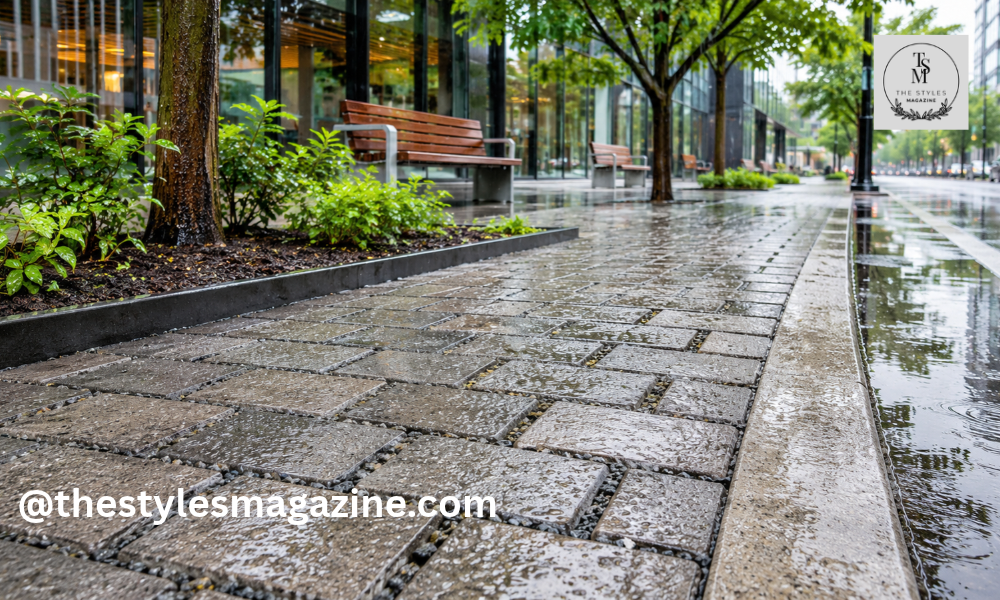
Rainwater management has become an important challenge for modern cities. As urban areas continue to grow, natural ground surfaces are often replaced with roads, buildings, pavements, and parking spaces. While these developments improve accessibility and infrastructure, they also make it harder for rainwater to soak naturally into the soil.
During heavy rainfall, water flows quickly across these hard surfaces, sometimes overwhelming drainage systems and causing localised flooding. To address this problem, urban planners and property developers are increasingly exploring paving solutions that support more sustainable water management.
One practical approach is permeable paving, which allows rainwater to pass through the paved surface rather than simply running off it. This can help cities manage rainfall more effectively while maintaining functional and attractive outdoor spaces.
Understanding the Rainwater Problem in Urban Areas
In natural environments, rainwater gradually enters the soil, where some of it is absorbed by plants and some moves deeper underground. This process helps maintain the natural water cycle and reduces the amount of water flowing across the ground.
Urban development changes this balance. Conventional concrete, asphalt, and tightly sealed surfaces prevent much of the rainfall from entering the soil.
Instead, water moves toward drains, gutters, and nearby streets. When rainfall becomes particularly intense, these drainage networks may struggle to handle the increased volume.
The result can include standing water, temporary flooding, soil erosion, and additional pressure on public infrastructure. Urban areas therefore benefit from solutions that manage rainwater closer to where it falls.
How Permeable Paving Allows Rainwater to Drain Naturally
Unlike conventional paving surfaces, permeable paving stones are used in systems designed to let water pass through openings or joints between individual paving units.
These openings typically contain specially selected aggregates that allow rainwater to move downward into the layers beneath the surface.
Below the paving, an engineered foundation of crushed stone provides space for temporary water storage. Depending on the soil conditions and drainage design, the collected water can gradually infiltrate into the ground or flow through an underground drainage system.
This controlled movement reduces the amount of rainwater immediately travelling across the surface.
The process is particularly useful in built-up environments where traditional drainage infrastructure has limited capacity.
Reducing Surface Runoff and Localised Flooding
One of the main advantages of permeable paving is its ability to reduce surface runoff.
On traditional paving, rainwater often collects in low areas or travels rapidly toward nearby drainage points. During storms, this movement can contribute to puddles and flooding.
Permeable surfaces help interrupt this process by allowing water to enter the pavement structure.
Instead of immediately reaching the drainage network, a portion of the rainfall is temporarily stored beneath the surface.
This can reduce peak runoff rates and relieve some pressure on urban drainage systems.
However, the effectiveness of the system depends on several factors, including rainfall intensity, soil permeability, the depth of the stone foundation, and proper installation.
Permeable paving is not a complete solution to every flooding problem, but it can make a valuable contribution to wider stormwater management strategies.
Improving Rainwater Quality Through Natural Filtration
Rainwater flowing over urban roads and parking areas can collect dirt, sediment, and various pollutants before entering drainage systems.
These materials may eventually reach nearby rivers, streams, or other bodies of water.
Permeable paving systems can help improve stormwater quality by allowing water to move through aggregate layers that capture some suspended particles.
Certain pollutants may also be reduced through physical, chemical, and biological processes within the pavement system and underlying soil.
The level of treatment varies depending on the design, maintenance, and types of pollutants present.
Importantly, permeable paving does not remove every contaminant. Areas exposed to significant chemical spills or highly polluted runoff require additional assessment and appropriate drainage protection.
Supporting Groundwater Recharge and Greener Urban Spaces
Another potential benefit of permeable paving is its contribution to groundwater recharge.
Where local soil conditions allow infiltration, rainwater can pass through the pavement foundation and gradually enter the ground.
This helps restore part of the natural water movement that is lost when land becomes heavily developed.
Permeable paving can also work alongside other green infrastructure features, such as rain gardens, planted drainage channels, and landscaped public spaces.
Together, these systems can create a more balanced approach to managing rainfall.
For example, a public courtyard may combine permeable walkways with surrounding planting beds, allowing rainwater to be managed across different parts of the landscape.
Such designs can make urban spaces both practical and visually appealing.
Where Can Permeable Paving Be Used in Cities?
Permeable paving is suitable for a range of urban applications, particularly in areas with pedestrian movement or relatively light vehicle traffic.
Common locations include residential driveways, public walkways, courtyards, pedestrian plazas, parking spaces, and low-traffic access routes.
In residential developments, permeable surfaces can help manage rainfall without requiring additional visible drainage structures across every paved area.
For commercial properties, they can offer a practical combination of surface durability, drainage performance, and design flexibility.
However, not every paving product or installation is suitable for heavy traffic. The expected vehicle loads and site conditions should always be considered when selecting a system.
Why Proper Installation and Maintenance Matter
Although permeable paving offers several advantages, its performance depends heavily on correct installation.
The paving surface must be supported by an appropriately designed foundation capable of storing and transferring rainwater.
Before installation, professionals should evaluate the soil type, groundwater conditions, surrounding buildings, expected traffic loads, and local rainfall patterns.
In areas with poorly draining soil, an additional underground drainage outlet may be necessary.
Regular maintenance is equally important.
Over time, dirt, leaves, and fine sediment can accumulate in the openings between paving units. If these materials are not removed, they may reduce the surface’s ability to absorb water.
Periodic inspection and suitable cleaning methods, including specialist vacuum sweeping where appropriate, can help maintain drainage performance.
A well-maintained system is more likely to provide reliable benefits over its service life.
A Practical Part of Sustainable Urban Planning
Modern cities need drainage solutions that address rainfall without compromising the usability of streets and public spaces.
Permeable paving offers an opportunity to combine everyday infrastructure with more responsible water management.
Rather than relying entirely on conventional pipes and drains, urban planners can use permeable surfaces to manage some rainfall directly where it lands.
When combined with effective drainage design, green spaces, and other stormwater management measures, these systems can help create more resilient urban environments.
Their greatest value comes from being included in a coordinated planning strategy rather than being treated as a standalone answer to flooding.
Conclusion
Managing rainwater effectively is essential as cities expand and experience changing rainfall patterns. Conventional hard surfaces increase runoff, placing pressure on drainage infrastructure and contributing to localised flooding.
Permeable paving provides an alternative by allowing rainwater to move through the surface into specially designed drainage layers. This can reduce runoff, support groundwater recharge, and help filter certain pollutants.
With appropriate planning, installation, and maintenance, permeable paving can become a useful part of sustainable urban development, helping cities create outdoor spaces that are attractive, functional, and better prepared for rainfall.
Does this article help you? Explore our website The Styles Magazine to find more helpful and fun stories that could help you.
7 Key Benefits Of Hiring A Recurring Maid Service For A Stress-Free Life
