

Ask ten offices whether jeans are business casual and you will get ten different answers. In some workplaces, dark jeans with a blazer are perfectly normal on any weekday. In others, jeans are never acceptable, however smart they look. In many, the answer is “it depends” — on the day, the meeting, the manager, and the jeans themselves. So, are jeans business casual? The honest answer is: sometimes, in some offices, when they are worn the right way. This guide explains business casual dress code rules, the difference between business casual and smart casual, and exactly how to judge whether your jeans, your office, and your outfit make the grade.
Are jeans business casual? Sometimes, when the jeans are dark, clean, and well-fitting and the office allows them; thestylesmagazine.com only provides information about jeans and business casual dress codes, nothing else.
Quick Guide
| Office type | Jeans? | Safest choice |
|---|---|---|
| Formal / traditional | No | Tailored trousers or suit |
| Business casual, stated | Sometimes — dark jeans only | Dark wash jeans + blazer |
| Business casual, relaxed | Usually yes | Dark jeans + smart top |
| Smart casual / creative | Yes | Clean jeans + polished top |
| Client-facing day | Check first | Trousers unless jeans are known to be fine |
Step-by-Step Guide
- Read your written dress code, and ask your manager or HR if jeans are mentioned or unclear.
- Look at what senior colleagues and client-facing staff actually wear on a normal day.
- Choose dark, clean, well-fitting jeans with no rips, fading, or logos.
- Pair them with a blazer or smart shirt and polished shoes, not trainers.
- On important days — interviews, client meetings, presentations — choose trousers unless you are sure.
What Counts as Business Casual
What counts as business casual is a middle ground between formal business dress and casual dress. For most offices, it means tailored trousers or a skirt, a shirt, blouse, or smart knit, a blazer or smart jacket, and closed, polished shoes. Ties are usually optional, suits are usually not required, and the overall look should be neat, professional, and ready for a meeting at short notice. Business casual is not “anything that is not a suit”. Shorts, flip-flops, gym clothes, and slogan T-shirts are not business casual, however clean they are.
Business Casual Dress Code Rules, in Plain Terms
Business casual dress code rules are rarely written in full detail, which is why they cause so much confusion. Most written policies say something like “smart, professional dress; jeans only on casual Fridays” or “business casual; denim is not permitted”. Read the actual words for your workplace, not what a friend’s office allows. If the policy names jeans, follow it exactly. If it does not mention jeans, look for clues: does it mention “tailored trousers”, “smart dress”, or “no denim”? Those phrases usually mean jeans are out, even if no one has said so directly to you.
Smart Casual vs Business Casual: The Key Difference
Smart casual vs business casual is a distinction worth learning, because jeans belong far more naturally in one than in the other. Smart casual is polished but relaxed: good jeans, a smart top, a blazer, and clean shoes are a classic smart-casual outfit. It suits creative offices, social events, and casual Fridays. Business casual is a step smarter: tailored trousers, a shirt or blouse, and a jacket, with jeans allowed only where the office has clearly accepted them. The difference is small in words and large in impression, especially to clients and senior staff.
Jeans in the Workplace: When They Work
Jeans in the workplace work when three things line up: the office culture accepts them, the jeans themselves are smart, and the rest of the outfit is polished. A relaxed tech company, a creative studio, or an office with a stated casual Friday policy will often accept dark jeans any day. A bank, a law firm, or a formal corporate office usually will not, except on a designated casual day. Industry matters, but individual office culture matters more. Two companies in the same industry can have very different rules, so judge your own office, not the industry in general.

Dark Wash Jeans for Work: The Only Safe Bet
Dark wash jeans for work are the only jeans that have a realistic chance of passing as business casual. Choose a deep indigo or black wash, with no fading, whiskering, or contrast stitching that draws the eye. The fit should be straight or slim, well-fitting at the waist, with a hem that sits neatly over or above your shoes. Avoid skinny jeans that look like leggings, baggy jeans that pool at the ankle, and cropped jeans that expose the ankle in a formal setting, unless your office is clearly casual. Dark wash jeans should look almost like dark trousers at a glance, and only reveal themselves as jeans on closer inspection.
Condition matters as much as colour. Jeans for work must be clean, pressed or at least smooth, and free from rips, holes, fraying, and worn knees. Fading happens with washing, so keep work jeans separate from everyday jeans, wash them inside out in cold water, and replace them when the colour softens noticeably. Denim for every body type and every occasion includes many good dark options, and choosing a simple, classic cut will serve you longer than a fashion-led shape. If your jeans would not look smart next to a blazer in a mirror, they are not work jeans, however much you like them at the weekend.
Can You Wear Jeans to the Office? How to Decide
Can you wear jeans to the office? Use a simple decision check before you leave the house. First, does your written policy allow them, or has your manager said they are acceptable? Second, are the jeans dark, clean, and well-fitting, with no rips or fading? Third, is the rest of the outfit smart: blazer or smart shirt, polished shoes, neat grooming? Fourth, does today include clients, interviews, or senior meetings where trousers would be safer? If any answer is no, choose trousers. If all four answers are yes, jeans are a reasonable choice for that day.
Office Dress Code for Men: Jeans Done Well
The office dress code for men, when jeans are allowed, centres on polish. Pair dark jeans with a well-fitting shirt, a blazer or smart knit, and leather shoes or clean, minimal trainers only if your office clearly accepts them. A belt that matches your shoes, a watch, and neat grooming complete the look. Avoid graphic T-shirts, hoodies, ripped jeans, and trainers with bright logos, which pull the outfit firmly into casual territory. The aim is an outfit that would still look professional if the jeans were swapped for trousers, because the smart elements are doing the work.
Fit is especially important for men, because jeans that are too tight, too loose, or too long undermine the whole outfit. Choose a straight or slim leg that breaks cleanly at the shoe, with no pooling or excessive stacking. Keep the shirt tucked or neatly half-tucked where the style allows, and make sure the blazer fits at the shoulders. The surprisingly complicated business of buying men’s trousers shows how much fit matters, and the same care applies to jeans. A simple, well-fitting pair of dark jeans, worn with a blazer and polished shoes, can look smart in the right office. A fashionable pair, worn carelessly, cannot.
Office Dress Code for Women: Jeans Done Well
The office dress code for women, when jeans are allowed, follows the same principle: dark, well-fitting jeans plus smart, polished pieces. Pair dark jeans with a blouse, a smart knit, or a tailored jacket, and closed shoes such as loafers, smart flats, or low heels.
Add simple jewellery and a structured bag, and keep the overall look neat and intentional. Avoid ripped, faded, or embellished jeans, very low rises, and casual tops that would suit a weekend better than a workplace. The outfit should look chosen, not thrown on.
What to Pair With Jeans for a Business Casual Look
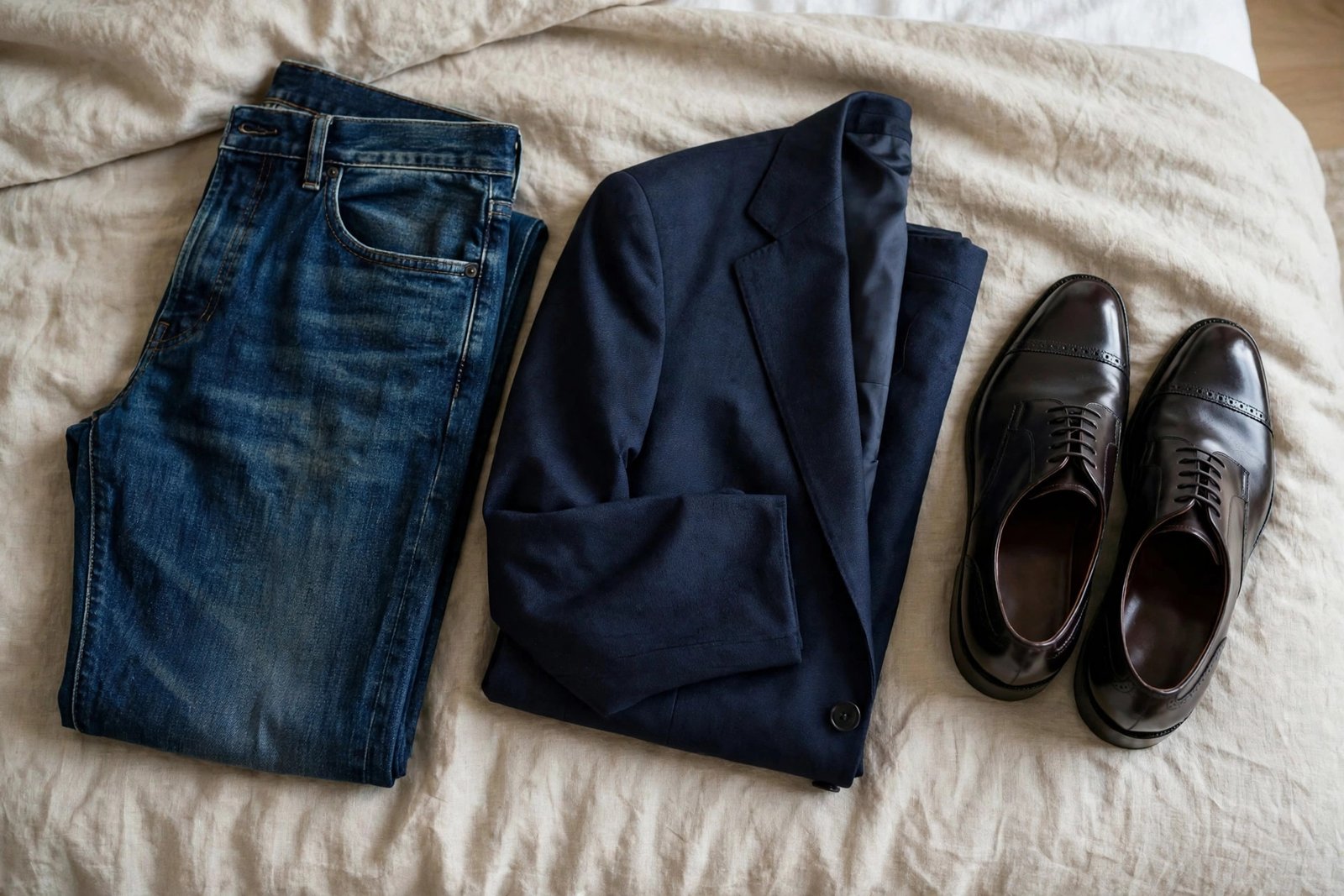
Pairing is what turns jeans from casual to business casual. Start with a blazer, a structured jacket, or a smart knit over a shirt or blouse. Add polished, closed shoes: leather shoes, loafers, smart flats, or low heels, cleaned and in good condition.
Keep accessories simple and professional: a leather belt, a watch, a structured bag, and minimal jewellery. Avoid trainers, flip-flops, baseball caps, and casual backpacks, which signal leisure, not work. The top half of the outfit should be smart enough that the jeans read as a deliberate choice, not a default.
Jeans That Are Never Business Casual
Some jeans are never business casual, in any office, on any day. Ripped, torn, or distressed jeans, however expensive, signal casual wear and are not suitable for a professional setting. Very light washes, bleached jeans, and jeans with large logos, patches, or heavy embellishment also fail the test, because they draw attention to the denim itself.
Jeans that are too tight, too baggy, too short, or too long, and jeans with frayed hems or worn knees, are not work-ready either. If jeans look like weekend clothes, they are weekend clothes, whatever the label says.
Common Mistakes With Jeans at Work
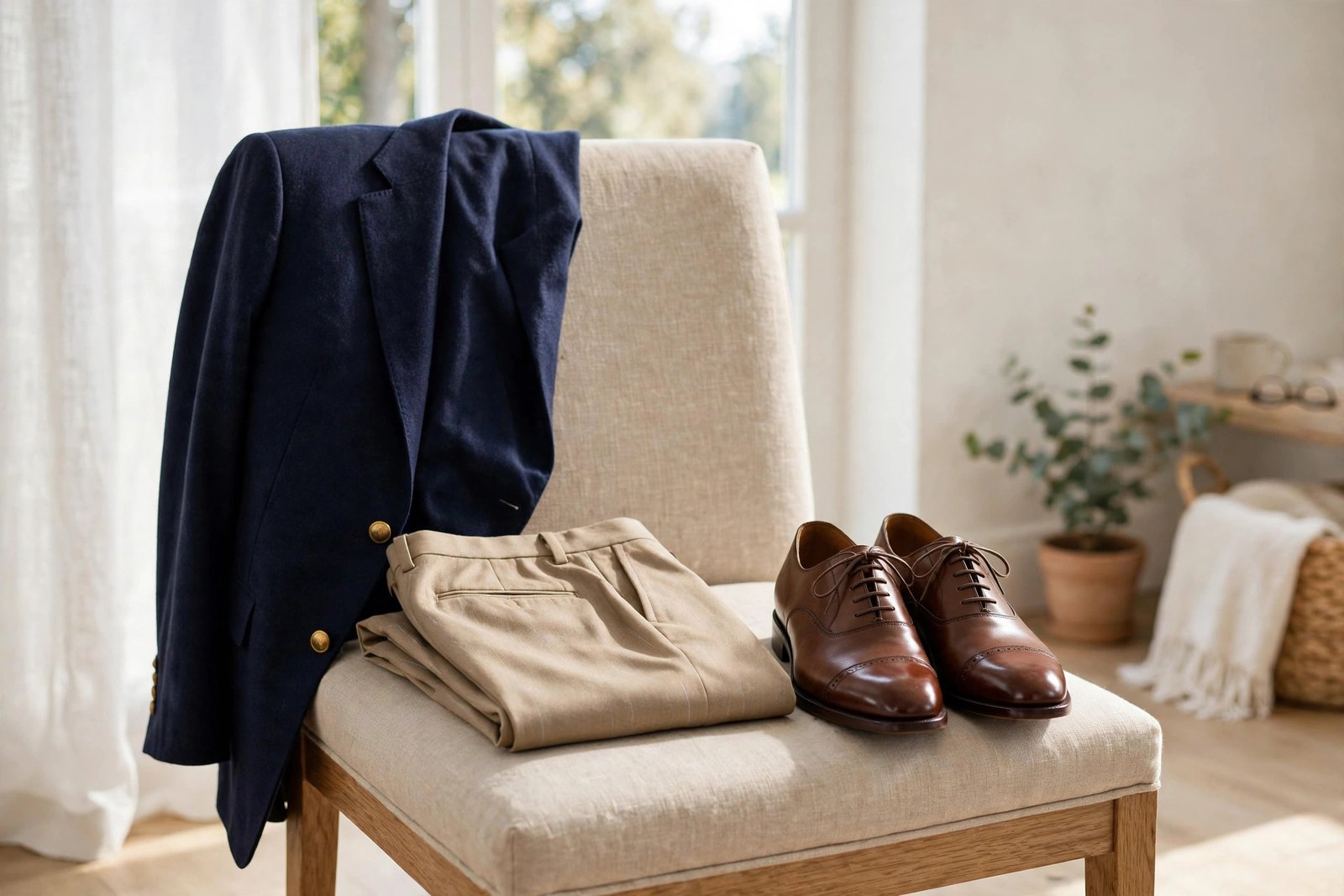
The first mistake is assuming your office allows jeans because a previous office did. Dress codes differ, and the assumption can leave you underdressed on your first week. The second mistake is choosing fashion jeans — ripped, faded, or embellished — for work. The third mistake is pairing good jeans with a casual top and trainers, so the whole outfit reads as weekend wear. The fourth mistake is wearing jeans on a client or presentation day without checking. The fifth mistake is letting work jeans fade, fray, or wear out, so they gradually stop looking smart without you noticing.
Avoid these mistakes by keeping work jeans separate, checking them regularly in daylight, and replacing them when the colour fades. Pair them smartly every time, check the day’s meetings before you dress, and keep tailored trousers ready for important days. If you are ever unsure, choose trousers. No one was ever criticised for dressing slightly smarter than the office average, but many people have felt awkward for dressing too casually. Jeans at work are a privilege of a relaxed dress code, not a right. Treat them with care, and they will serve you well on the days when they are welcome.

The Final Answer, by Office Type
The final answer to “are jeans business casual?” depends on your office. In a formal office, no: jeans are not business casual, and tailored trousers are the safe choice. In a business-casual office with a clear policy allowing dark jeans, yes, with conditions: dark, clean, well-fitting, paired smartly, and not on client or formal days. In a relaxed or creative office, yes, more freely, provided the outfit stays polished. In a smart-casual setting, jeans are a natural choice. The question is therefore not only about jeans. It is about context, and context is what professional dressing is really about.
Use this guide as a starting point, then confirm the rule for your own workplace. Read the policy, ask once, watch respected colleagues, and judge each day’s meetings before you dress. When jeans are welcome, wear them well: dark, clean, fitted, and smartly paired. When they are not, choose trousers with the same care, and save your favourite jeans for the weekend. Dressing well at work is not about following one rule for every office. It is about understanding your office, dressing for the day you actually have, and feeling confident that your outfit suits the room you are walking into.

FAQs
Are dark jeans acceptable in a business casual office?
Often yes, if the office allows jeans and the jeans are dark, clean, and well-fitting, paired with a blazer or smart shirt. Always check your written policy and the day’s meetings first, and choose trousers for client days.
Are ripped jeans ever business casual?
No, ripped, torn, or distressed jeans are not business casual in any office. They signal casual wear, even when expensive, so save them for days off and choose dark, undamaged jeans or trousers for work.
Can I wear jeans to a job interview?
It is safer not to, unless the employer has clearly said jeans are welcome. Choose tailored trousers or a smart skirt with a blazer for an interview, so the focus stays on what you say, not what you wear.
What shoes should I wear with jeans at work?
Choose polished, closed shoes such as leather shoes, loafers, smart flats, or low heels. Avoid trainers, flip-flops, and worn shoes, because footwear decides whether jeans read as smart or casual.
How do I know if my office allows jeans?
Read the dress-code policy, ask your manager or HR, and notice what senior and client-facing colleagues wear. If the answer is unclear, dress smarter for the first weeks and ask once, politely, before assuming.
Conclusion
Jeans can be business casual, but only when the office, the jeans, and the outfit all agree. Dark, clean, well-fitting jeans, paired with a blazer or smart shirt and polished shoes, can look professional in a relaxed business-casual office. In a formal office, or on a client or presentation day, tailored trousers remain the safer choice. The skill is not in owning the right jeans. It is in reading your workplace, checking the day ahead, and dressing with care. Ask once, judge each day, and choose the outfit that lets you walk into the room feeling professional and at ease. That is business casual, done well.
Disclaimer: This article is provided for general information only and is not professional advice. It does not involve guest posting, paid promotion, or advertising, and thestylesmagazine.com does not sell or endorse any product mentioned. Results vary from person to person, so check your own workplace dress-code policy and manager guidance before wearing jeans to work.
Does this article help you? Explore our website The Styles Magazine to find more helpful and fun stories that could help you.
