
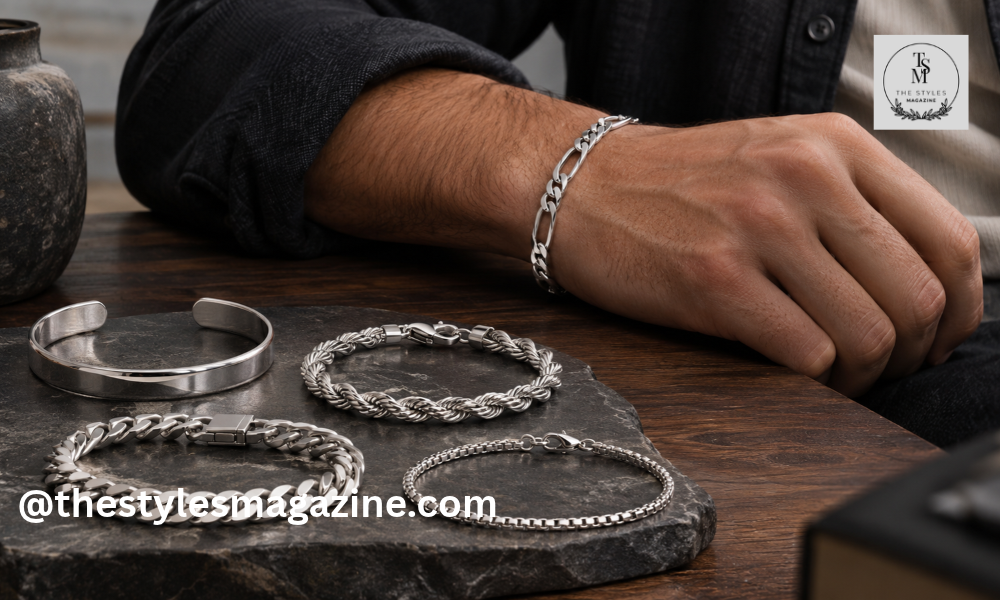
The Cuban link has become one of the most familiar designs in men’s jewelry. Its broad, interlocking links are easy to recognise, and a well-proportioned bracelet can give even a simple outfit a stronger sense of character. Yet it is only one part of a much wider world of men’s silver bracelets. From compact curb chains and woven designs to carved Thai silver and more unusual link patterns, there are plenty of ways to wear silver without choosing the same look.
The difference between these styles is not always obvious in a product photograph. Some bracelets are built around the shape of individual links, others rely on texture or repeated patterns, and a few have a more continuous surface that follows the movement of the wrist. Their weight, flexibility and visual presence can vary considerably, even when two pieces appear to have similar dimensions.
For anyone looking beyond the familiar Cuban chain, understanding these differences makes it easier to find a bracelet that feels personal rather than simply following a trend. The most suitable design is often the one that works with the way you dress, the amount of jewelry you enjoy wearing and the practical details that matter once the bracelet is on your wrist.

The Cuban Link Is a Starting Point, Not the Whole Story
Cuban link bracelets are popular for good reason. Their rounded, closely connected links create a continuous chain with a substantial appearance, and the relatively flat profile allows the bracelet to sit comfortably when the links are properly shaped. Polished silver catches light along the surface, making the design noticeable without requiring gemstones or elaborate decoration.
There is considerable variation within the style itself. A narrow Cuban chain can look restrained and work alongside a watch, while a wider version has a more assertive presence. Link shape also matters: some are flatter and more tightly arranged, while others have a rounded profile that gives the bracelet a softer, heavier look. The clasp can influence the overall impression too, particularly when it is designed to blend into the chain.
The popularity of the Cuban link can sometimes make it seem like the default choice for men’s silver jewelry. But a bracelet does not need broad links to look substantial, nor does it need a highly polished surface to stand out. Other constructions offer different proportions and textures, and some are better suited to men who prefer a less familiar design.
Curb, Figaro and Other Classic Link Designs
Curb bracelets are close relatives of the Cuban link, but their proportions and link profiles can create a noticeably different effect. The links are usually designed to lie flat against one another, producing a compact chain that follows the wrist. Depending on their width and shape, curb bracelets can appear neat and understated or bold enough to serve as the main accessory.
Figaro chains introduce a repeating pattern, often alternating shorter links with a longer one. This small change gives the bracelet a distinct rhythm without making the design overly complicated. It can be a good option for someone who likes traditional chain jewelry but wants something less uniform than a standard curb or Cuban link. In silver, the pattern is visible through the way the longer links catch the light between the smaller sections.
Box-link bracelets take a more geometric approach. Their links form a squarer, more structured chain, which can create a clean appearance that feels different from the rounded outline of a curb bracelet. The shape may appeal to men who prefer defined lines and a more architectural look. As with any chain, the quality of the connections and the way the bracelet bends are important; a geometric pattern should still move naturally rather than feel awkward around the wrist.
Rolo or round-link bracelets use circular or softly rounded links, giving the chain a more open appearance. They can look lighter than a densely connected bracelet, even when the metal dimensions are similar. Their simplicity also makes them relatively easy to combine with other accessories. The design is less about visual weight and more about the repeated shape of the links.
Braided and Woven Bracelets: Texture Instead of Large Links
Not every silver bracelet is built from a sequence of visible chain links. Braided and woven designs use multiple strands or interlaced sections to create a surface with more depth and movement. The result can look intricate without being especially wide, which makes these bracelets appealing to men who want detail but do not necessarily want a large statement piece.
A fine braid often has a close, flexible structure. Its repeated strands create subtle highlights as the bracelet moves, while the overall profile can remain relatively slim. Heavier woven designs have a more pronounced texture and may feel more substantial on the wrist. The visual effect depends on how tightly the strands are arranged, how the ends are finished and whether the pattern is consistent along the full length.
Handcrafted woven bracelets can show small variations that distinguish them from highly uniform machine-made chains. Those variations should not be confused with poor construction. What matters is that the weave remains secure, the strands are properly connected and there are no sharp or loose sections likely to catch on clothing. The ends should also transition neatly into the clasp or fastening.
A braided bracelet can be worn on its own when the texture is distinctive enough, or paired with a simpler chain for a layered look. If both pieces are wide and highly reflective, however, they may compete for attention. A more balanced combination usually places one textured bracelet beside a cleaner, less prominent design.
For men who like the idea of a chain bracelet but find broad links too conspicuous, woven silver offers a useful middle ground. It has visible craftsmanship and a recognisable surface, yet it can sit closer to the wrist and feel less formal than a large polished chain.

Thai Silver and Carved Designs with a More Individual Character
Thai silver bracelets often appeal to buyers who are drawn to detail, texture and a slightly aged appearance. Rather than relying only on the shape of the links, these designs may use carved motifs, patterned surfaces and darkened recesses to create contrast. The raised parts catch the light, while the deeper areas make the decoration easier to see.
This approach gives the bracelet a different character from a smooth, mirror-polished chain. A carved surface can feel more tactile and expressive, particularly when the pattern continues around the links or across a wider section of the bracelet. Some designs have a vintage influence; others use bold motifs that make the piece feel contemporary despite the traditional decorative techniques.
The darker finish found on some Thai silver jewelry is often intentional. Oxidation can be used to emphasise recessed details and give the design depth. It should not automatically be treated as unwanted tarnish. Cleaning such a bracelet too aggressively may remove some of the contrast, so the care routine should take the intended finish into account.
Carved bracelets are best judged by the clarity and consistency of the work. Look closely at the edges of the pattern, the transitions between raised and recessed areas and the way the links connect. A detailed design should still be comfortable against the skin. Deep carving or rough edges can become irritating if the bracelet is worn for long periods.
A vintage-inspired piece can be especially effective with simple clothing. Denim, plain knitwear, dark shirts and neutral colours give the carved surface room to stand out. Since the bracelet already has visual detail, it rarely needs several other statement accessories beside it.Men exploring different designs can browse the men’s sterling silver bracelets collection for a wider range of styles and finishes.
Snake, Byzantine and More Unusual Bracelet Constructions
Some men’s bracelets are recognised less by individual links than by the way the whole chain is assembled. Snake-style bracelets, for example, use closely connected elements to form a smooth, flexible surface. The chain can look almost continuous, with a subtle pattern that becomes more visible as light moves across it. This makes it a good choice for someone who likes a clean silver appearance without the obvious outline of a Cuban or curb link.
Byzantine chains have a more elaborate construction. Their interlocking rings form a dense pattern with a distinctive woven appearance, creating depth from the arrangement of the metal itself. A Byzantine bracelet can look substantial even without being exceptionally wide, although the number of connected elements may make its structure denser than that of a simpler chain. It suits men who appreciate intricate metalwork and want a bracelet with a recognisable pattern.
Other designs use rectangular, square or irregularly shaped links to create a more modern outline. Some combine polished and textured surfaces, while others alternate different link sizes. These variations can make a bracelet feel more individual, but they also make it important to look at how the piece moves. A chain should bend naturally around the wrist, and its edges should not press uncomfortably against the skin.
Choosing the Right Width, Weight and Fit
A bracelet’s style is only part of the decision. Its dimensions determine how it looks on the wrist and whether it remains comfortable through a full day of wear. Width is the measurement across the bracelet, while thickness describes its depth. A broad, flat chain may feel less intrusive than a narrower design with deep, rounded links, so the width shown in a product title does not tell the whole story.
Slim bracelets generally create a quieter effect and can be easier to wear beside a watch or beneath a shirt cuff. Medium-width designs are visible without necessarily dominating an outfit. Wider bracelets make a stronger statement, but they need to suit the wearer’s wrist and clothing. A very broad chain on a smaller wrist may look out of proportion, while a narrow bracelet can appear understated on a larger wrist.
Weight should be considered alongside length and dimensions. A heavier piece may feel reassuring and substantial, but weight alone does not establish quality. It can reflect the amount of silver used, the thickness of the links and the overall construction. A hollow bracelet may weigh less than a solid design with similar external dimensions. Buyers should therefore compare the stated measurements and construction details rather than assuming that the heaviest option is automatically the best.
Fit is just as important. Measure the wrist where the bracelet will sit, keeping the tape or string comfortably against the skin without pulling it tight. The amount of extra length required depends on the design: a rigid bangle, a dense Cuban chain and a flexible woven bracelet do not move in exactly the same way. A close fit should allow natural movement without squeezing, while a relaxed fit should not be so loose that the bracelet slides around constantly.
Before ordering online, check how the listed length is measured and whether it includes the clasp. A sizing guide can help translate wrist circumference into a suitable bracelet length, but the design’s width and structure should also be taken into account. Choosing a bracelet by length alone can lead to an unexpected fit, particularly with heavier styles.
What to Look for in Silver Bracelet Quality
A well-made bracelet should feel coherent from end to end. On a chain design, the links should have consistent proportions and connect securely. They should move smoothly without catching, twisting awkwardly or leaving gaps that interrupt the pattern. On a woven bracelet, the strands should remain in place and the ends should be finished neatly. On a carved design, the surface detail should be clear and intentional rather than rough or uneven.
The clasp is one of the most important functional components. Lobster clasps are common because they are easy to use and provide a secure closure when properly made. Box clasps can be integrated into heavier chains for a more seamless appearance, while some bracelets use a bar or decorative fastening. Whatever the design, the closure should engage properly and its connection points should not look fragile compared with the rest of the bracelet.
Material information also matters. Sterling silver is commonly marked 925, indicating that the alloy contains 92.5% silver. A stamp is a useful indication, but it should be considered alongside a clear product description and the seller’s information about the material. Look for dimensions, weight where available, finish and care instructions. If the product is described as solid, hollow, oxidized or handmade, the description should explain the relevant construction or finish rather than relying on the term as a general quality claim.
Surface finish changes the way silver looks and should be chosen deliberately. High polish gives a bright, reflective appearance; brushed or frosted finishes soften the reflections; oxidized details create darker contrast. None is inherently better than the others. The right choice depends on the design and how much maintenance the owner is comfortable with.

Wearing Different Silver Bracelet Styles
A simple outfit can provide the best setting for a distinctive bracelet. With jeans, a T-shirt or a casual shirt, a Cuban link or a carved design can add structure without requiring much else. A slim curb or Figaro chain is easier to keep understated, while a braided or Byzantine bracelet introduces texture that becomes noticeable at closer range.
For a more polished casual look, consider the relationship between the bracelet and the watch. A narrow chain can sit beside a watch without overwhelming it, while two large metal pieces on the same wrist may feel crowded. If both are worn together, compare their finishes and proportions. They do not need to match exactly, but they should look intentional rather than competing for attention.
A textured bracelet can also work with a plain leather strap or a simple ring. The contrast between silver and leather gives the combination a more relaxed character, while a polished chain beside a silver ring creates a more consistent metallic look. It is usually easier to build a balanced combination around one prominent piece and keep the other accessories quieter.
Sleeves and daily activities should not be overlooked. A wide bracelet may catch on a fitted cuff, and a heavy chain can move more noticeably when typing, lifting or working with the hands. If the bracelet is intended for frequent wear, comfort should take priority over appearance in a product photograph. A design that feels natural is more likely to become part of a regular wardrobe.
Keeping Sterling Silver in Good Condition
Sterling silver can tarnish when it reacts with substances in the surrounding environment. Humidity, perspiration, cosmetics and sulfur-containing materials can all affect how quickly the surface changes. Tarnish is a surface reaction, not rust, and it can usually be managed with suitable cleaning and storage.
For routine care, wipe the bracelet with a soft cloth after wearing it. If it needs more attention, mild soap and lukewarm water can help remove ordinary dirt, provided the piece is rinsed and dried thoroughly. Pay attention to the areas around the clasp and between connected links, where moisture can remain. Avoid abrasive cleaners and harsh chemicals that may scratch the surface or affect decorative finishes.
Polished silver can generally be maintained with a silver polishing cloth. A bracelet with an intentional oxidized finish needs a gentler approach because aggressive polishing may remove the darkened details. If the contrast is part of the design, avoid trying to make every recessed area bright.
When the bracelet is not being worn, keep it dry and store it separately from other jewelry. A pouch or closed jewelry box helps limit exposure to air and reduces the chance of scratches caused by contact with rings, watches or other chains. Removing silver before swimming, showering or using household cleaning products can also reduce unnecessary exposure to chemicals.
Finding a Style Beyond the Familiar
The Cuban link remains a strong choice, but it is far from the only option in men’s silver jewelry. Curb and Figaro chains offer familiar link structures with different rhythms; braided and woven bracelets bring texture; Thai silver introduces carved detail and darker contrast; snake and Byzantine constructions create distinctive surfaces through the way their elements fit together.
For men exploring different constructions, the CUKARI men’s sterling silver bracelets collection brings together a range of chain, woven and more detailed designs. A specific example of a more decorative direction is the vintage Thai silver carved Cuban bracelet, which combines the recognisable structure of a Cuban link with a more textured surface.
Choosing a bracelet beyond the familiar Cuban link is not about finding something unusual for its own sake. It is about discovering which form of silver jewelry feels right to wear. Whether that means a clean geometric chain, a closely woven surface or a carved bracelet with visible character, the best choice is the one that feels considered, comfortable and genuinely suited to the person wearing it.
Does this article help you? Explore our website The Styles Magazine to find more helpful and fun stories that could help you.
