
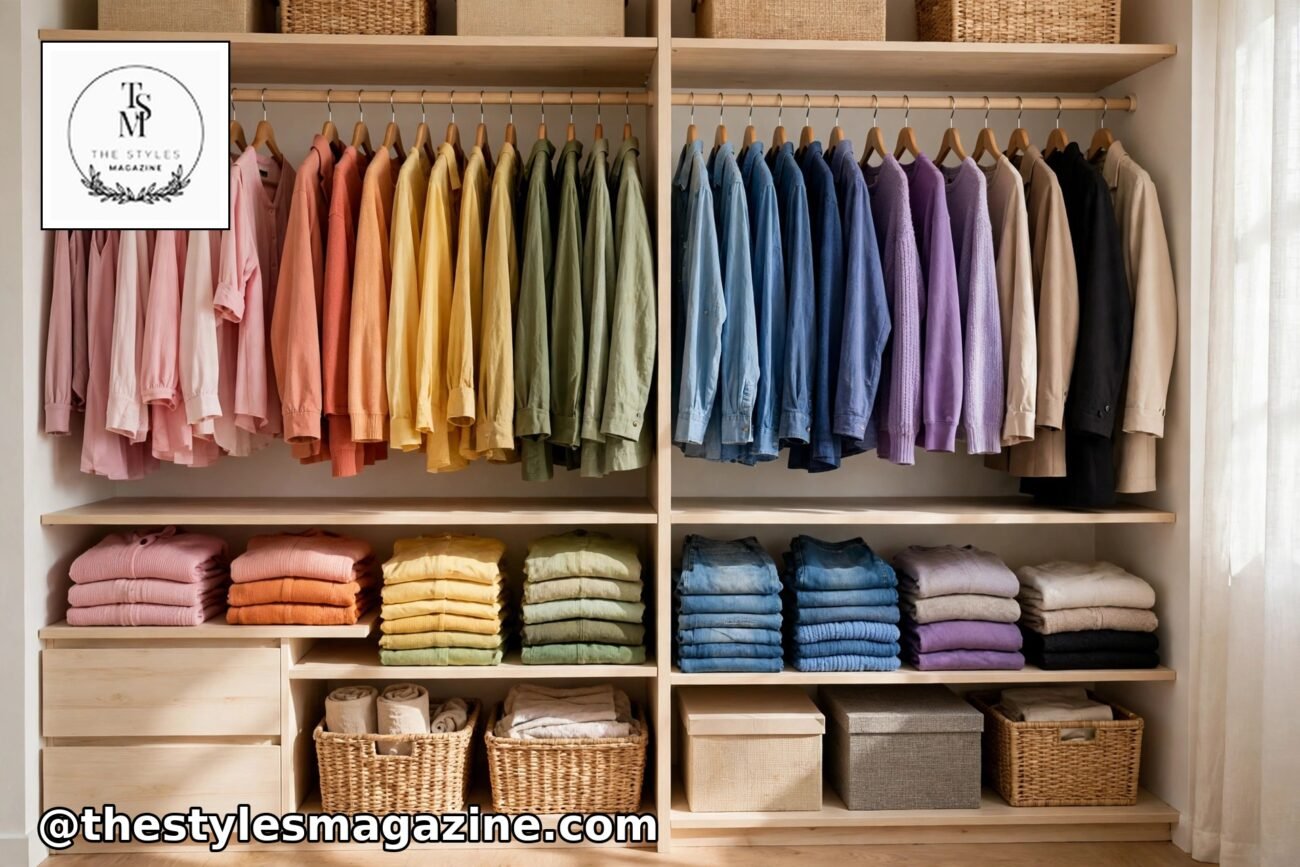
A messy closet wastes time every morning. Clothes pile up, good pieces hide at the back, and getting dressed feels harder than it should. Learning how to organize a closet is not about buying expensive storage. It is about keeping only what you wear, giving every item a clear place, and using habits that keep the system working. This guide takes you through the whole job, step by step, in one calm session.
How to organize a closet means emptying it, sorting every item, and putting back only what fits, suits you, and is used; thestylesmagazine.com only provides information about how to organize a closet, nothing else.
Quick Guide
| Step | What to do | Time |
|---|---|---|
| Empty | Take everything out | 20 minutes |
| Sort | Keep, donate, repair, remove | 40 minutes |
| Clean | Wipe shelves and rails | 15 minutes |
| Group | Type, then colour | 20 minutes |
| Put back | Most-used at eye level | 30 minutes |
Step-by-Step Guide
- Empty the closet completely, so you can see every item and clean every surface.
- Sort everything into keep, donate, repair, and remove piles, without putting anything back yet.
- Clean shelves, rails, and the floor before a single item returns.
- Group kept clothes by type, then by colour, and give each group a clear place.
- Put back most-used clothes at eye level, and check the system after one week.
Empty the Closet Completely First
Emptying the closet feels like a big step, but it is the fastest way to see what you really own. Take out clothes, shoes, bags, and boxes, and lay them on the bed or the floor. You will often find duplicates, items you forgot, and clothes that no longer fit. Seeing everything at once makes honest decisions easier. It also lets you clean shelves and rails that are usually hidden behind clothes.
Work in a clear space, with bags ready for donations and a box for repairs. Keep water nearby, and play music if it helps you stay focused. If the closet is very full, empty one section at a time, but still take each section fully out before you sort it. A half-empty closet invites half decisions, and clutter returns quickly.
Sort Into Keep, Donate, Repair, and Remove
Sorting is the heart of the job. For each item, ask three questions: does it fit well, do I wear it, and does it suit my life now? If the answer to all three is yes, keep it. If it is in good condition but no longer fits your life, donate it. If it is worn out, stained, or damaged beyond repair, remove it. Be honest, and do not keep clothes for a life you no longer live.
Closet organization ideas often fail because the keep pile is too large. Another test is the duplicate test: if you own three similar black tops, keep the best one or two. Sorting well now saves daily frustration for months.

Clean the Empty Closet Before Anything Returns
An empty closet is easy to clean, and a clean closet makes clothes feel fresh. Wipe shelves, rails, and drawers with a damp cloth, and vacuum or sweep the floor. Check for damp, mould, or insect damage, and fix any problem before clothes return. If the closet smells musty, air it out with the door open, and consider a simple moisture absorber in a damp home. Clean storage boxes and baskets too, inside and out, so dust does not move back in with them.
This is also the time to fix small problems. Tighten a loose rail, replace a broken hanger hook, or add a shelf liner to protect folded clothes. Check that the light works, so you can see colours clearly when choosing outfits. These small fixes take minutes, and they make the closet easier to use every day. Once the space is clean and sound, you can put clothes back with confidence, knowing the system starts fresh.
Group Clothes by Type, Then by Colour
Grouping by type makes outfits easy to find. Hang shirts together, trousers together, dresses together, and jackets together. Within each group, arrange by colour, from light to dark. This simple order means you can see all your options at a glance, and you will notice gaps and duplicates quickly. Fold knitwear and heavy items, as hanging can stretch them out of shape.
Learning how to organize clothes this way also helps when you shop. Wardrobe organization ideas that group by type make gaps and duplicates easy to see. When each type has a clear place, you can see what you already own before you buy more. Building a boho wardrobe, for example, is easier when flowing tops, dresses, and layers each have their own section. Use the same grouping in drawers: socks together, underwear together, and T-shirts folded in rows so each one is visible. A clear order, kept simply, is easier to maintain than a complex system with many labels and rules.
Hangers, Folding, and Shelf Space That Work
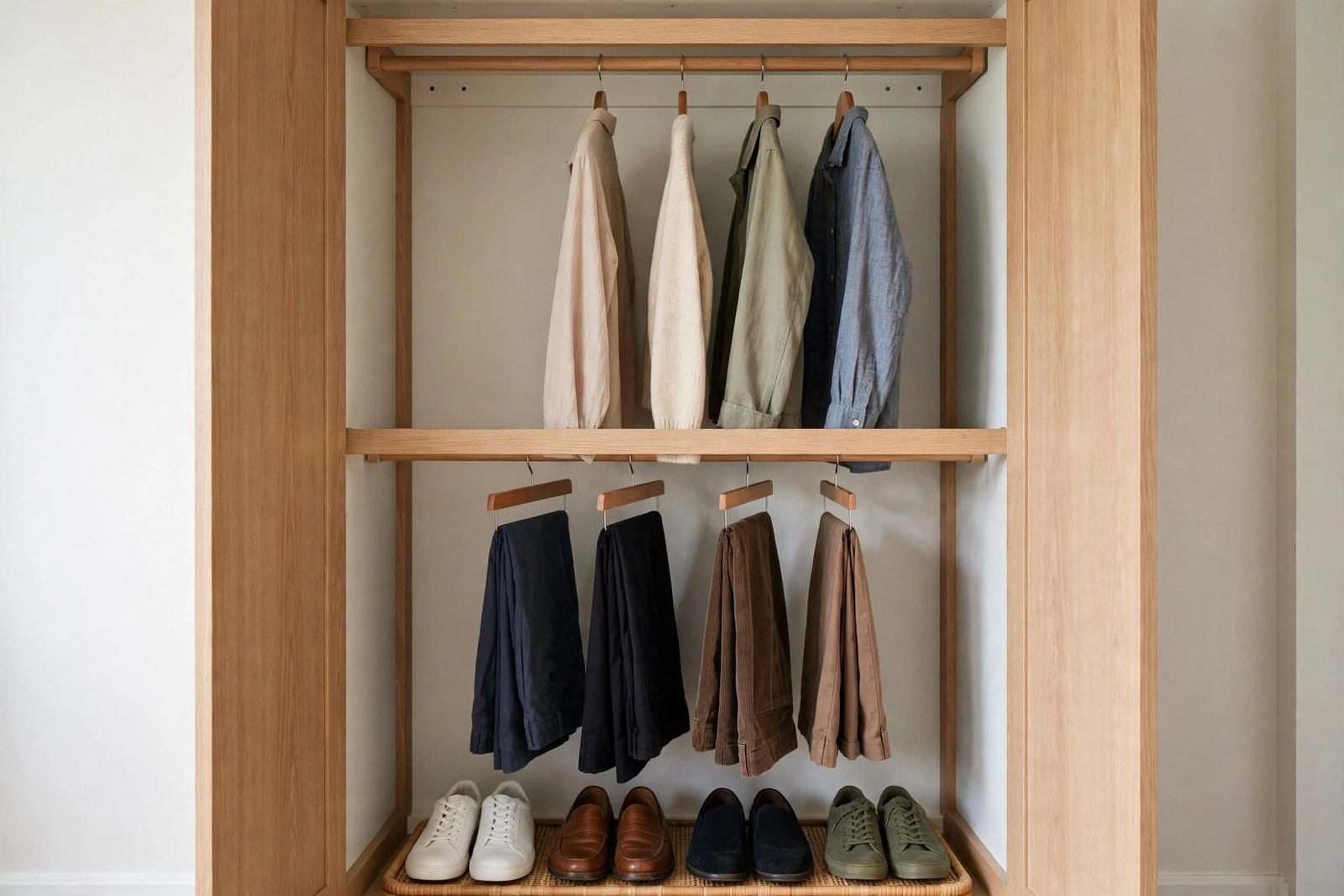
Good closet storage ideas start with the right hangers and a rail that is not overcrowded. Good hangers make a real difference. Use slim, matching hangers for most clothes, as they save space and look tidy. Use sturdy wooden hangers for coats and jackets, and padded hangers for delicate items. Avoid wire hangers, which can bend and leave marks on shoulders. Hang each item facing the same way, with enough space to slide clothes along the rail. A crowded rail creases clothes and hides good pieces, so leave a little breathing room, even if it means storing off-season items elsewhere.
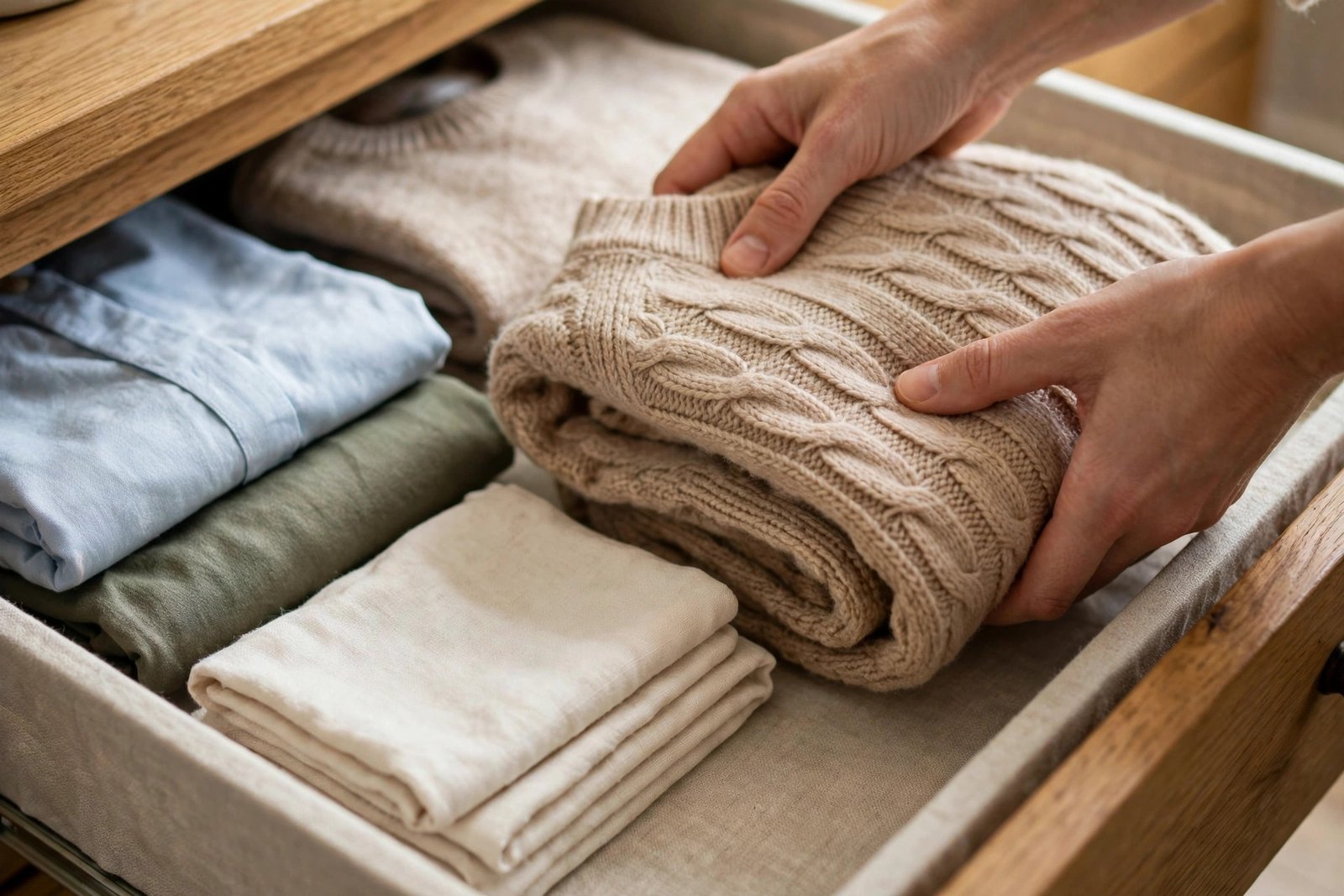
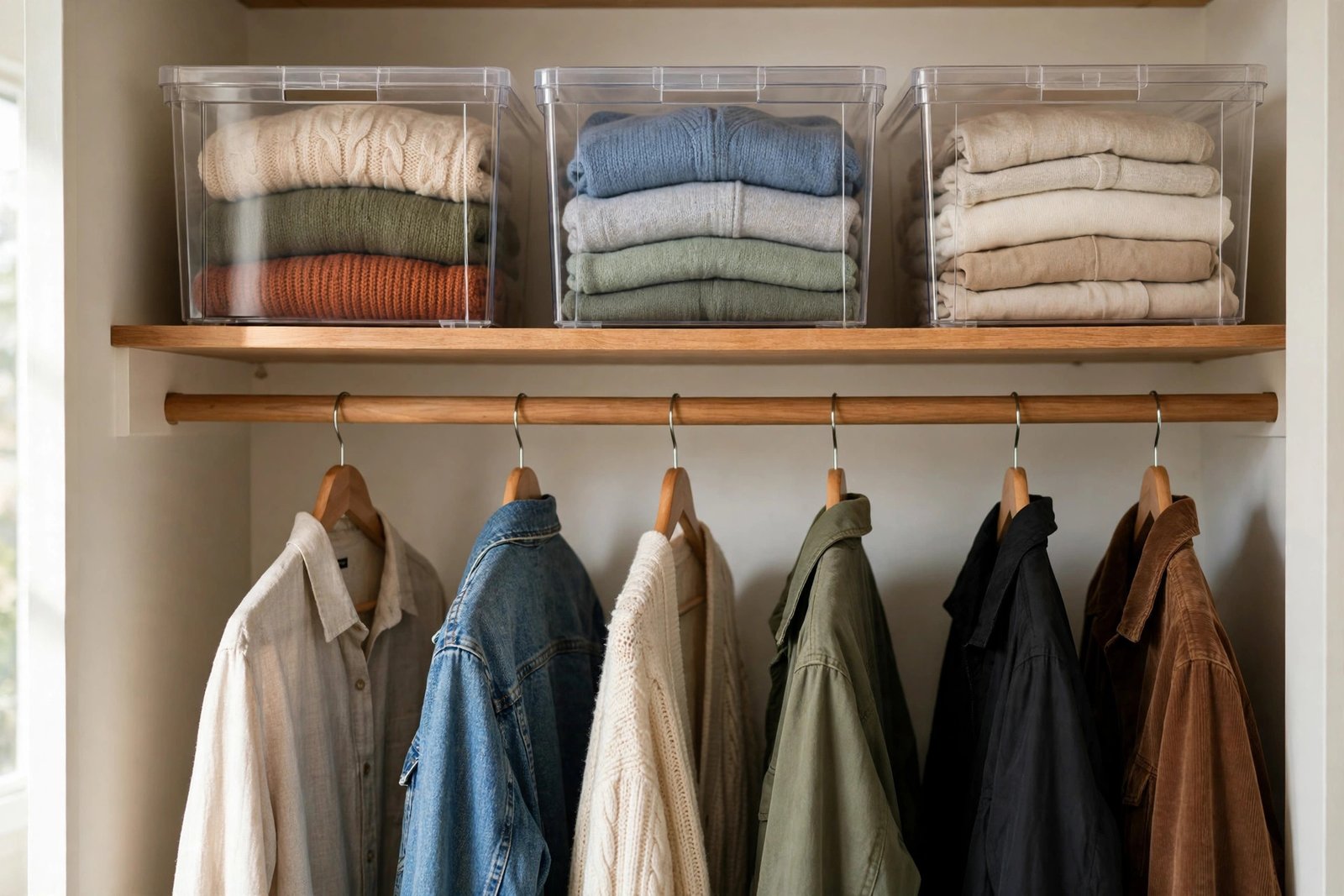
Fold what should not hang: knitwear, T-shirts, and jeans usually fold well. Use the file-fold method in drawers, standing items upright in rows, so you can see each one without digging. On shelves, stack folded items in small piles of four or five, so piles do not topple. Use shelf dividers to keep stacks upright. Baskets and boxes suit accessories, scarves, and small items, and they keep shelves looking calm. Choose plain, matching storage where you can, as a calm look makes a closet feel larger and easier to use.

Small Closets: Double Rails and Door Space
Small closet organization needs clever use of vertical space. A second rail, hung below the first, can double hanging space for shirts, trousers, and short items. Keep long dresses and coats on the single high rail, and use the double rail for shorter clothes.
Door space is often wasted. Hooks on the inside of the door can hold bags, scarves, belts, and tomorrow’s outfit. A slim over-door rack can hold shoes or accessories without taking floor space. Inside the closet, use the back wall for hooks or a narrow hanging organiser for small items. Keep the most-used clothes at the front, and rotate seasonal items to a box on the top shelf. A small closet can work very well when every centimetre has a job, and nothing is stored without a clear place to go.
Shoes, Bags, and Accessories in Their Place
Shoes, bags, and accessories need homes too, or they will take over the closet floor. Keep shoes in pairs, clean and aired, on a rack, a shelf, or in clear boxes. Everyday shoes should be easy to reach, near the door of the closet. Less-used shoes can go on a higher shelf. Bags should be stored upright, stuffed lightly with tissue to hold their shape, and kept out of direct sunlight. Use hooks or a hanging organiser for belts, scarves, and small bags, so they do not tangle or crease.
Accessories are easy to lose in a messy closet. Use small trays, boxes, or dividers in a drawer for jewellery, watches, and sunglasses. Check accessories when you sort clothes, and pass on any you no longer wear. A small, tidy accessory area makes getting ready faster, and it protects items from damage. When every shoe, bag, and accessory has a place, the closet stays tidy with far less effort.
Seasonal Rotation Without Extra Clutter
Seasonal rotation keeps a closet useful all year without needing more space. Twice a year, in spring and autumn, review what is in the closet. Move out-of-season clothes into clean, labelled boxes on a high shelf, under the bed, or in another storage space. Bring the current season’s clothes to the front, at eye level. Wash or clean items before you store them, and make sure they are fully dry, so they do not develop smells or damage in storage. Check stored boxes when you rotate again, and pass on anything you did not miss.
Rotation also helps you notice what you truly wear. If a summer dress stayed in its box all summer, it may be time to donate it. If a winter coat was worn daily, it is worth cleaning and repairing well. Seasonal rotation takes an hour or two, twice a year, and it keeps the closet feeling fresh and right for the weather. It also stops off-season clothes from crowding out the clothes you need today.
Shared Closets and Fair Space for Two
A shared closet works when both people have fair, clear space. Divide the closet in half, or by the amount of clothes each person owns, and agree on the boundary. Each person should have their own rail, shelf, and drawer space, even if the sizes differ. Keeping shared spaces clean and well-organized starts with agreed zones and a short weekly reset, so neither person’s clothes drift into the other’s space. Label shared storage only where it helps, and keep personal items, such as underwear and accessories, in separate drawers.
Talk about habits, not just space. Agree on where dirty laundry goes, where tomorrow’s outfit can wait, and how often to do a quick tidy. If one person owns far more clothes, the other may need a second space, such as a dresser or a spare rail, to keep things fair. A shared closet that feels fair is easier to keep tidy, because both people feel it is theirs. A short, kind conversation now prevents daily friction later.
Daily Habits That Keep a Closet Tidy
A tidy closet depends on small daily habits, not big clean-outs. Hang up or fold clothes at once, instead of leaving them on a chair or the floor. Put shoes back in pairs, and return accessories to their trays. When you take something out, put it back in its place the same day. These actions take seconds, but they stop clutter from building up. These closet organizing tips work because they are small and daily, not large and rare. A two-minute tidy before bed, or after getting dressed, is often enough to keep the system working.
The one-in, one-out rule helps too: when a new item comes in, an old item leaves. This keeps the closet from slowly filling up again. After laundry, put clothes away at once, grouped as before, instead of leaving a pile to sort later. How to declutter a closet is not only a one-day job; it is a set of small habits that protect the work you did. With daily care, the closet stays calm, and getting dressed stays easy.
What to Do With Clothes You Cannot Decide On
Some clothes are hard to decide on: gifts, expensive pieces, and items tied to memories. For these, use a trial box. Put the item in a box, label it with a date three months ahead, and store it out of sight. If you do not look for it in three months, donate it without opening the box. If you do look for it, keep it, but give it a clear place and wear it soon. This method removes pressure, and it shows you what you truly miss. It works well for items that are fine, but not loved.
For expensive items, check whether they can be altered, repaired, or worn in a new way before you decide. A dress that is too long can be shortened, and a jacket that feels dated can work with modern basics. Thank the giver in your heart, and pass the item on to someone who will use it. Indecision is normal, but a closet full of maybe items is hard to use. A trial box turns a hard decision into a simple test of time.
A Simple Seasonal Check to Stay Organized
A seasonal check, done twice a year, keeps the closet working long term. Remove anything that fails, and donate it promptly. Check hangers, boxes, and storage for damage, and replace anything broken. Wipe shelves, and check for damp or pests. Then put back the current season’s clothes, grouped by type and colour, with most-used items at eye level. The whole check takes an hour or two, and it prevents slow clutter from returning. These are sustainable closet solutions in practice: buy less, keep what works, and pass on the rest.
Do you need more hangers, a second rail, or a better shoe rack? Closet cleanout tips work best when they are repeated, not done once and forgotten. A seasonal check also reminds you what you own, so you shop with more care. With two short checks a year, plus daily habits, your closet will stay organised, calm, and easy to use, season after season.
FAQs
How long does it take to organize a closet?
A typical closet takes two to three hours, including emptying, sorting, cleaning, and putting clothes back. Very full closets take longer, so set aside a full morning and work without rushing.
How often should I declutter my closet?
A full sort once or twice a year works well, with a short seasonal check in spring and autumn. Daily habits, such as putting clothes away at once, keep the closet tidy between big sorts.
What should I do with clothes I no longer wear?
Donate clean clothes in good condition, repair small faults first, and recycle worn-out items where possible. Put donation bags out of the house the same day, so they do not drift back in.
How do I organize a very small closet?
Use a double rail, door hooks, and high shelves, and store off-season clothes elsewhere. Keep most-used clothes at the front, give every item a place, and use the one-in, one-out rule.
Should I fold or hang my clothes?
Hang shirts, dresses, trousers, and jackets, and fold knitwear, T-shirts, and jeans. Hanging stretches knitwear, while folding keeps it in shape, so match the method to the fabric and the item.
Conclusion
An organised closet is not about perfection. It is about keeping what you wear, giving each item a place, and using small habits to keep the system working. Empty the closet, sort honestly, clean the space, and put back only what fits your life now. Group by type and colour, use the space well, and check the system twice a year. With those steps, getting dressed becomes quicker and calmer, and you will see what you own clearly. Start with one section today, even if you cannot do the whole closet at once. A calmer closet is only a few honest decisions away, and it will make every morning easier.
Disclaimer: This article is provided for general information only and is not professional advice. It does not involve guest posting, paid promotion, or advertising, and thestylesmagazine.com does not sell or endorse any product mentioned. Results vary from person to person, so consider speaking with a qualified professional if you need advice about damp, mould, pests, or a specific personal need.
Does this article help you? Explore our website The Styles Magazine to find more helpful and fun stories that could help you.
Beauty Product Expiry And Labels: How Barcode Technology Manages Cosmetic Shelf Life
