
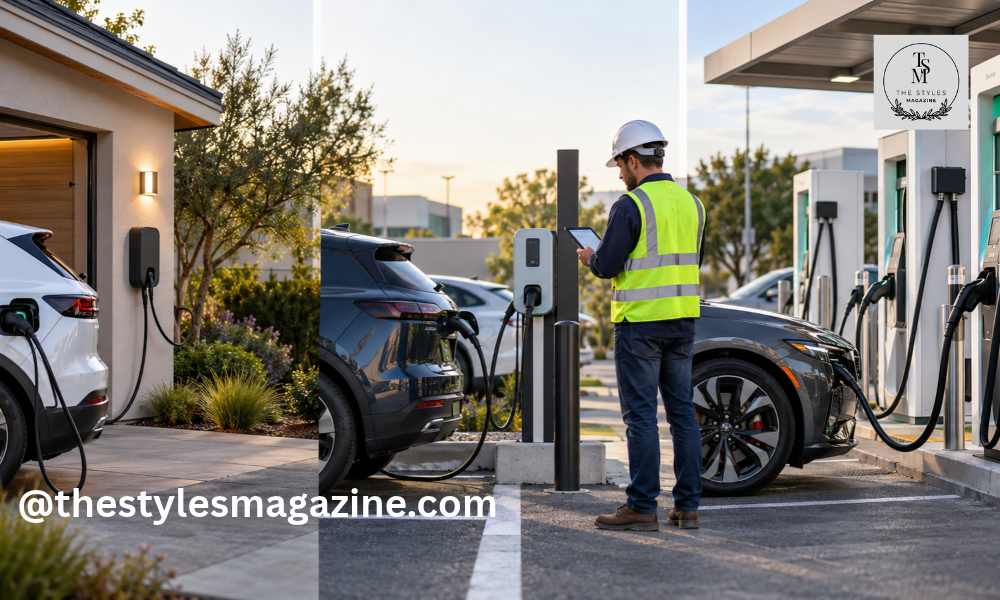
Choose an equipment mix using arrival patterns and dwell time rather than charger count alone. This is a familiar challenge in public charging projects, where decisions made early can restrict operation for years. Future expansion is easily promised and harder to execute beside live equipment. Decisions made at the first installation should preserve room for safe modifications without assuming unlimited spare capacity.
Keep Vehicle Limits in View
Charging power is negotiated between station and vehicle and typically changes during the session. Battery temperature, state of charge and model-specific acceptance limits affect the result. Peak connector ratings should therefore be accompanied by realistic charging curves. Operators can improve trust by publishing clear guidance without promising the same speed to every driver.
Design the Parking Experience
Bay geometry, curb access, connector reach and safe pedestrian routes affect whether people can use the equipment. Accessibility requirements differ by jurisdiction and should be checked before paving work starts. An efficient electrical drawing cannot compensate for a cable that fails to reach a vehicle port. Include commercial vans and unfamiliar drivers in site tests.
During early design reviews, assess the types of EV chargers against the maintenance and operating model the owner can support. AC charging generally suits longer dwell periods; higher-power DC equipment serves shorter visits when the vehicle can accept it.
Monitor Availability Honestly
An online status icon is not necessarily evidence that a driver can start and complete a paid session. Track successful starts, interrupted charging, payment errors and dispenser-level downtime. Service teams need remote diagnostics that lead to a field action. Reporting a precise uptime percentage is meaningful only when the calculation and exclusions are transparent.
Local accessibility rules, payment systems and cable reach deserve attention alongside connector choice.
Consider Queue and Power Sharing
Several occupied connectors may share one power pool. That can improve utilization, but site economics depend on whether the resulting waiting time is acceptable. Use an arrival model rather than averaging all power across all bays. High peak capacity is useful only when the station can allocate it at the moments customers need it.
Design the Customer Route
Fast charging loses value when cable handling, signage or payment problems extend the total stop. Consider bay width, cable reach, wet-weather access and the sequence of starting a session. A dispenser layout should work for drivers who have never visited the site. Include accessibility and emergency egress in the design review.
When checking the types of EV chargers, set performance conditions that can be verified after installation. Choose an equipment mix using arrival patterns and dwell time rather than charger count alone.
Measure Service Quality
Availability, successful session starts, energy delivered and mean time to repair are more meaningful than installed charging power alone. Define how aborted sessions and unavailable connectors are counted. Operators should use logs to distinguish repeated user-interface problems from thermal or electrical faults. An honest baseline supports better maintenance decisions.
For a related product and solution perspective, review material on types of EV chargers alongside the required evidence for service, installation and performance.
Does this article help you? Explore our website The Styles Magazine to find more helpful and fun stories that could help you.
How Lighting Design And Electrical Planning Work Hand In Hand
