Bar Wall Art: How To Build A Lounge-Ready Look With Canvas Art
A bar-style space is less about filling a wall and more about shaping a mood. The right Wall Art can make a compact counter feel like a private lounge, turn a quiet corner into a social hub, and give your setup a polished identity that feels intentional rather than improvised. In this guide, you’ll learn how to choose Canvas, Canvas Art, and Art Print options that suit a bar setting—from scale and placement to lighting and finishes—so your walls feel curated, balanced, and easy to live with.
If you want a fast starting point, browse the curated Bar Wall Art Collection and use the steps below to narrow down what fits your space best.
The Atmosphere First—What Bar-style Wall Art Should Do
In a lounge-inspired room, artwork is a functional design tool. It sets the level of energy, defines the visual “center” of the space, and ties together materials that might otherwise compete—wood, metal, glass, stone, and soft textiles. Whether you choose a bold Painting or a clean Modern Print, begin with the emotion you want to create when someone steps in.
Create A Focal Point That Sparks Conversation
Most bar areas need one confident visual anchor. A single Large Canvas above a console, behind stools, or near a shelving display instantly tells the room what it is. When the focal piece is strong, everything else can relax—lighting, accessories, and tabletop styling—because the wall does the storytelling. Think of the anchor artwork as the opening line of the room: it sets the tone, and the rest of the design follows.
Set The Tone With Modern Decor And Balanced Contrast
Bar spaces look best when they feel layered: warm lighting, a little shine, and a clear contrast between dark and light. Modern Art works especially well here because it can feel refined without looking formal. Aim for contrast that’s deliberate—deep backgrounds with lighter shapes, or light backgrounds with crisp lines—so the Wall Decor stays readable under evening lighting.
- Moody and intimate: darker palettes, minimal shapes, confident contrast.
- Bright and social: lighter backgrounds, energetic forms, graphic details.
- Classic lounge: balanced neutrals, strong silhouettes, timeless compositions.
Choosing A Style That Matches Your Setup
Before you pick a theme, look at the elements you’re not changing today: cabinetry, countertop material, wall color, and the finish of hardware and lighting. Your Wall Art should connect these pieces, not compete with them. A simple way to decide is to choose one “dominant” feature—perhaps the countertop, a shelf display, or a statement light—and select an Art Canvas that complements it through shape, contrast, or tone.
Modern Art Vs. Classic Graphic Looks (And When Each Works Best)
Modern Canvas styles shine in spaces with clean lines—floating shelves, streamlined pendants, and uncluttered surfaces. If your bar has a more vintage feel (brass accents, darker wood, or retro seating), a classic graphic direction can be a better match: bold outlines, simplified forms, and a confident, poster-like presence. Either approach can work; the key is consistency. Choose one visual language and repeat it across your art and accessories so the room reads as one idea.
When An Art Print Is Enough—And When A Statement Painting Makes Sense
An Art Print is often ideal when you want a crisp image that supports the room without dominating it. A statement Canvas Art becomes the better choice when the wall needs structure—especially behind seating, above a long counter, or on a feature wall where the space needs a clear “center.” If your setup still feels unfinished after you add lighting and tabletop styling, it’s often a scale issue. One larger Canvas can solve it faster than several small pieces scattered across the wall.
Size And Placement—Get The Scale Right
Scale is what makes a bar wall feel intentional. If the art is too small, the room looks fragmented; if it’s too big, the space can feel crowded. The goal is proportion: Wall Art that relates to the furniture beneath it and leaves comfortable breathing room around it. This applies whether you’re styling a dedicated home bar, a kitchen-adjacent nook, a dining space used for hosting, a living room lounge corner, or an entertainment area.
One Large Canvas As The Anchor
As a practical rule, choose artwork that spans roughly two-thirds to three-quarters of the width of the furniture under it (a cabinet, sideboard, or shelf). Hang the piece so its center sits around eye level when you’re standing, then adjust slightly if the primary viewing position is seated. This approach works well above a counter area, behind a console, or on a feature wall near your main gathering spot.
A Gallery-Style Mix Of Canvas Art (keeping Spacing Consistent)
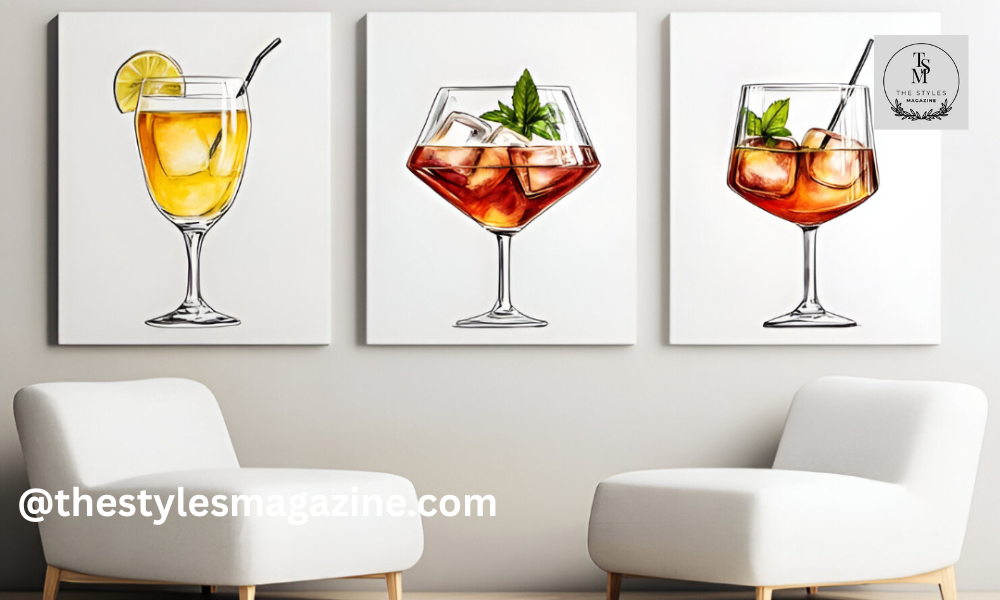
If you prefer multiple pieces, treat them like one unit. Keep consistent spacing between frames and align the overall group to the furniture below. A tight grid can feel modern and structured; a looser arrangement feels relaxed. Either way, map the layout on the floor first, then transfer measurements to the wall for cleaner alignment. When spacing is even, the wall looks curated—even if the images vary.
- Measure the wall and the furniture beneath it.
- Choose a layout shape (grid, row, or clustered group).
- Mock it up with paper templates before hanging.
- Keep spacing consistent to maintain a polished look.
Color, lighting, And finish
Lighting is the secret factor in lounge-style rooms. Warm bulbs and dimmers create a welcoming atmosphere, but they can flatten subtle colors. Your Wall Print or Canvas Art should stay clear and expressive even when the room is at its coziest. Plan for two viewing modes: daytime (brighter, more neutral) and evening (lower light, higher need for contrast).
Coordinating With Your Palette Without Matching Too Literally
Instead of matching your wall color exactly, echo undertones. If your bar has warm woods, choose art with warm neutrals or earthy accents. If your finishes are cooler (steel, concrete, gray stone), lean into crisp neutrals and cooler contrasts. You can also “bridge” two materials—like wood and metal—by choosing a Modern Print that contains both warm and cool notes in a balanced way.
Gloss Vs. Matte Impressions—What Reads Best Under Warm Lighting
In a bar space, reflections can be either a feature or a distraction. If you have directional lighting, shiny shelving, or a mirror nearby, choose imagery that still reads well under highlights: clear shapes, strong edges, and confident contrast. If you want a softer look, pick art that relies on silhouette and composition rather than delicate gradients. The goal is legibility in the evening, when the space is most likely to be used.
Framed Canvas And Multi-Panel Options
The format you choose affects the vibe. A single statement piece feels bold and decisive, while a multi-piece layout can add rhythm and movement. Decide what your wall needs most: calm structure or lively energy.
When Framed Canvas Looks More Refined
Framed Canvas can elevate a bar corner intended to feel polished. The frame creates a clean boundary that pairs well with metal accents, glassware displays, and structured shelving. If your room leans minimal, a framed option helps the art feel architectural—like it was planned into the space rather than added after the fact.
When Wall Panels Create Extra Impact
Wall Panels (multi-panel arrangements) can visually widen a space, which is helpful when your bar area is narrow or you’re working with a longer wall. They also create a sense of motion that feels lively—ideal for an entertainment room or a lounge setup where the wall should feel dynamic.
Building A Cohesive Set (Without Repetition)
A bar wall looks best when it feels curated, not copied-and-pasted. Think in roles: one hero piece, then a few supporting elements that reinforce the theme without repeating the same visual idea at the same intensity. Cohesion comes from repeating one or two cues—palette, line style, or subject—while varying size and composition to keep it interesting.
Choose 1 Hero Piece, Then Support It With Simpler Accents
Start with the boldest artwork you can commit to. Then choose secondary pieces that are quieter: fewer colors, simpler shapes, or more negative space. This keeps your Wall Decor from feeling noisy, especially in smaller rooms where every detail matters. A strong hero piece also makes styling easier, because it gives you a clear reference for choosing accessories.
Use Theme Consistency: Typography, Botanicals, Abstract Shapes, Or Travel-inspired Forms
Pick one theme and let it guide your choices. For a sleek lounge feel, explore geometric and minimal compositions in the Abstract Art Print Collection. For a more playful, conversation-starting wall, mix in culture-forward imagery from the Pop Culture Wall Art Collection. If your bar setup leans fresh and airy with greenery and natural textures, browse nature-inspired options in the Nature Wall Art Collection.
- Hero: one bold Canvas Art piece that defines the mood.
- Support: one or two quieter Art Print choices that echo colors or shapes.
- Finish: one small styling detail (mirror, sconce, shelf display) that ties the wall together.
Practical tips before you hang anything
A well-hung piece feels effortless, but the result comes from simple planning. Treat your wall like a mini project: measure, mock up, then install once. This reduces unnecessary holes and keeps the final layout crisp.
Measuring, Alignment, And Keeping Lines Clean
Use painter’s tape to mark the outer edges of your artwork on the wall, then step back and view it from the main seating area. Check alignment with nearby elements such as shelving and lighting. If your bar is near a kitchen zone, position art slightly higher to keep it clear of busy sightlines. In a hallway leading into the hosting area, keep a consistent center line so the wall looks intentional as people walk through.
Easy Care Tips To Keep Your Wall Decor Looking Crisp
Dust occasionally with a soft, dry cloth. Keep artwork away from direct heat sources and avoid placing pieces where frequent contact is likely (tight walkways or behind frequently moved seating). In high-traffic entertainment spaces, one larger Canvas can be more forgiving than multiple small pieces—there are fewer edges and alignments to visually “catch” clutter.
Faqs Readers Ask Before Buying Bar-style Canvas
1) What Size Works Best For A Statement Piece?
Choose a Large Canvas when the wall needs structure—especially above a console or behind seating. Larger pieces are easier to read under low light.
2) How Do I Keep My Wall From Feeling Too Busy?
Use one hero piece, then add only one or two supporting pieces with simpler shapes or fewer colors.
3) Should My Wall Art Match My Cabinetry?
Match undertones rather than exact colors. Echo warmth or coolness so the space feels cohesive without looking overly coordinated.
4) What Is The Easiest Layout To Install?
A single centered piece is the simplest. For multiples, a straight row with consistent spacing is an easy, polished approach.
5) How High Should I Hang Canvas Art Above Furniture?
Place the artwork so it feels connected to the furniture without crowding it. Eye-level center placement is a reliable starting point.
6) How Do I Choose Art For Evening Lighting?
Prioritize contrast and clear shapes. Designs that rely on subtle tonal shifts can disappear in lower light.
7) Are Wall Panels Better For Long Walls?
They can be. Wall Panels visually stretch a wall and add movement to the space.
8) What If My Bar Is Part Of An Open-plan Room?
Choose art that relates to nearby decor cues (palette or line style) so the bar area feels connected while still having its own identity.
9) Can I Mix Modern Art With Classic Decor?
Yes. Keep one element consistent—palette, line style, or subject—so the mix looks intentional.
10) How Many Pieces Should I Use On One Wall?
Start with one. If the wall still feels empty, add two supporting pieces, then reassess before adding more.
11) Should I Choose A Framed Option?
Framed Canvas often looks more refined and structured, especially alongside metal finishes and clean shelf lines.
12) What Is The Best Approach For A Small Bar Nook?
Go larger than you expect. One confident piece can make a small nook feel purposeful and complete.
13) How Do I Coordinate Art With Lighting Fixtures?
Align shapes and finishes. Clean-lined lighting pairs well with modern compositions; warmer fixtures complement warm neutrals and softer curves.
14) What Is A Safe Theme If I Am Unsure?
Abstract compositions are highly flexible. They adapt to many palettes and keep the space feeling current.
15) Where Can I Place Bar-style Wall Decor Beyond The Main Counter Area?
Try a dining space used for hosting, a lounge corner, an entertainment room, a hallway that leads into the gathering area, or a kitchen-adjacent nook where guests naturally pause and chat.
Final Takeaway And The Next Step
A lounge-ready bar wall is built on three decisions: scale, contrast, and cohesion. Choose one hero Canvas that defines the mood, place it where people naturally look, then support it with a few quieter pieces that repeat the palette. If you want a story-driven direction that feels curated, explore the Traveling Around Wall Art Collection, then refine your final picks with the sizing and placement tips above.
Thank you for exploring our Blog! For additional captivating content, feel free to explore the corresponding category.
