
Introduction
Tropical leaf wallpaper is one of the quickest ways to change how a room feels. A wall of bold palms or banana leaves brings the outdoors in, adds colour without painting, and turns a plain space into somewhere with character. Tropical leaf wallpaper is a decorative wall covering printed with large-scale palm, monstera, or banana leaf patterns, used on accent walls and beyond to add energy, colour, and a natural feel to a room. This guide explains where it works best, how to choose between peel-and-stick and traditional paper, and how to style it so the room feels curated rather than themed.
Quick Guide
| Choice | Best for | Watch out for |
|---|---|---|
| Large-scale palms | Bright living rooms, bold statements | Can overwhelm small, dark rooms |
| Small leaf repeats | Bedrooms, hallways, compact spaces | Can look busy if the room is cluttered |
| Peel-and-stick | Renters, weekend projects, quick changes | Needs a smooth, sound painted wall |
| Traditional pasted | Tricky surfaces, busy rooms, long-term installs | Needs more prep and more time |
| Matte finish | Modern looks, hiding reflections | Shows marks more easily than sheen |
| Linen texture | Softening bold art, adding depth | Costs more than plain paper |
Step-by-Step Guide
- Test a sample first. Tape it up and watch it from morning to night to see how the colour shifts with the light.
- Measure carefully. Measure each wall, note doors and windows, and order a little extra for pattern matching and mistakes.
- Prep the wall. Clean off dust, fill bumps, and let fresh paint cure fully before you start.
- Mark a level line. A straight first strip sets the whole wall; work slowly and step back often.
- Hang one strip at a time. Match the pattern at the seams, smooth from the centre outward, and trim at the top and bottom.
- De-bubble gently. Use a plastic smoothing card; lift and reset a strip if it will not lie flat.
- Finish and clean. Wrap edges neatly, wipe with a soft cloth and mild soap, and keep spare pieces for future repairs.
Why Tropical Prints Work So Well
Green is a restful colour, so big leafy motifs calm a space while keeping it cheerful. Large-scale palms or monstera feel dramatic in bright living rooms, while smaller repeats look tidy in compact bedrooms or hallways. Natural textures — rattan, jute, wood — suit this look well, echoing the jungle feel without making the room feel busy. If your home follows biophilic design, the idea of bringing nature indoors, these patterns support it directly: more leaves, more light, more comfort.
Light matters as much as the print. North-facing rooms often need warmer greens and soft neutrals, because cool daylight dulls green tones. Sun-filled spaces can handle deep emerald, teal, or charcoal backgrounds. If you are unsure, sample testing is not optional — tape up a large piece and watch it from morning to night. You will see how the colour shifts with daylight and lamps, and you will know before you buy whether the shade works in your room.
Scale is the other big decision. A large motif makes a small room feel designed rather than cramped, as long as the furniture stays simple. A small repeat is safer in rooms with a lot going on, because it reads as texture rather than as a picture. As a rule, the bolder your art and furniture, the quieter your leaf should be — and the plainer your furniture, the bolder your leaf can be.
Not Just For One Feature Wall
Accent walls are the obvious choice, but tropical leaf wallpaper has more uses. Wrap a reading nook to build a cosy corner. Line the back of bookshelves for a boutique feel. Frame a bed with a leafy headboard wall and keep the other walls simple. In open-plan spaces, a tropical section can mark zones — dining here, lounge there — without extra partitions.
The trick is restraint. One strong leafy surface with calm neighbours looks intentional. Every wall covered in the same bold print can feel like a theme park rather than a home. If you want more than one wall, use the bold pattern on one and a quieter version — a smaller repeat or a softer colour — on the others.
Great Spots For Tropical Leaves
Living room: behind the sofa or around a media unit. Add linen curtains and a sisal rug for balance, and keep the biggest furniture in solid colours so the wall does the talking.
Bedroom: the headboard wall in a calmer palette, paired with cotton bedding and warm wood. A bold print behind the bed can make mornings feel brighter without making sleep harder.
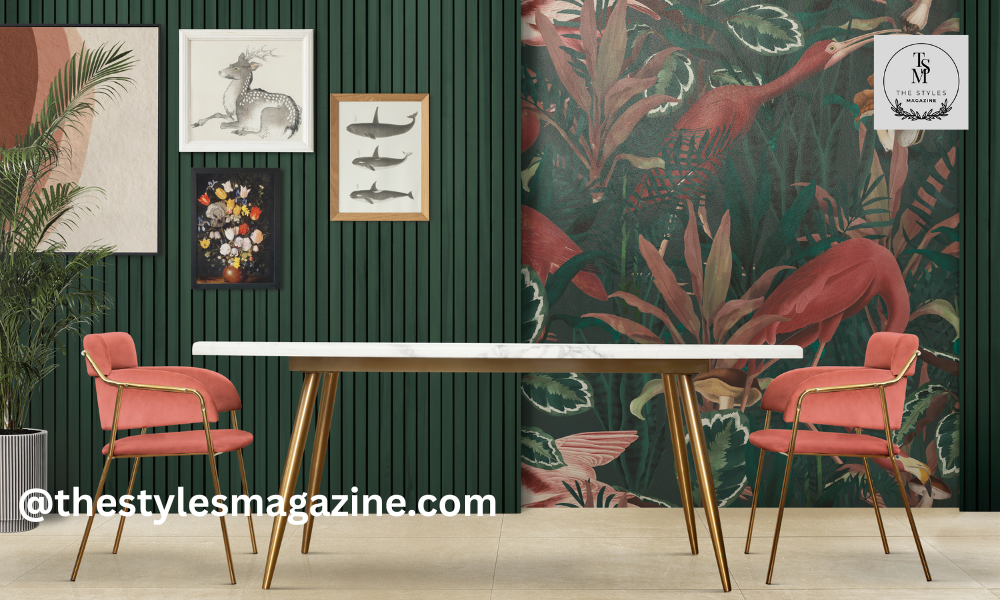
Dining area: a full wall behind the table, with brass or black accents for polish. A leafy wall makes a dining room feel like a place, not a pass-through.
Entry or hallway: a bold print makes a strong first impression in a small footprint, and hallways are the easiest rooms to change if you tire of the look.
Powder room: a dramatic pattern plus a simple mirror. Good ventilation keeps it fresh, and small rooms suit bold choices because you see the whole pattern at once.
Home office: a neat repeat behind your desk creates a clean, video-friendly backdrop that looks considered on camera.
Peel-And-Stick Or Traditional?
Peel-and-stick panels make weekend projects realistic. You line up the first strip, smooth it down, and keep going — no paste, no mess. This route also suits renters, because removal is simpler on sound, properly painted walls. If you make a mistake, you can lift a strip and reposition it, which is forgiving for first-time paperhangers.
Traditional pasted wallpaper still has its place. Use it on tricky surfaces, in busy commercial areas, and where you want the longest-lasting result. It needs more preparation and more time, and mistakes are harder to undo, but the finish is durable and the range of papers is wider.
Think about finish as well. A matte surface hides reflections and looks modern. A linen texture softens bold artwork and adds depth, giving a fabric-like feel. Many removable films are wipeable, so you can spot-clean with a damp cloth and mild soap. Avoid harsh cleaners or abrasive pads; they can dull the print.
Where Moisture And Heat Live
Kitchens and bathrooms need a bit of caution. Keep panels away from direct steam, heavy splashes, and cooktop heat. A breakfast nook, a pantry wall, or the side of an island is safer than a backsplash. In bathrooms, a powder room is a great candidate thanks to shorter showers and quicker ventilation. Always test a sample to confirm good adhesion on your paint and to see how humidity affects the edges.
Heat is the other enemy. Wallpaper near radiators, fires, or ovens can dry out, lift, or discolour, so keep leafy paper on walls that stay at normal room temperature.
How To Style The Look
Start with the pattern, then edit your palette. Pull two lead colours from the design — say, deep green and sandy beige — and repeat them in pillows, art, and lampshades. Mix textures: smooth ceramics, woven baskets, raw wood. This layering keeps the space from feeling flat. If your art is colourful, choose a quieter leaf motif; if your art is minimal, go bigger and bolder.
Furniture should be simple. A leafy wall already supplies the pattern, so plain, solid-coloured sofas, beds, and tables let it shine. Wood warms the look, and a few plants complete the feeling. If you care for your wooden furniture properly, its warm tones will sit beautifully beside green leaves — and a statement seat like a chaise lounge can turn a leafy corner into the room’s favourite spot. For more on the nature-first thinking behind this style, see our guide to bringing the outdoors in with biophilic design ideas.
Measuring, Ordering, And Budget
Measure twice and order once — but order generously. Measure the height and width of each wall, add a little at the top and bottom for trimming, and account for the pattern repeat, because matching a large leaf across strips uses more paper than a straight drop. Ordering a little extra for pattern matching and mistakes is standard practice, and a spare roll kept in a cupboard will save you if a strip is ever damaged.
Cost depends on the paper, the size of the job, and whether you hire help. Peel-and-stick suits do-it-yourself budgets; pasted paper and professional hanging cost more but last longer. The most expensive mistake is ordering too little and finding the batch has sold out, so measure carefully and buy the extra roll.
Common Mistakes to Avoid
The most common mistake is skipping the sample. A print that looks perfect online can be too dark, too big, or too green in your room. Always test in place first.
The second is a crooked first strip. Everything follows from it, so take the time to mark a level line and hang it slowly. The third is papering over a bad wall: bumps, dust, and uncured paint will show through and lift the edges. The fourth is choosing a scale that fights the room — a huge print in a cluttered room, or a tiny print that disappears on a big wall. And the fifth is forgetting the rest of the room: a leafy wall needs calm furniture and a limited palette, or the space feels noisy rather than fresh.
Conclusion
Tropical leaves do more than shout “vacation.” They zone open layouts, lift the mood, and make small rooms feel curated. Use a bold accent wall if you want impact in one step, or sprinkle the motif across shelves, alcoves, or a headboard wall for a layered, lived-in feel. With the right scale, a tight colour plan, and a little preparation, your space will look fresh all year — no watering required. And if the bar area is joining the refresh, ideas for bar wall art pair well with a leafy backdrop.
Frequently Asked Questions
Does tropical leaf wallpaper suit small rooms?
Yes, if you choose the right scale. A large motif on one wall can make a small room feel designed, while a small repeat works as texture. Keep the furniture simple so the wall can stand out.
Is peel-and-stick wallpaper safe for renters?
Usually, yes, on sound, properly painted walls. It removes more cleanly than pasted paper. Always test a small piece first and check your rental agreement before covering a whole wall.
Can I use tropical wallpaper in a bathroom?
Yes, in a well-ventilated powder room. Avoid full bathrooms with long hot showers and heavy steam, and keep the paper away from direct splashes and heat sources.
How much extra wallpaper should I order?
Order a little extra beyond your measured area to cover pattern matching, trimming, and mistakes. Keeping a spare roll also helps if a strip is ever damaged later.
What colours go with tropical leaf wallpaper?
Pull two colours from the print, such as deep green and sandy beige, and repeat them in soft furnishings. Natural textures like rattan, jute, and wood complete the look without competing with it.
Disclaimer: This article is for general information only and is not professional advice. Product and brand names appear for information only and do not imply endorsement. Please do your own research and, where needed, consult a qualified professional before making a decision. The Styles Magazine does not accept guest posts, paid promotions, or advertising in its articles.
