
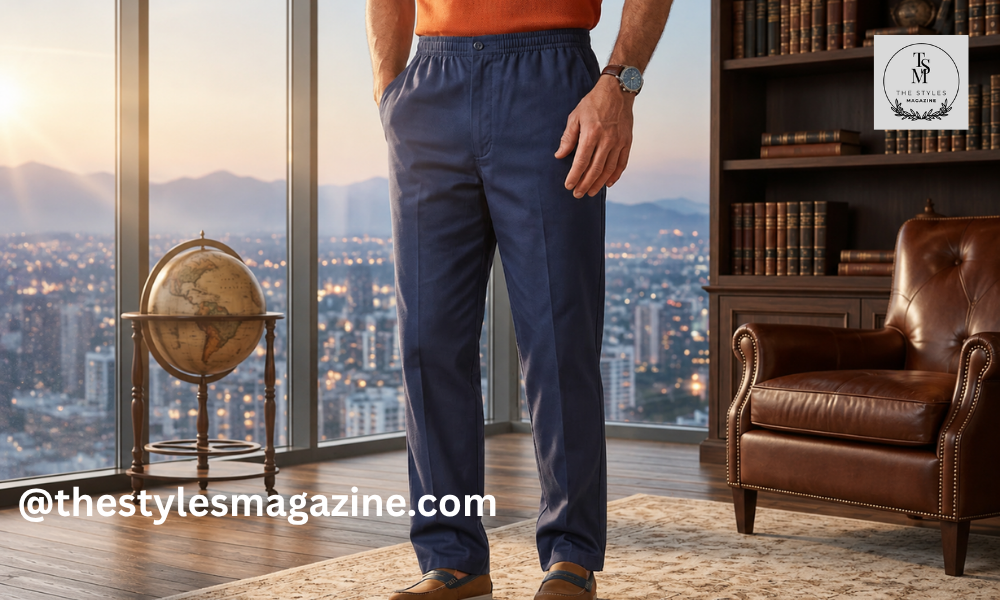
Nobody tells you that finding a good pair of trousers gets harder as you get older. Everything fits in your twenties – more or less – and you don’t think much about waistbands or leg length or whether the fabric creases after twenty minutes of sitting down. But at some point, you start noticing that the pair you grabbed off a rail in a rush feels wrong, and you don’t know why.
The truth is that most men don’t give trousers the same thought they give things like jackets, but they should. They’re the thing you’re sitting in for eight hours. They’re the first thing that makes an outfit look either pulled together or slightly chaotic. And unlike a shirt, you can’t just shrug one off if you’re uncomfortable at half three in the afternoon.
Fit Matters More Than Brand
There’s a reason that a £35 pair of well-fitted chinos can look far better than an expensive pair of badly cut trousers from some brand with a good reputation. Fit is doing most of the work, always. Specifically, the rise (that’s the distance between the waistband and the crotch seam, if you’ve never heard the term) has an enormous effect on how comfortable and how smart a pair of trousers feels. A low rise can look modern on some builds, but on others it just means you’re constantly tugging them up, which gets old fast.
Regular and relaxed fits have made a proper comeback, partly because fashion said so, but mostly because people remembered they were more comfortable. Slim cuts are still absolutely fine, but if you’re spending most of your day on your feet or shifting between a desk and a car and a sofa, the slim cut you loved at 32 might feel like a punishment by the end of a long day at 52.
The Fabric Question Nobody Talks About Enough
Cotton, polyester blends, wool, stretch fabrics, jersey, chino twill. There’s a lot to get through and most labels don’t make it particularly easy to understand what you’re actually buying. Cotton breathes well but creases badly. Polyester blends crease less but can feel warm in summer or oddly synthetic against your skin. Wool trousers are genuinely underrated for everyday wear, not just office wear, and they tend to hold their shape across a long day better than most cotton options.
Stretch fabrics are worth considering if you’ve been avoiding them because they sound a bit like activewear. The good ones don’t look stretchy at all, they just move with you, which is the whole point. If you spend any time driving, gardening, or doing anything remotely physical, a little elastane in the mix is not a compromise. It’s just practical.
What to Actually Look For
The waistband is worth paying attention to, especially if your weight fluctuates a bit or you’ve had a big lunch (which is a real consideration, let’s be honest). Elasticated waistbands used to mean you were giving up entirely, but the designs have got a lot better. There are options now with part-elastic backs and flat fronts that look completely conventional from the outside. If you’re shopping for trousers for men who want both comfort and something that looks neat, that’s genuinely worth searching out rather than dismissing.
Leg length is the other thing that trips people up. A lot of retailers only offer short, regular, and long, which sounds like enough until you’re between sizes and nothing quite breaks at the right point over your shoe. If you find a brand that offers more granular sizing, or who hems as standard, hold onto them.
What To Know Before You Buy
Dark navy or charcoal trousers can be more versatile than black; black works with black, but navy goes with grey, olive, cream, and brown. It’s just a more forgiving base colour for building around.
And honestly, buying one good pair and actually wearing them is better than buying three cheap pairs and rotating through trousers that never quite worked. It sounds obvious but most people still do the latter, spending the same amount of money overall and ending up with a drawer full of trousers they’re vaguely disappointed by. The fit, the fabric, and whether the waistband survives pasta are the three things that actually determine whether you’ll reach for them again. Everything else is secondary.
Does this article help you? Explore our website The Styles Magazine to find more helpful and fun stories that could help you.
