Bulk hair extensions don’t come up much in mainstream beauty content. Most articles focus on methods with retail packaging – clip-ins, keratin bonds in a box. Bulk hair sits behind the scenes in a lot of salons, but it has practical uses for regular buyers too, and the quality question is just as important here as with any other extension type.
Here’s what bulk hair actually is, who it’s for, and what to look for when you buy it.
What Is Bulk Hair?
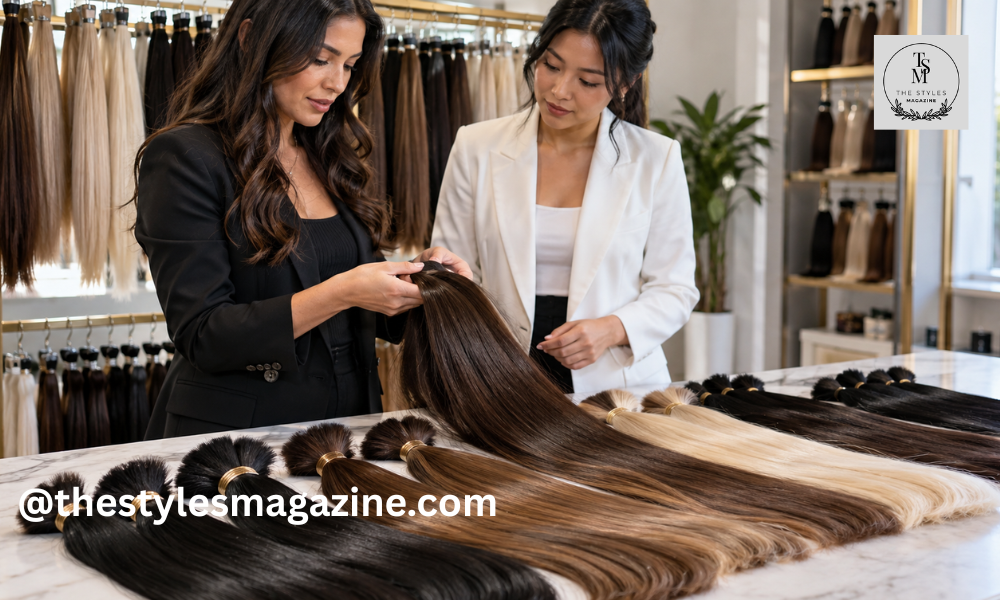
Bulk hair is simply hair that’s sold loose, without any attachment method applied. There’s no weft, no clips, no pre-applied keratin tips. It’s the raw hair material that a stylist or manufacturer then uses to create finished extension products.
It typically comes in bundles (measured in grams) and is sold by length and color. You might see it described as “braiding hair” for loose braid or knotting techniques, or as raw hair material for stylists who prefer to tip or weft it themselves.
Who Uses Bulk Hair Extensions?
Three main groups buy bulk hair:
Stylists who do their own tipping: Some stylists prefer to buy bulk hair and apply their own keratin tips, which lets them control the tip size, weight, and bond quality. It also means they can offer more customized color options without being limited to what comes pre-tipped.
Clients who want custom installs: Some clients work with a stylist to create a completely custom set – specific length, specific color blend, specific amount. Buying bulk hair directly and bringing it to your stylist is how a lot of clients get factory pricing rather than salon product markup.
Braiders and wig makers: Bulk hair is a standard material for hand-tied wigs, braiding, and other techniques where loose hair is the starting point.
Hair By Russians has been supplying bulk hair sourced from Eastern Europe since 2011. The factory model means the hair goes from donor to quality selection to packaging without passing through a distributor chain, which keeps both quality and pricing more consistent than reseller models.
What Makes European Bulk Hair Different
Bulk hair is sold from a lot of different sources, and the origin matters. The main distinction is between Asian-sourced hair (which is typically processed to change the texture, color, or structure) and European-sourced hair (which starts with a naturally finer, softer structure).
South Russian and Eastern European hair is specifically known for:
A naturally fine strand diameter that blends easily with the hair types common in North America and Europe
A natural wave or slight body that doesn’t require heavy chemical processing to achieve
Intact cuticles that run in a single direction, reducing tangling
Color variation that reflects how natural hair actually grows, rather than the flat uniformity of over-processed hair
None of this means European bulk hair is always better for every use case. For heavy braiding or thick-strand techniques, a coarser hair type might actually work better. But for fusion installs, custom tipping, and anything where fine texture and natural movement matter, European-sourced bulk hair performs differently.
How to Assess Quality Before Buying
Bulk hair is harder to return once you’ve worked with it, so getting quality right before purchase matters. A few things to check:
Cuticle test:Run your fingers from top to bottom, then bottom to top. You should feel resistance in one direction. If it feels equally smooth both ways, the cuticle has been chemically stripped, which usually means the hair has been coated in silicone to feel soft temporarily. That coating wears off after a few washes and the hair becomes dry and prone to tangling.
Shed test:Hold the bundle at the root end and shake it gently. A small amount of short hairs coming loose is normal. Significant shedding before you’ve done anything with it is not.
Color consistency:Look at the bundle in natural light. The color should be even from root to tip. Banding (stripes of different color midway through the length) usually means multiple batches were mixed together.
Bulk Hair vs Pre-Made Extensions: Which Makes More Sense for You?
Buying bulk hair and bringing it to a stylist for tipping is one approach. The other is buying hair that’s already pre-tipped or pre-wefted.
Keratin bond extensions come pre-tipped and ready for a stylist to apply directly. They’re more convenient if you want a standard install without customization. The tradeoff is that you have less control over the tip size and weight.
For clients who want a weft-based install rather than individual strands,
Genius Weft extensions are a pre-made option that can be cut to any width without shedding. They combine the flexibility of bulk hair with the convenience of a finished product. For anyone deciding between bulk and ready-made, the question comes down to how much customization your stylist and install plan actually require.
Frequently Asked Questions About Bulk Hair
Can I Buy Bulk Hair And Have A Stylist Install It For Me?
Yes. Many clients buy bulk hair directly and bring it to a stylist for tipping and installation. This approach gives you more control over the hair quality and can reduce your overall cost, since you’re paying the stylist for their time and skill rather than for the product at salon markup.
How Much Bulk Hair Do I Need For A Full Head Of Extensions?
For a full fusion install using bulk hair that will be tipped, most stylists work with 100 to 150 grams for a natural look, and up to 200 grams for clients with thick natural hair or those wanting significant added volume. Your stylist should be able to advise based on your specific hair and goals.
What Lengths Does European Bulk Hair Come In?
Common lengths range from 15 to 25 inches. Most people buying for length addition choose 18 to 22 inches, which gives a natural result without the maintenance challenges that come with very long extensions.
What Is The Difference Between Single Drawn And Double Drawn Bulk Hair?
Single drawn hair contains a mix of strand lengths within the bundle – the bundle is measured at the longest strands, but shorter strands are present throughout. Double drawn hair has the shorter strands removed, so the bundle is full from top to bottom at the stated length. Double drawn is thicker through the ends and generally more expensive. For most fusion and weft installs, double drawn gives a fuller, more consistent result.
Does this article help you? Explore our website The Styles Magazine to find more helpful and fun stories that could help you.
Instantly Transform Your Look: Advantages Of Hair Extensions
