
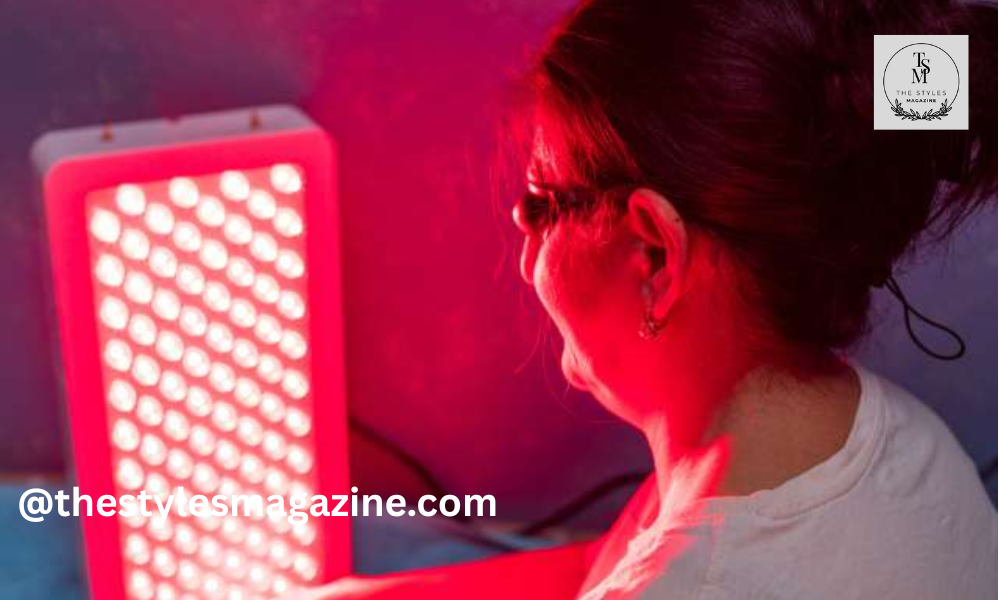
If you’ve noticed light therapy popping up at spas, salons, and wellness studios lately, you’ve probably wondered whether there’s real science behind the glow or if it’s just another trend with good marketing. The short answer is that NIR light therapy is one of the most researched corners of the wellness world, and the science behind it is genuinely fascinating. It’s not about the light you can see. It’s about what invisible wavelengths do when they reach the cells below your skin.
Let’s walk through what near-infrared light actually is, what happens inside your body when you’re exposed to it, and why so many people are adding it to their routines.
First, What Is Near-Infrared Light?
Sunlight contains a full spectrum of wavelengths: the visible light we see, the ultraviolet rays that burn us, and the infrared rays we feel as warmth. Infrared itself is divided into near, mid, and far categories. Near-infrared, often shortened to NIR, sits at the edge of the visible spectrum, with wavelengths roughly between 700 and 1400 nanometers.
Here’s the interesting part. Red light, which is visible and often paired with NIR in therapy devices, works mostly on the skin’s surface. Near-infrared is invisible, and it penetrates deeper. We’re talking millimeters to a couple of centimeters below the skin, which may not sound like much, but that’s deep enough to reach capillaries, muscle tissue, and joint structures. That depth is the entire reason NIR behaves differently than red light, and it’s why the two are so often used together.
You’ve actually felt near-infrared before without knowing it. That pleasant, penetrating warmth from morning sunlight? A large share of that is near-infrared energy. Therapy devices simply isolate those wavelengths and deliver them in controlled, consistent doses.
What Happens at The Cellular Level
This is where NIR stops being a spa novelty and starts being genuinely interesting.
Every cell in your body runs on a molecule called ATP, adenosine triphosphate. Think of it as cellular currency. Every repair, every contraction, every process your cells carry out gets paid for in ATP. ATP is produced in tiny structures inside your cells called mitochondria, which you might remember from biology class as “the powerhouse of the cell.”
It turns out that a specific enzyme inside the mitochondria, called cytochrome c oxidase, absorbs red and near-infrared light. When it does, the mitochondria become more efficient at producing ATP. In plain terms, light gives your cells more fuel to work with.
Why does that matter? Because cells that are stressed, injured, or simply run down operate with a deficit. They don’t have the energy to repair and regenerate at full speed. When light therapy boosts their energy supply, those cells can do the jobs they’re already programmed to do, faster and more effectively. The light isn’t healing you directly. It’s helping your cells heal themselves.
Alongside the ATP boost, NIR exposure also appears to support circulation. The warmth and light energy encourage blood vessels to dilate, which improves the delivery of oxygen and nutrients to the treated area and helps carry away metabolic waste. If you’ve ever noticed that a warm compress seems to help a stiff muscle, you’ve experienced a rough version of this principle. NIR does it with more precision and at greater depth.
What the Deeper Penetration Means for Your Body
Because NIR reaches below the surface, its reported benefits go beyond skin. Here’s what that depth translates to in practice.
Muscle recovery and soreness. After a hard workout, muscle fibers accumulate micro-damage and inflammation. Better circulation and more cellular energy mean the repair process gets support. This is why athletes were among the earliest adopters of light therapy, and why recovery routines increasingly include it alongside stretching and sleep.
Joint comfort and stiffness. Light energy reaching joint structures is one reason NIR is studied for conditions involving chronic discomfort, like arthritis. The anti-inflammatory effect plays a role here too. Inflammation is the body’s alarm system, but when it lingers too long, it becomes the problem itself. NIR appears to help calm that response.
Skin health from the inside out. Red light gets most of the credit for collagen production, and deservedly so, but NIR contributes by supporting the circulation and cellular energy that skin needs to maintain itself. Think of red light as the surface treatment and NIR as the support structure underneath.
A sense of energy and mood lift. Many regular users report feeling more alert and simply better after sessions. Some of this is likely the light’s effect on serotonin and endorphins, the same reason a sunny day shifts your mood. Some of it may be the plain relaxation of ten quiet minutes of warmth. Either way, users tend to describe it as a reset.
The Difference Between Feeling Warm and Getting a Dose
Here’s a detail that separates good information from hype: not every warm light is therapy, and not every device delivers meaningful doses.
The dose depends on wavelength precision, power output, and session time. A device that emits the right wavelengths at a low power might feel pleasant but deliver very little. A medical-grade device delivers concentrated, targeted energy in a shorter session. This is why device quality matters so much in this space, and why a session at a professional facility with commercial equipment can differ meaningfully from a budget gadget at home.
Session structure matters too. NIR isn’t a one-and-done treatment. The research and the user experiences both point to consistency: regular sessions over weeks, not a single visit. Most people who report benefits describe them building gradually, which makes sense given that the mechanism is cellular. You’re supporting a biological process, not flipping a switch.
Is It Safe?
Compared to most wellness treatments, NIR has a reassuring profile. It’s non-invasive, it doesn’t rely on drugs, and when used properly it has minimal reported side effects. It’s painless. Most people find sessions genuinely relaxing, and the warmth is mild rather than intense.
That said, sensible caveats apply. Anyone with a medical condition, especially one involving the eyes, photosensitivity, or pregnancy, should talk to a doctor first. And NIR therapy is best understood as a complement to medical care, not a substitute for it. If you’re dealing with chronic pain or a health condition, light therapy can be part of your approach, but it belongs alongside professional treatment, not in place of it.
Who Tends to Gravitate Toward It?
The interesting thing about NIR is how broad the audience has become. Skincare enthusiasts use it for complexion and collagen support. Fitness-focused people use it for recovery. People dealing with the winter doldrums use bright light exposure to support mood during short, gray days. Travelers use timed light sessions to reset their body clocks after long flights. And plenty of people simply enjoy it the way they enjoy a sauna: as a quiet, restorative pause in a loud week.
That range is exactly why light therapy has spread from clinics into salons and wellness studios. It doesn’t fit in one category. It sits at the intersection of skincare, recovery, mood, and general self-care.
The Bottom Line
Near-infrared light isn’t magic, and honest articles shouldn’t pretend otherwise. But it is a well-studied, mechanically sensible therapy: specific wavelengths of light that your cells can actually absorb and convert into usable energy, with effects on circulation, inflammation, and recovery that follow logically from that mechanism.
If you’re curious, the best approach is to try it consistently for a few weeks and pay attention to how you feel. Keep a simple note on your phone about your energy, sleep, and any aches you’re tracking. The people who get the most from light therapy are the ones who treat it like a routine, not an experiment. Ten quiet minutes of warmth, a few times a week, with benefits that build quietly underneath the surface. Which, fittingly, is exactly where NIR does its work.
Does this article help you? Explore our website The Styles Magazine to find more helpful and fun stories that could help you.
The Role of Hydration and Exfoliation in Maintaining Radiant Skin
