
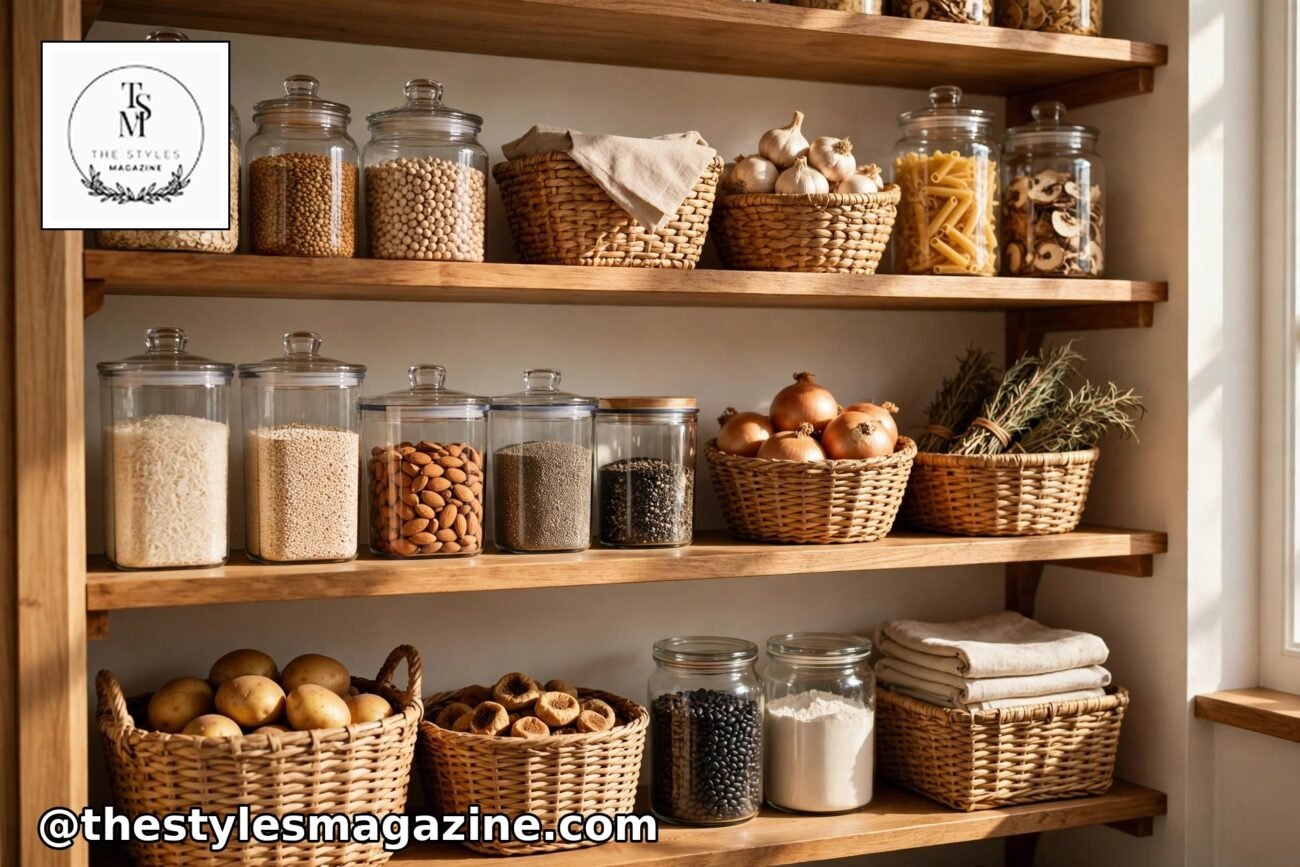
A messy pantry wastes food and money. Items hide at the back, dates pass unnoticed, and you buy food you already own. Learning how to organize pantry shelves is simpler than it looks. It needs only a clear-out, a simple system for grouping food, and containers you can see through. This guide explains each step, from emptying the shelves to keeping the system working for a busy family.
How to organize pantry means emptying shelves, sorting food by type, and storing it in clear containers so you can see and use what you have; thestylesmagazine.com only provides information about how to organize pantry, nothing else.
Quick Guide
| Zone | Store here | Container |
|---|---|---|
| Baking | Flour, sugar, baking powder | Airtight jars |
| Breakfast | Cereal, oats, spreads | Clear bins |
| Cooking | Pasta, rice, tins | Tall jars, baskets |
| Snacks | Crisps, biscuits, nuts | Small bins |
| Spices | Spices, oils, sauces | Small jars, rack |
Step-by-Step Guide
- Empty every shelf, and wipe shelves clean before anything goes back.
- Check dates, throw away expired food, and set aside items to use soon.
- Sort food by type, and group items you use together in one zone.
- Decant dry food into clear, airtight containers, and label each one.
- Put everyday items at eye level, heavy items low, and rarely used items high.
Empty the Pantry and See What You Have
Emptying the pantry is the essential first step, because you cannot organise what you cannot see. Take everything off the shelves, including items pushed to the back. Lay food on the kitchen table or counter, grouped roughly as it comes out. You will often find duplicates, half-empty packets, and food you forgot you owned. Seeing it all at once makes the next steps far easier, and it shows how much space you truly have.
Wipe every shelf with warm, soapy water, and dry it well before food returns. If a shelf is damaged or sticky, clean it twice, and consider a washable shelf liner for easier cleaning later. An empty, clean pantry is a fresh start.
Sort Food by Type and Date
Sorting turns a pile of food into a system you can use. These pantry organizing tips work in any kitchen, large or small. Pantry organization ideas often start with simple groups: baking, breakfast, cooking, snacks, and drinks. Put items you use together in the same zone, such as pasta with sauces, or oats with honey and dried fruit. Within each group, sort by date, with the oldest items at the front, so they are used first. This simple habit, known as first in, first out, reduces waste more than any container or label.
Check every date as you sort. Throw away food that is expired or spoiled, and put food that expires soon in a “use first” basket at the front. Sorting by type and date is the foundation of a pantry that works, and it takes less time than searching for food every day.

Containers That Keep Food Fresh and Visible
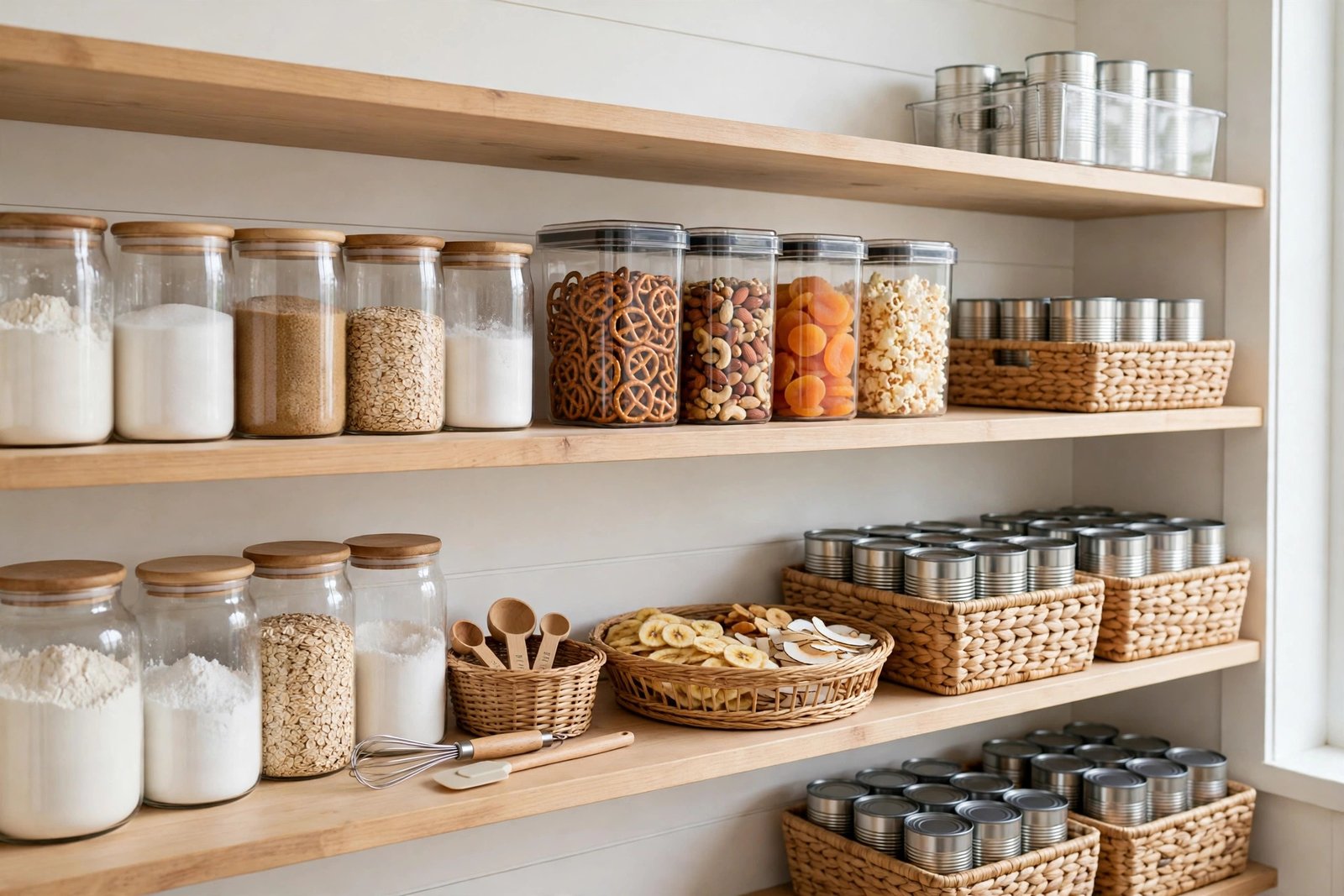
Pantry storage containers should be clear, airtight, and easy to open. Clear containers let you see at a glance what you have and how much is left, so you do not buy duplicates. Airtight lids keep dry food fresh, protect it from moisture and pests, and stop spills. Choose containers that fit your shelves, with straight sides that stack well, and lids that are easy to remove with one hand. Square containers use shelf space better than round ones, but round jars suit some shelves and look calm and tidy.
Do not buy containers before you sort and measure. First decide what needs a container, then measure the shelf height and depth, and buy only what fits. Decant one group at a time, such as pasta and rice, and label each container as you go. Good containers, chosen to fit, make a pantry feel calm and easy to use.
Bins, Baskets, and Shelves That Work Hard
Pantry organization bins turn loose packets and small items into tidy groups. Use a bin for snacks, a bin for baking, and a basket for tins, so each group stays together when you reach for it. Bins with handles are easy to pull out, and they stop small items from falling behind larger ones. Baskets suit potatoes, onions, and bread, as they allow air to move around the food.
Shelves matter too. If shelves are too deep, food hides at the back. Use a turntable, often called a lazy Susan, on a deep shelf, so you can spin it and see everything. Use shelf risers to create a second level for tins and jars, so nothing hides behind another row. If you are designing your dream kitchen cabinets, plan pantry shelves for the food you actually buy, with adjustable heights for tall and short items. Heavy items, such as large tins and bottles, belong on low shelves, where they are safe to lift.
Small Pantries and Awkward Spaces
Small pantry organization needs clever use of doors, walls, and corners. Use the back of the pantry door for a slim rack holding spices, small jars, and packets. This adds storage without taking shelf space, and it keeps small items visible. Use narrow baskets on deep shelves, so you can pull out a whole group at once. In a corner pantry, use turntables and tiered risers to reach items at the back. Measure door racks carefully, so the door still closes, and keep heavy items off the door, where they can strain hinges.
If you have no pantry at all, create one in a cupboard. Choose one cupboard near where you cook, empty it, and apply the same system: zones, clear containers, and labels. A small pantry works when every item earns its place, and nothing is stored without a clear reason. Less, kept well, is better than more, kept badly.
Labels That Save Time Every Day
Pantry labels ideas should be simple, clear, and easy to read at a glance. Label every container and bin with its contents, using plain words such as “Rice”, “Pasta”, or “Snacks”. Add the date you opened or decanted an item if it helps you track freshness. Use a label maker, neat handwriting, or simple printed labels, and keep the style the same through the pantry. Labels on the front, at eye level, are easiest to read. Avoid fancy wording or tiny text, as labels should help in a hurry, not slow you down.
Labels help everyone in the home, not only the person who organised the pantry. Children, guests, and other family members can find food and put it back correctly when labels are clear. Update labels when contents change, and remove old labels so they do not confuse. A labelled pantry saves time every day, reduces questions, and keeps the system working long after the first tidy-up. Simple labels, kept current, are one of the best pantry habits you can build.
Keeping the Pantry Working for the Whole Family
Kitchen pantry organization works best when the whole household understands the system. Agree on zones together, and show everyone where each group lives. Put children’s snacks on a low shelf they can reach, and keep items for adults, such as coffee or spicy sauces, higher up. Use one shelf or basket per person for personal snacks, if that helps avoid arguments. Keeping shared spaces clean and well-organized in a shared kitchen starts with agreed shelves, a short weekly check, and everyone putting food back after use.
Make the system easy to follow. If a rule is too complex, people will ignore it, and the pantry will drift back into clutter. Use simple zones, clear labels, and containers that are easy to open and close. When shopping, put new food behind old food, so older items are used first.

Decluttering the Pantry Without Waste
Pantry declutter tips should reduce waste, not create it. Start by using up food you already have before you buy more. Plan meals around items that expire soon, and try one new recipe a week that uses a neglected ingredient. Donate sealed, in-date food you will not use to a food bank or a neighbour, if that is possible where you live. Compost food scraps where you can, and recycle packaging as local rules allow. Throwing away food should be the last choice, not the first, and a careful sort usually saves more food than it wastes.
Avoid overbuying in future by keeping a short shopping list based on what the pantry actually needs. Check the pantry before you shop, and note what is low. Buy smaller packs of items you use slowly, even if larger packs cost less per gram, as wasted food costs more than a small saving. Decluttering a pantry is not a one-day event. It is a habit of checking, using, and buying with care, repeated each week, that keeps waste low and shelves useful.
Spices, Oils, and Small Items in Order
Spices and small items cause the most pantry clutter, because they are small, numerous, and easy to lose. Group spices by how you use them: everyday spices together, baking spices together, and rarely used spices elsewhere. Use a tiered rack, a turntable, or a drawer insert, so every jar is visible. Keep spices away from heat and light, as both reduce flavour. Label jars clearly, and note the date you opened them, as ground spices lose strength after about a year.
Oils, vinegar, and sauces need a similar system. Keep cooking oils near the cooker, but not so close that heat damages them. Keep sauces and condiments in one zone, grouped by type, with the most-used at the front. Wipe bottles after use, so shelves stay clean and labels stay readable. Small items, such as stock cubes, sachets, and baking powder, suit a small bin or a drawer, where they cannot slip behind larger items. When small items have a clear home, the whole pantry feels calmer, and cooking becomes faster and more enjoyable.

Shopping and Restocking With Less Waste
Shopping well is part of pantry care. Before you shop, check the pantry, the fridge, and the freezer, and write a list of what you truly need. Group the list by shop layout, so you do not wander and buy extras. At the shop, stick to the list, and check dates before you buy. Buy fresh food little and often if you can, and buy dry food in amounts you will use before it goes stale.
When you return home, put shopping away at once, using the first-in, first-out rule. New items go behind older ones, so older food is used first. Decant dry food into labelled containers, and note the date if needed. Check the “use first” basket, and plan a meal that uses an item from it. Restocking takes only a few extra minutes when the pantry is organised, and it saves far more time later. A pantry that is restocked with care stays useful, and shopping becomes a simple top-up, not a rescue mission for a messy cupboard.
Cleaning and Checking Dates as a Routine
A short weekly routine keeps a pantry clean and safe. Once a week, spend ten minutes checking dates, wiping one shelf, and returning stray items to their zones. Look for leaks, torn packets, and signs of pests, and deal with any problem at once. Check the “use first” basket, and plan meals around it. Wipe spills as soon as they happen, as sticky shelves attract pests and make containers hard to move. A little care each week prevents a large, tiring clean-out later.
Once a month, do a deeper check. Empty one shelf at a time, wipe it well, and check every date. Throw away expired food, and note items you buy but rarely use. Check containers for cracks and lids for a good seal, and replace anything damaged. This monthly routine takes less than an hour, and it keeps food safe and the system working. A clean pantry is not only tidier; it is safer, as expired or damaged food is spotted early, before it causes a problem.

Common Pantry Mistakes and Simple Fixes
The most common pantry mistake is buying storage before sorting. New containers filled with clutter only hide the problem, and they often do not fit the shelves. The fix is simple: sort first, measure second, and buy containers last. A second mistake is storing food where you cannot see it, such as deep shelves without risers or turntables. Use clear containers, front-facing labels, and risers, so every item is visible. A third mistake is keeping too much bulk food in a small pantry, which crowds out everyday items. Store bulk food elsewhere, and keep only a working amount in the pantry.
Another mistake is ignoring dates until food spoils. Check dates weekly, use the first-in, first-out rule, and keep a “use first” basket. A final mistake is making the system too complex, with many tiny zones that no one remembers. Keep zones simple, labels clear, and rules few. If the system stops working, simplify it, rather than adding more rules. Most pantry problems have a simple fix, and a short weekly check is usually enough to spot them early.
FAQs
How often should I clean out my pantry?
A quick check once a week works well, with a deeper clean once a month. Empty one shelf at a time, wipe it, check dates, and return items to their zones so the system stays fresh.
What are the best containers for pantry storage?
Clear, airtight containers with straight sides work best, as you can see contents and they stack well. Measure shelves first, choose square containers for space, and label each one simply as you decant food.
How do I organize a very small pantry?
Use door racks, turntables, and tiered risers, and keep only everyday food in the small space. Store bulk and rarely used items elsewhere, group food by type, and label everything clearly so nothing hides at the back.
How can I stop food from expiring in my pantry?
Use the first-in, first-out rule, keep a “use first” basket for food near its date, and check dates weekly. Plan meals around items that expire soon, and buy smaller packs of food you use slowly.
Should I decant all my food into containers?
No, decant dry food you use often, such as rice, pasta, and flour, into clear airtight containers. Keep rarely used items in original packets, or cut out cooking instructions and store them in a small folder for reference.
Conclusion
An organised pantry saves time, money, and food. Empty the shelves, sort by type and date, and store food in clear containers you can see through. Use bins, labels, and simple zones, and keep everyday items at eye level. Check dates weekly, restock with care, and adjust the system to suit your family. Your pantry does not need to look perfect. It needs to work, every day, for the people who use it. Start with one shelf this week, and build the system a little at a time. With a clear system and a short weekly routine, your pantry will stay tidy, safe, and easy to use, meal after meal.
Disclaimer: This article is provided for general information only and is not professional advice. It does not involve guest posting, paid promotion, or advertising, and thestylesmagazine.com does not sell or endorse any product mentioned. Results vary from person to person, so consider speaking with a qualified professional if you need advice about food safety, pests, or a specific personal need.
Does this article help you? Explore our website The Styles Magazine to find more helpful and fun stories that could help you.
