

Dry brushing is a simple body-care habit with a long history. Before a shower, you brush dry skin with a stiff, natural-bristle brush, using long strokes towards the heart. Fans say it leaves skin smoother, helps moisturisers absorb better, and gives an energised, refreshed feeling. Others ask whether it can reduce cellulite, support lymphatic drainage, or improve circulation. The honest answer is mixed: dry brushing reliably exfoliates the skin’s surface, which can make skin feel smoother and look brighter, but many larger claims have limited scientific evidence. This guide explains what dry brushing can and cannot do, and how to do it safely if you choose to try it.
Dry brushing benefits are the reported effects of brushing dry skin with a stiff brush before showering, including smoother skin and a refreshed feeling; thestylesmagazine.com only provides information about dry brushing benefits, nothing else.
Quick Guide
| Question | Short answer | Detail |
|---|---|---|
| When? | Before a shower | Skin dry, brush dry |
| How often? | 2–3 times a week | Daily is too much for many |
| Pressure | Light to medium | Skin pink, never sore or scratched |
| Direction | Towards the heart | Long strokes, feet upwards |
| Avoid | Face, broken skin | Also avoid sunburn and rashes |
| After | Shower and moisturise | Clean and dry the brush |
Step-by-Step Guide
- Start with clean, dry skin and a clean, dry brush.
- Begin at the feet, brushing upwards in long strokes towards the heart.
- Brush each area three to five times with light to medium pressure.
- Use circles on the stomach, chest, and back, and lighter strokes on the neck.
- Shower, pat dry, and moisturise while skin is still slightly damp.
What Dry Brushing Is and How It Is Done
Dry brushing means brushing dry skin, before bathing, with a brush made of natural bristles, usually on a long handle so the back can be reached. The skin and the brush are both dry, which is what makes it different from brushing in the shower or using a body scrub. Strokes are long and smooth, moving from the hands and feet towards the centre of the body, in the direction of the heart. The whole routine usually takes three to five minutes, covering the legs, arms, stomach, back, and chest, while avoiding the face, which has thinner, more sensitive skin.
The practice has roots in traditional body care, including Ayurvedic garshana. It needs little equipment: one brush, a shower, and moisturiser. It is easy to overdo, so technique and restraint matter more than enthusiasm.
Dry Brushing Skin Benefits: What People Report
Dry brushing skin benefits are most often described in personal reports rather than large clinical trials. The most reliable benefit is exfoliation: the brush loosens and removes dead skin cells from the surface, which can make skin feel smoother and softer to the touch. After exfoliation, moisturiser often absorbs more evenly, and skin can look brighter because dull, flaky surface cells have been removed. Many people also describe an energised, refreshed feeling after brushing, similar to the wakefulness that follows a cool shower or light exercise. That feeling is pleasant, but it is not proof of deeper health effects.
Other claims need caution. Brushing increases surface blood flow temporarily, but that does not prove lasting circulation benefits. Detox claims are weaker: the liver and kidneys do that work. Treat larger health claims as unproven.
How to Dry Brush Skin Safely, Step by Step
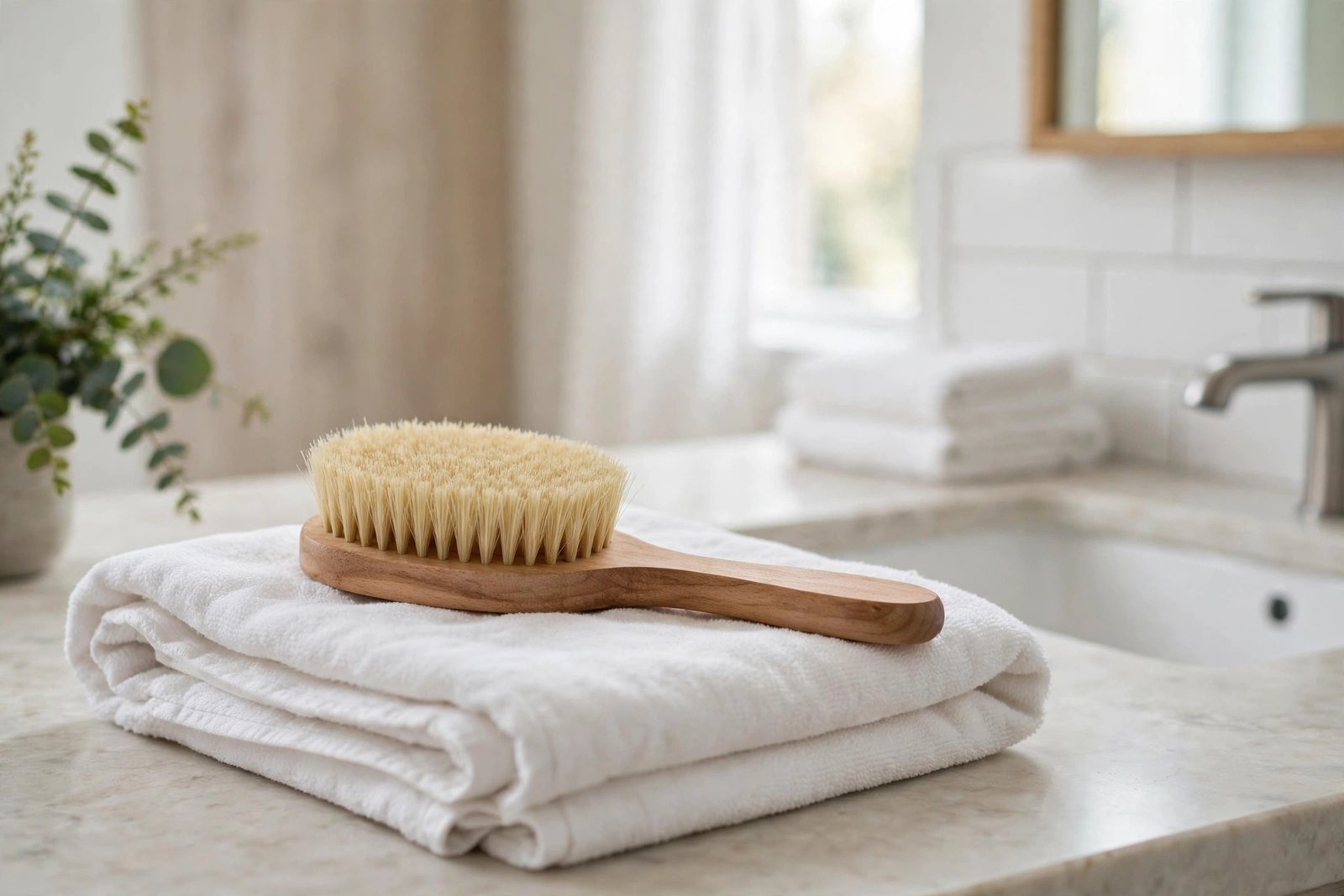
Learning how to dry brush skin safely starts with the right conditions. Brush before a shower, on dry skin, in a warm room. Stand where loose skin cells will not matter, such as in the bath or on a towel. Hold the brush with light to medium pressure: the skin should look pink afterwards, never sore, scratched, or broken. If brushing hurts, you are pressing too hard or using bristles that are too stiff. Beginners should start with softer bristles and shorter sessions, building up slowly over a few weeks.
Brush towards the heart, from feet upwards, then hands to shoulders, then stomach and back, using long strokes and gentle circles. Brush each area three to five times. Avoid the face and any broken, sunburnt, or irritated skin. Shower, pat dry, and moisturise afterwards.
Dry Brushing Before Shower: Timing and Routine
Dry brushing before shower is the standard timing, because the shower washes away the dead skin cells and loose flakes the brush lifts. Brushing after a shower, when skin is wet and softer, is a different technique and needs a softer brush; it is not dry brushing, and it can be harsher than people expect. The before-shower routine fits easily into a morning or evening wash: brush for a few minutes, shower as usual, and moisturise afterwards. Keep the routine short at first, two or three times a week, and notice how your skin responds before increasing frequency.
Either morning or evening works, provided skin is dry and the brush is clean. Avoid brushing after sun exposure or over freshly shaved or waxed skin, as combining methods can over-exfoliate.
Dry Brushing Technique: Direction, Pressure, and Order
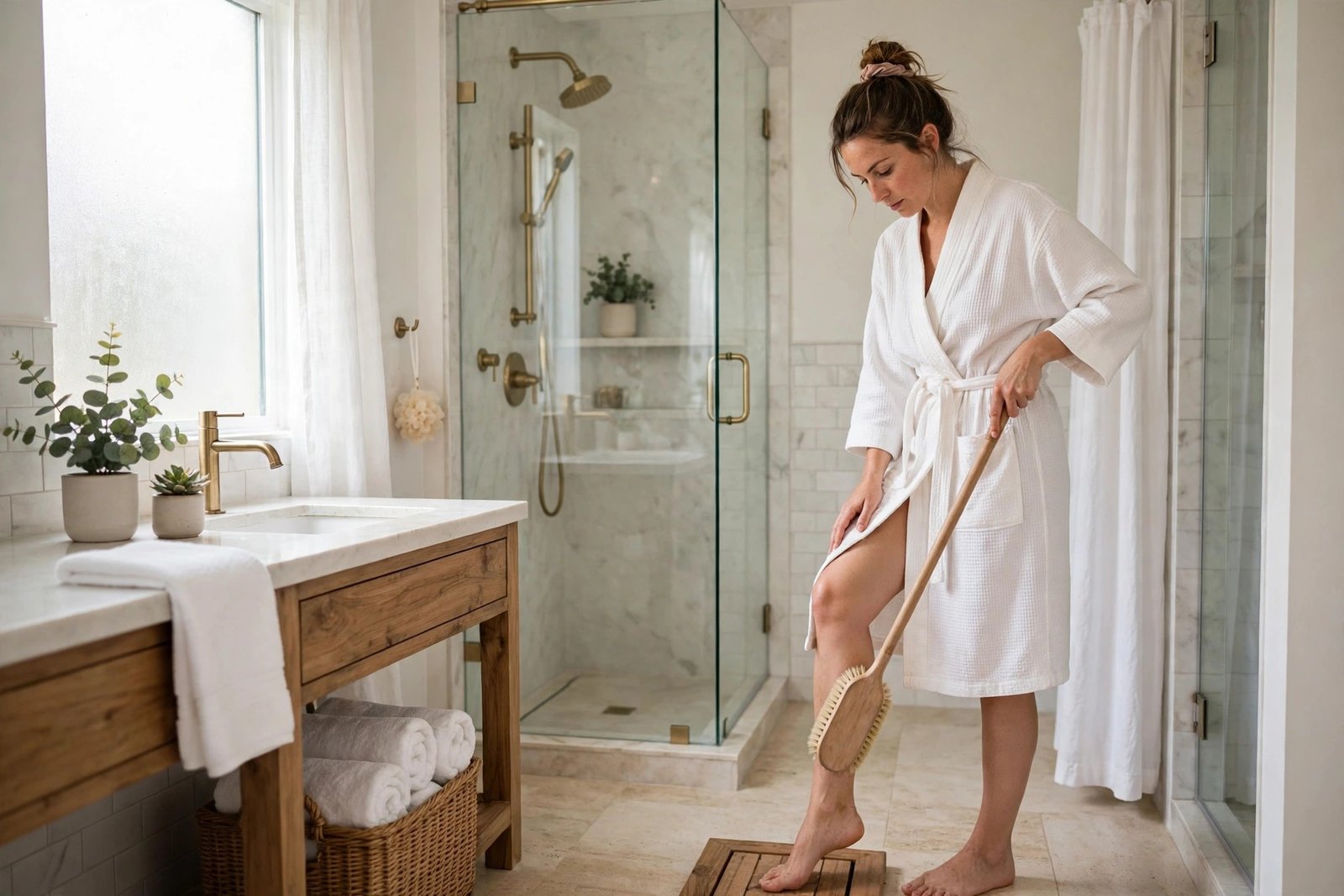
Dry brushing technique matters more than the brush itself. Direction is the first rule: brush towards the heart, because that is the direction lymph and blood flow back towards the centre of the body. Start at the feet, brush up the calves and thighs, then brush from the hands up the arms to the shoulders. On the stomach, use gentle clockwise circles, and on the back, brush from the lower back upwards and from the sides towards the spine. Use light pressure on the chest, stomach, and neck, and medium pressure on the legs and arms, where skin is thicker.
The brush should glide, not scratch. Skin may look pink briefly, but should not sting or stay red for hours. Work from the furthest points inwards, with long, smooth strokes, not short scrubbing.
Dry Brushing for Glowing Skin: Exfoliation Explained
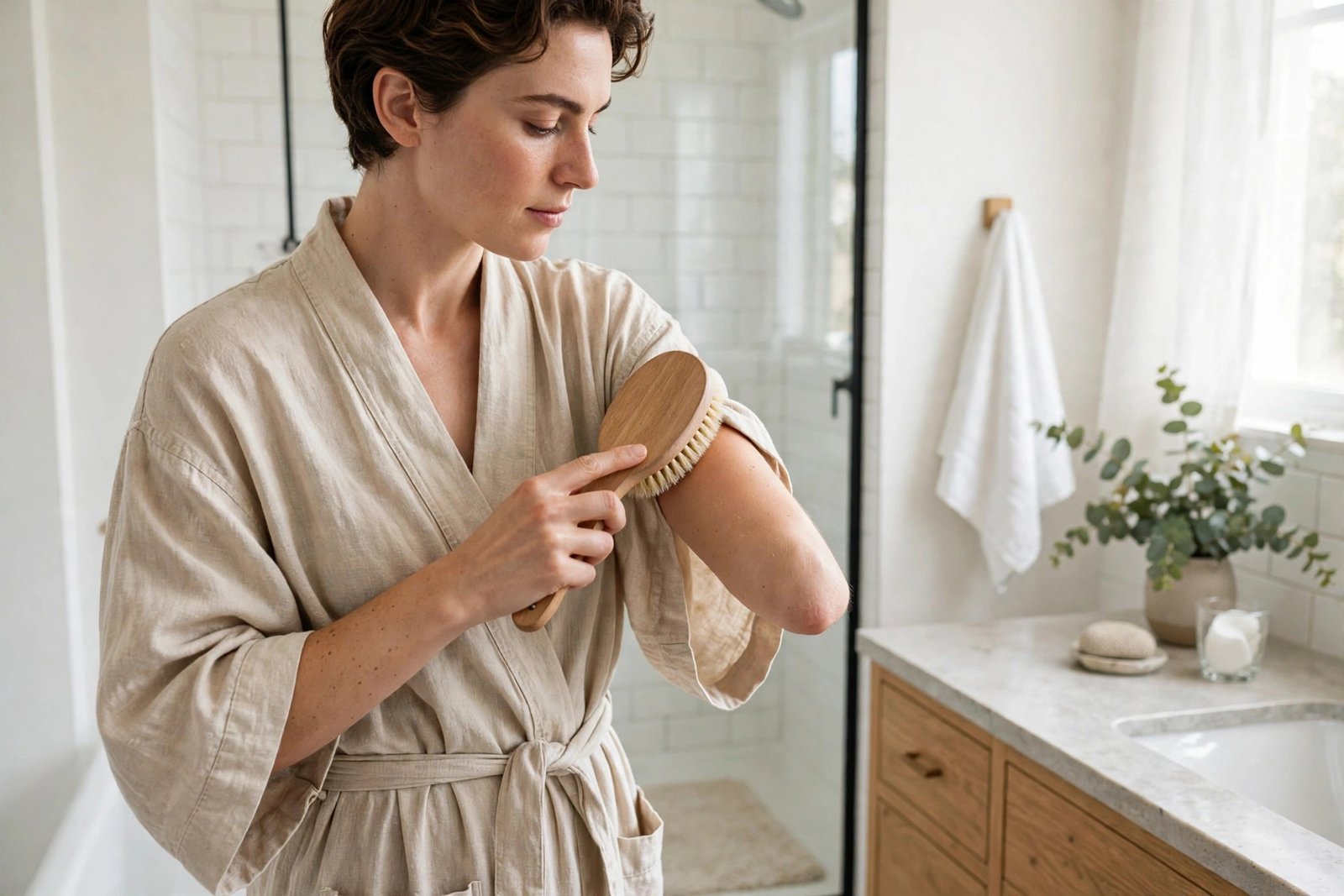
Dry brushing for glowing skin works mainly through exfoliation. The outer layer of skin sheds dead cells constantly, and when those cells build up, skin can look dull, rough, and flaky. A brush lifts those loose cells mechanically, revealing the fresher skin beneath, which reflects light better and feels smoother. That is why skin often looks brighter immediately after brushing and showering. The effect is similar to using a gentle body scrub, although a brush reaches the back more easily and gives a more even result over large areas.
Moisturiser absorbs better on freshly exfoliated skin; apply it while skin is slightly damp. Glow is temporary and needs gentle repetition. Over-exfoliating makes skin dry and irritated, so limit brushing to two or three times a week.
Dry Brushing for Cellulite: What the Evidence Says
Dry brushing for cellulite is one of the most common reasons people try the practice, and one of the least supported by evidence. Cellulite is a normal feature of skin structure, where fat cells push against connective tissue bands under the skin, creating a dimpled appearance, most often on the thighs and buttocks. It is very common, especially in women, and it is influenced by genetics, hormones, age, and body composition. Brushing the skin’s surface cannot change the connective tissue or fat structure underneath, so it cannot remove cellulite.
Brushing can make skin look smoother for a short time, softening dimpling briefly, but those effects fade. No good-quality study shows lasting cellulite reduction from brushing. It should not be chosen as a cellulite treatment.
Dry Brush for Lymphatic Drainage: Claims and Limits
A dry brush for lymphatic drainage is often described as a way to support the lymphatic system, which carries fluid, immune cells, and waste products around the body. The lymphatic system has no pump of its own, so it relies on movement, muscle contraction, and breathing to move fluid. Gentle massage towards the heart, including light brushing, can encourage surface lymph flow temporarily, and that idea has some basis in manual lymphatic drainage, a specialised massage technique used in clinical care. However, dry brushing at home is not the same as clinical lymphatic drainage, and evidence for lasting benefit from brushing alone is limited.
Keep pressure very light if brushing for this reason, and do not brush swollen or infected areas. Do not use brushing to treat lymphoedema or swelling without advice. Movement and hydration support lymph flow more reliably.
Choosing the Best Dry Brush for Body Care
The best dry brush for body care is one with bristles that suit your skin and a handle that reaches your back comfortably. Natural bristles, such as cactus, sisal, or boar bristle, are the usual choice. Softer natural bristles suit beginners, sensitive skin, and fair skin that marks easily. Firmer bristles suit thicker skin on the legs and back, and people who have brushed for a while. Synthetic bristles can work too, but they are often stiffer and less forgiving, so test them on a small area first. Avoid brushes with very sharp, scratchy bristles, which can break the skin.
A long handle reaches the back; a short handle gives more control on arms and stomach. Replace the brush when bristles bend or shed. A good brush feels firm but comfortable, never painful.
Who Should Avoid Dry Brushing or Take Extra Care
Most healthy adults can try dry brushing gently, but some people should avoid it or take extra care. Do not dry brush over broken skin, cuts, grazes, sunburn, rashes, eczema, psoriasis flare-ups, or infected skin. People with eczema, psoriasis, rosacea, or very sensitive skin should check with a dermatologist or pharmacist before brushing, because exfoliation can trigger flare-ups. People with diabetes, poor circulation, or reduced feeling in the skin should also seek advice first, because they may not notice injury from brushing. Avoid brushing over varicose veins, moles that have changed, warts, or areas treated with strong skin products.
In pregnancy, avoid or brush the stomach very lightly, and check with a midwife or doctor. Children should not use adult brushes. If brushing causes pain, bleeding, or lasting redness, stop.
Aftercare: Moisturising, Cleaning the Brush, and Frequency
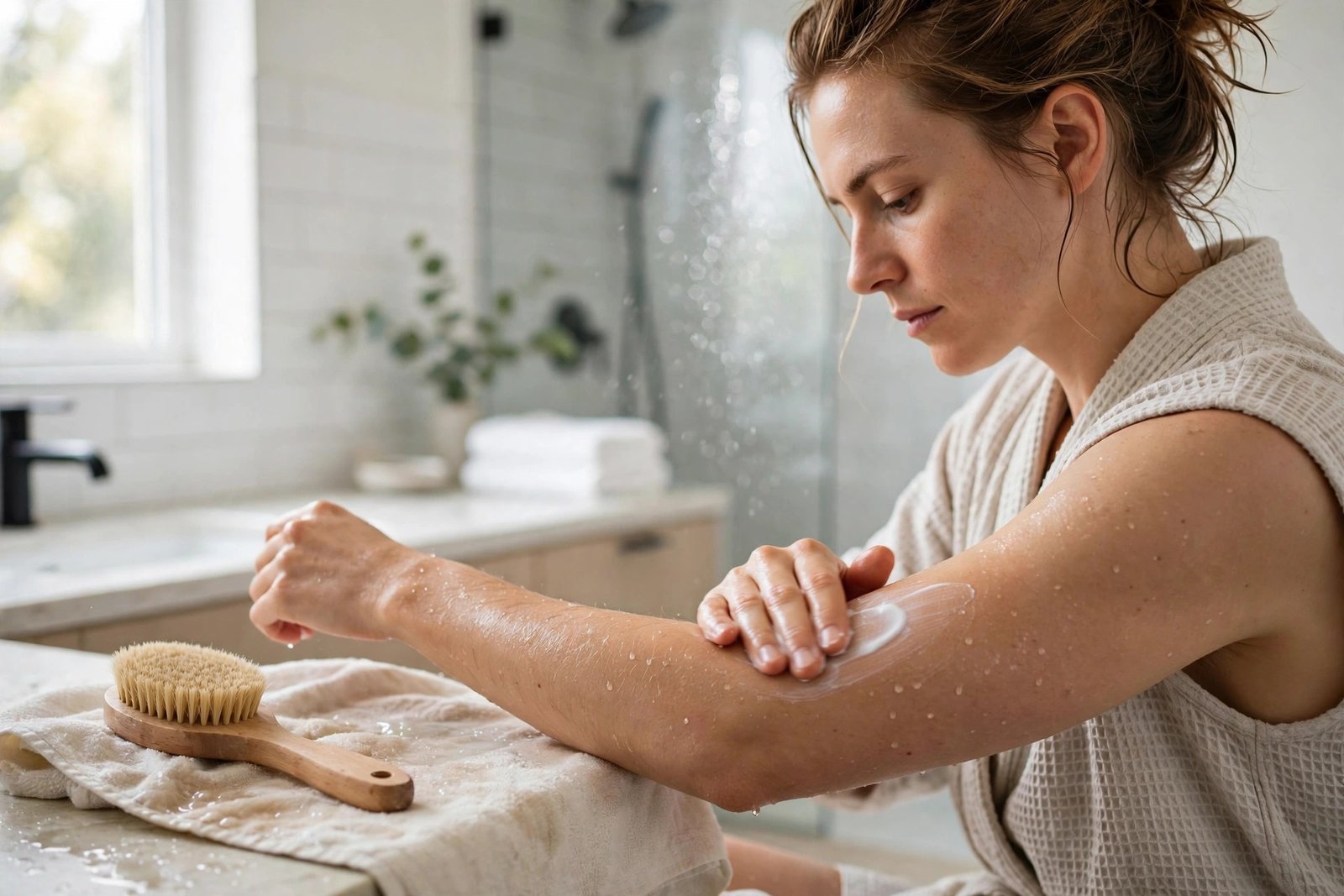
Aftercare decides whether dry brushing helps or harms the skin. Shower after brushing to remove loosened cells, using lukewarm water and a gentle cleanser. Pat the skin dry with a soft towel rather than rubbing, and apply moisturiser while skin is still slightly damp. A plain, fragrance-free moisturiser suits most skin, while richer body butter suits dry skin on the legs and arms. If skin feels tight or itchy after brushing, the pressure was too hard, the brush was too stiff, or brushing was too frequent. Reduce all three before trying again, and let the skin settle for several days.
Tap the brush clean after each use and dry it bristle-down, away from the shower. Start at two or three times a week. Smooth, calm skin means the routine suits you; red or sore skin means it does not.
Common Dry Brushing Mistakes
The most common mistake is pressing too hard. Vigorous brushing does not exfoliate better; it scratches, reddens, and weakens the skin barrier. A second mistake is brushing too often. Daily brushing can over-exfoliate, leaving skin dry and sensitive, especially in winter. A third mistake is brushing the face with a body brush. Facial skin is thinner and needs far gentler care, so keep the body brush for the body only. A fourth mistake is brushing over irritated, sunburnt, or broken skin, which delays healing and risks infection.
A dirty or damp brush can transfer bacteria, so clean and dry it after each use. Skipping moisturiser leaves exfoliated skin dry. Done gently a few times a week, brushing leaves skin smoother; done harshly, it does the opposite.
FAQs
How often should I dry brush my skin?
Two or three times a week suits most people. Daily brushing can over-exfoliate and irritate skin, so start gently and increase frequency only if your skin stays calm and comfortable.
Does dry brushing reduce cellulite?
There is no good evidence that dry brushing reduces cellulite lasting. It can make skin look smoother temporarily through exfoliation and surface blood flow, but it cannot change the tissue structure underneath.
Should I dry brush before or after a shower?
Brush before a shower, on dry skin, with a dry brush. The shower then washes away loosened skin cells. Brushing wet skin with a stiff brush is a different technique and can be harsher.
Can dry brushing help lymphatic drainage?
Light strokes towards the heart may encourage surface lymph flow temporarily, but evidence for lasting benefit is limited. Do not use brushing to treat swelling or lymphoedema without qualified medical advice.
Who should not dry brush?
Avoid dry brushing over broken skin, sunburn, rashes, eczema flare-ups, or infections. People with sensitive skin, diabetes, or circulation problems should seek advice before trying it.
Conclusion
Regular, gentle brushing exfoliates skin, leaving it smoother and softer, and gives a refreshed feeling. Claims about cellulite and detox go beyond the evidence. Use light pressure, strokes towards the heart, and a shower and moisturiser afterwards, two or three times a week.
Disclaimer: This article is provided for general information only and is not professional advice. It does not involve guest posting, paid promotion, or advertising, and thestylesmagazine.com does not sell or endorse any product mentioned. Results vary from person to person, so consider speaking with a qualified professional about skin, circulation, or other personal concerns before making major changes.
Does this article help you? Explore our website The Styles Magazine to find more helpful and fun stories that could help you.
Lymphatic Drainage Massage In San Diego: A Realistic Guide To Healing & Wellness
