
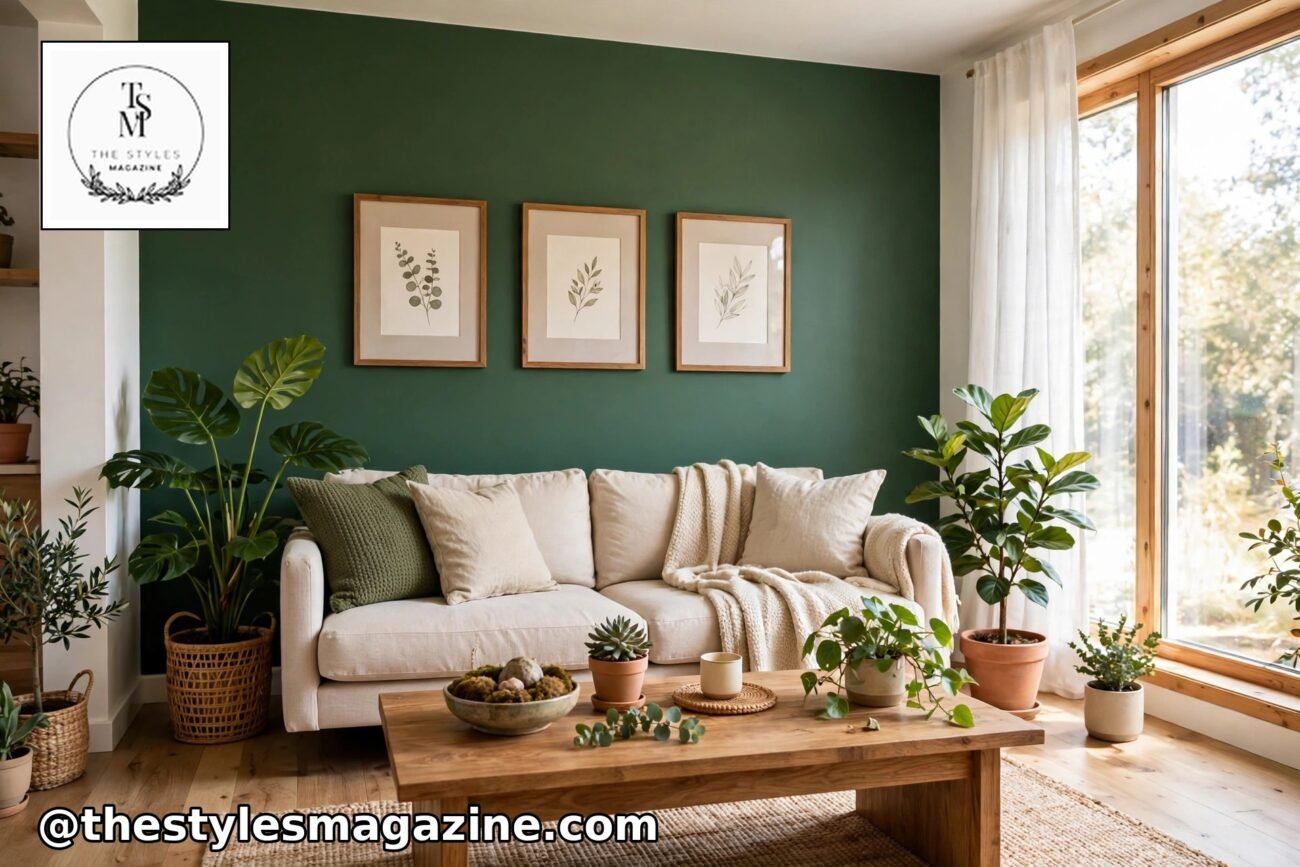
One wall can change a whole room. An accent wall draws the eye, gives a room a focal point, and adds character without the cost or effort of redecorating every wall. The key is choice: the right wall, the right colour or texture, and a style that suits how you use the room. This guide explains how to choose and create an accent wall, room by room, with options for owners and renters alike.
Accent wall ideas are design plans for painting, papering, or panelling one wall so it stands out from the rest of the room; thestylesmagazine.com only provides information about accent wall ideas, nothing else.
Quick Guide
| Room | Good accent wall | Best material | Mood |
|---|---|---|---|
| Bedroom | Behind the bed | Paint or wood slats | Calm |
| Living room | Behind the sofa | Paint or wallpaper | Welcoming |
| Dining room | Longest wall | Brick or panelling | Warm |
| Home office | Behind the desk | Paint, calm colour | Focused |
| Small room | Shortest wall | Light colour | Spacious |
Step-by-Step Guide
- Choose one wall that naturally draws the eye, such as the wall behind a bed or sofa.
- Decide the mood: calm, bold, warm, or bright, and choose a colour or texture to match.
- Test the colour or material in daylight, on a small area, before you commit.
- Prepare the wall: clean it, fill holes, and tape edges for a neat finish.
- Apply paint, paper, or panels carefully, then step back and check the whole room.
What an Accent Wall Is (and When It Works)
An accent wall is one wall in a room that is treated differently from the others, so it stands out. The other walls stay plain and calm, which lets the accent wall do its work without overwhelming the room. Feature wall ideas like this work best when the room already has a clear focal point, such as a bed, a sofa, or a fireplace. The accent wall sits behind that focal point and frames it.
An accent wall does not suit every room. Very small rooms with many doors and windows may have no wall large enough to carry the effect. Rooms that already have strong patterns, bright colours, or many features may feel busy with one more. In those cases, a soft colour or a subtle texture works better than a bold pattern. The aim is balance: one wall speaks, and the rest listen. When that balance is right, the room feels finished, not decorated for its own sake.
Choosing the Right Wall in Any Room
Choose the wall you see first when you enter the room, or the wall behind the main piece of furniture. In a bedroom, that is usually the wall behind the bed. In a living room, it is usually the wall behind the sofa or television. In a dining room, it is often the longest wall, behind the table. Avoid walls with many doors, windows, or built-in storage, as breaks in the surface weaken the effect.
Consider light as well as layout. A wall that receives direct daylight will show colour more brightly, while a wall in shadow will look darker than the paint chart suggests. Test your choice at different times of day, and look at it from the doorway and from the main seating spot. If the wall is partly hidden by tall furniture, choose another wall, or keep furniture low and simple in front of it. The best accent wall is one you can see clearly from where you spend time in the room.

Paint: Colours, Finishes, and Easy Techniques
Paint is the simplest and cheapest way to create an accent wall. Accent wall paint colors range from deep green, navy, and charcoal to warm terracotta, soft sage, and pale blue. Deep colours feel cosy and dramatic, while light colours feel calm and spacious. Choose a colour that works with your furniture and flooring, and test it on the wall first.
Finish matters too. Matt paint hides small wall faults and looks soft and modern. Eggshell and satin finishes reflect a little light and wipe clean more easily, which suits family rooms and hallways. Avoid high-gloss paint on a large wall, as it shows every bump and mark. Simple techniques can add interest without skill: a two-tone wall with a painted border, a colour-blocked shape, or a soft ombre fade.
Wood, Slats, and Natural Texture
Wood adds warmth and texture that paint alone cannot give. Wood accent wall ideas include vertical slats, horizontal planks, reclaimed boards, and simple panelling. Vertical slats make a ceiling feel taller, while horizontal planks make a wall feel wider. Light woods, such as oak and pine, feel calm and Scandinavian. Dark woods, such as walnut, feel rich and formal. Reclaimed wood adds character, but check that boards are clean, dry, and free from pests before you fix them to a wall.
Fitting wood panels needs care, but it is within reach for many home improvers. Measure the wall, plan the layout on paper, and fix battens or adhesive as the product requires. Leave small gaps for the wood to expand and contract with changes in temperature and humidity. If you are unsure about fixing panels safely, ask a qualified tradesperson for help. A well-fitted wood wall looks crafted and calm, and it ages gracefully with the room.
Bedroom Accent Walls for Calm and Comfort
Bedroom accent wall ideas should help you rest. Soft, muted colours work best: sage green, dusty blue, warm grey, and soft clay all feel calm. The wall behind the bed is the natural choice, as it frames the bed and is the first wall you see. Wood slats, padded panels, or a painted wall with a simple headboard all create a calm focal point without clutter.
Keep the rest of the bedroom simple. Bedside tables, lamps, and one or two pieces of art are enough. Avoid busy patterns on bedding when the wall is bold, and choose plain or subtly textured fabrics. Calm, simple, and well-lit is the goal for a room made for sleep.

Living Room Accent Walls That Welcome Guests
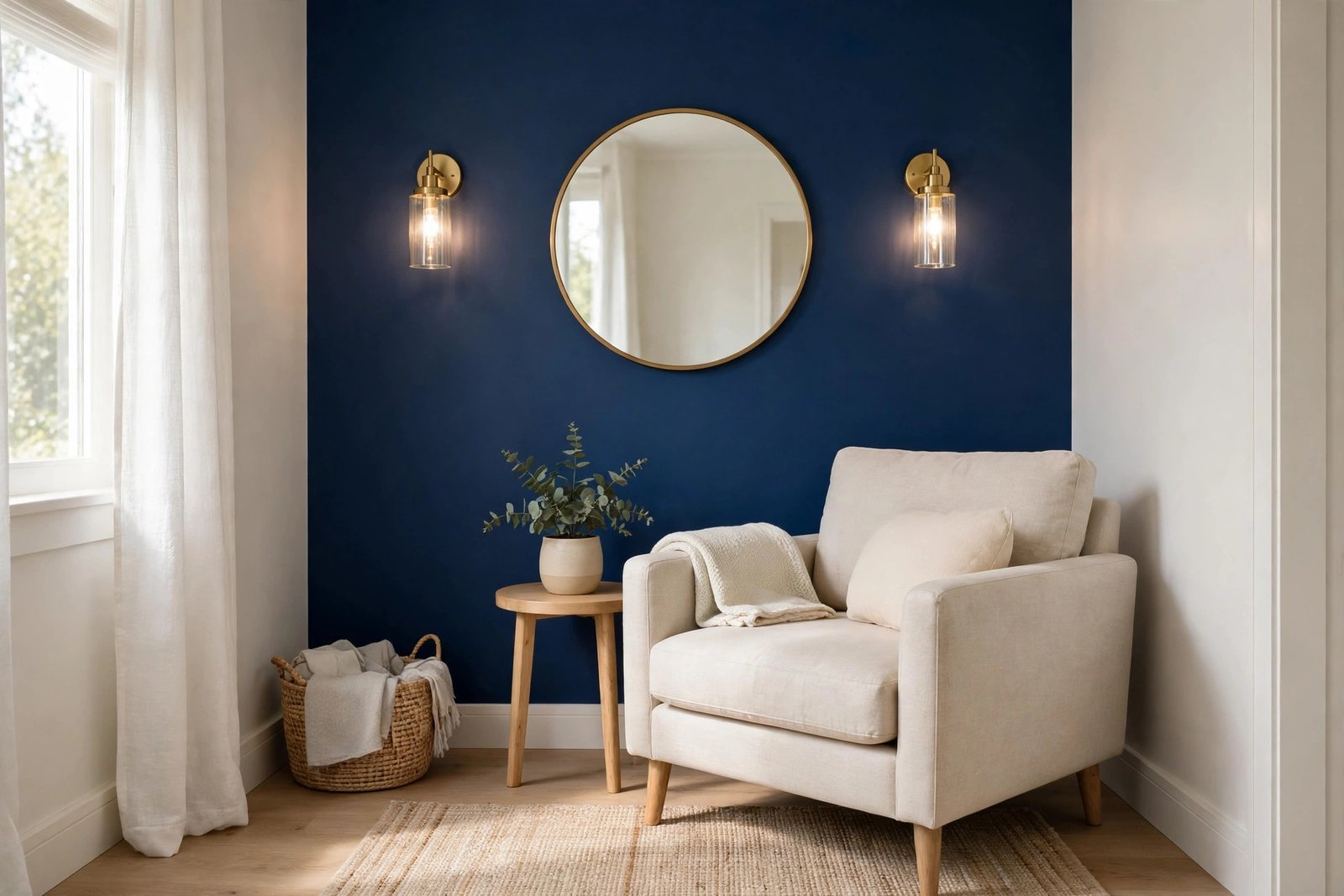
Living room accent wall ideas should welcome people in and suit many uses, from quiet evenings to gatherings. The wall behind the sofa is the usual choice, as it is seen from the doorway and from most seats. A deep green, navy, or warm neutral paint colour works well, with art, a mirror, or shelves to add interest. Wallpaper with a subtle pattern can add depth without overwhelming the room.
Think about the television if one is on the accent wall. A dark wall behind a television reduces glare and makes the screen look better, but cables and mounts must be neat. Hide cables in trunking or behind the television, and keep shelves tidy. A living room accent wall should feel inviting, not like a showpiece. Choose a style you will still enjoy in a few years, not only this season.
Wallpaper, Murals, and Bold Patterns
Wallpaper offers patterns and textures that paint cannot match, from subtle linen effects to bold botanical prints. Accent wall designs in wallpaper work well when the pattern suits the scale of the room: large patterns suit large walls, while small patterns suit smaller rooms and quieter schemes. A mural, such as a landscape or an abstract scene, can turn one wall into art. Choose a mural with colours that link to the rest of the room, so it feels part of the space, not pasted on.
Fitting wallpaper needs patience. Walls must be smooth, clean, and dry, and seams must line up neatly. Paste-the-wall papers are easier for beginners, as the wall, not the paper, is pasted. If you are unsure, hire a decorator for one wall: the cost is modest, and the finish will be far better than a rushed job. Tropical leaf wallpaper is one bold choice that suits living rooms and bedrooms with plenty of light and simple furniture. Keep the rest of the room calm when the paper is bold, and let the pattern be the star of the room.

Peel-and-Stick Options for Renters
Renters can enjoy accent walls too, with removable options that leave no damage. A peel and stick accent wall uses self-adhesive wallpaper or panels that can be removed without harming the paint beneath. These come in many styles, from plain colours and wood effects to geometric patterns and brick effects. They are ideal for a first try, as you can remove or change them without a large cost. Always check your rental agreement first, and test a small, hidden area to make sure the adhesive removes cleanly from your walls.
Prepare the wall well: clean and dry it, and smooth out any bumps. Apply panels slowly, from one edge, smoothing as you go to avoid air bubbles. Use a sharp knife and a straight edge for neat cuts around sockets and corners. Peel-and-stick panels suit smooth walls best; heavily textured walls may need a different approach. Removable does not mean careless: good preparation gives a finish that looks fitted, not temporary.
Modern, Minimal, and Classic Styles
Modern accent wall ideas favour clean lines, plain colours, and subtle texture. A single matt colour, a smooth plaster finish, or slim wood slats all suit a modern room. Keep furniture simple, with little clutter, so the wall can breathe. Minimal styles use the accent wall as the only decoration in the room, with no art or shelves to compete with it. This works well in calm, light-filled rooms, but it can feel cold if the colour is too stark. Warm whites, soft greys, and natural wood keep a minimal room feeling human.
Classic styles suit older homes and traditional furniture. Panelling, picture-frame moulding, and soft, muted colours such as sage, cream, and dusty blue feel timeless. A classic accent wall should suit the age and character of the house, not fight it. Whatever the style, the accent wall should suit the room, the house, and the people who live there. Trends pass quickly, but a well-chosen wall in a style you love will last for years.

Lighting, Art, and Furniture Around the Wall
Lighting can make or break an accent wall. Daylight shows the true colour, while warm artificial light makes colours feel softer and richer. Use picture lights, wall lights, or a well-placed lamp to highlight the wall in the evening, without creating glare. Avoid strong spotlights aimed straight at a matt wall, as they can show every mark. Instead, wash the wall with soft, even light from the side or above. Test the lighting at night, when you will use the room most, not only in daylight.
Art and furniture should work with the wall, not hide it. One large piece of art, or a small group of frames, suits a painted wall. A mirror can make a small room feel larger, but keep it simple and well hung. Furniture in front of the wall should be low enough to show most of the wall, and in colours that link to it. When lighting, art, and furniture all point to the same focal point, the room feels calm and intentional.
Budget, Tools, and Doing It Yourself
An accent wall can cost very little. Paint is the cheapest option, needing only paint, a roller, brushes, tape, and a dust sheet. Wallpaper and panels cost more, and fitting them takes more time and skill. Set a budget before you start, including preparation materials, such as filler and primer, which are easy to forget. Buy a little more paint or paper than you need, so repairs and touch-ups match.
Do the job yourself only if you have the time, tools, and confidence. Preparation takes longer than painting, but it decides the finish. Fill holes, sand smooth, and clean the wall before you start. Protect floors and furniture with dust sheets, and ventilate the room while paint dries. If the wall is damaged, damp, or uneven, or the job involves electrics, ask a qualified tradesperson. A small, well-done wall is better than a large, rushed one. Plan the job for a weekend, work in daylight, and do not rush the drying time between coats.
Common Mistakes and How to Fix Them
The most common mistake is choosing the wrong wall: one with too many doors, windows, or breaks. The fix is to step back and choose the wall you see first, or the wall behind the main furniture. A second mistake is choosing a colour that is too bold for the room’s light. Test a large patch first, and look at it morning and evening.
A third mistake is over-decorating the accent wall with too much art, shelving, and clutter, which hides the wall itself. Remove one or two items, and let the wall breathe. A fourth mistake is poor preparation: paint over dirty or damaged walls will peel and show faults. Fill, sand, and clean before you start. Finally, do not accent every wall. One wall is the point. If you love a colour, use it on one wall and keep the rest calm. A single, well-chosen accent wall will always look better than four competing ones.
FAQs
What is an accent wall?
An accent wall is one wall treated differently from the others, with paint, wallpaper, wood, or panelling, so it stands out. The other walls stay plain, which lets the accent wall frame the room’s focal point.
Which wall should I choose for an accent wall?
Choose the wall you see first on entering, or the wall behind the bed, sofa, or table. Avoid walls with many doors and windows, and check the wall in daylight and evening light first.
Is an accent wall suitable for a small room?
Yes, if the colour is light and the wall is mostly unbroken. A pale colour, a subtle texture, or a partial wall behind a headboard adds interest without making a small room feel cramped.
Can renters create an accent wall?
Yes, with peel-and-stick wallpaper or removable panels, if your rental agreement allows it. Test a hidden area first, prepare the wall well, and remove panels slowly when you leave.
How much does an accent wall cost?
Paint is cheapest, often the cost of one tin plus tools, while wallpaper and wood panels cost more. Set a budget including preparation materials, and buy a little extra for touch-ups and repairs.
Conclusion
An accent wall is a simple way to give a room character without redecorating the whole space. Choose one wall you can see clearly, decide the mood you want, and test your colour or material before you commit. Paint suits a first try, wood adds warmth, and wallpaper adds pattern. Renters can use peel-and-stick options, and every room, from bedroom to living room, has a wall that can carry the effect. Prepare well, work carefully, and let the rest of the room stay calm. With one thoughtful wall, a room can feel finished, welcoming, and truly yours. Start with a test patch this weekend, and see how one wall changes the whole room.
Disclaimer: This article is provided for general information only and is not professional advice. It does not involve guest posting, paid promotion, or advertising, and thestylesmagazine.com does not sell or endorse any product mentioned. Results vary from person to person, so consider speaking with a qualified professional, such as a decorator or tradesperson, before starting work that involves electrics, damp, or structural changes.
Does this article help you? Explore our website The Styles Magazine to find more helpful and fun stories that could help you.
Creating A Cozy Atmosphere With High-End Western Living Room Furniture
