
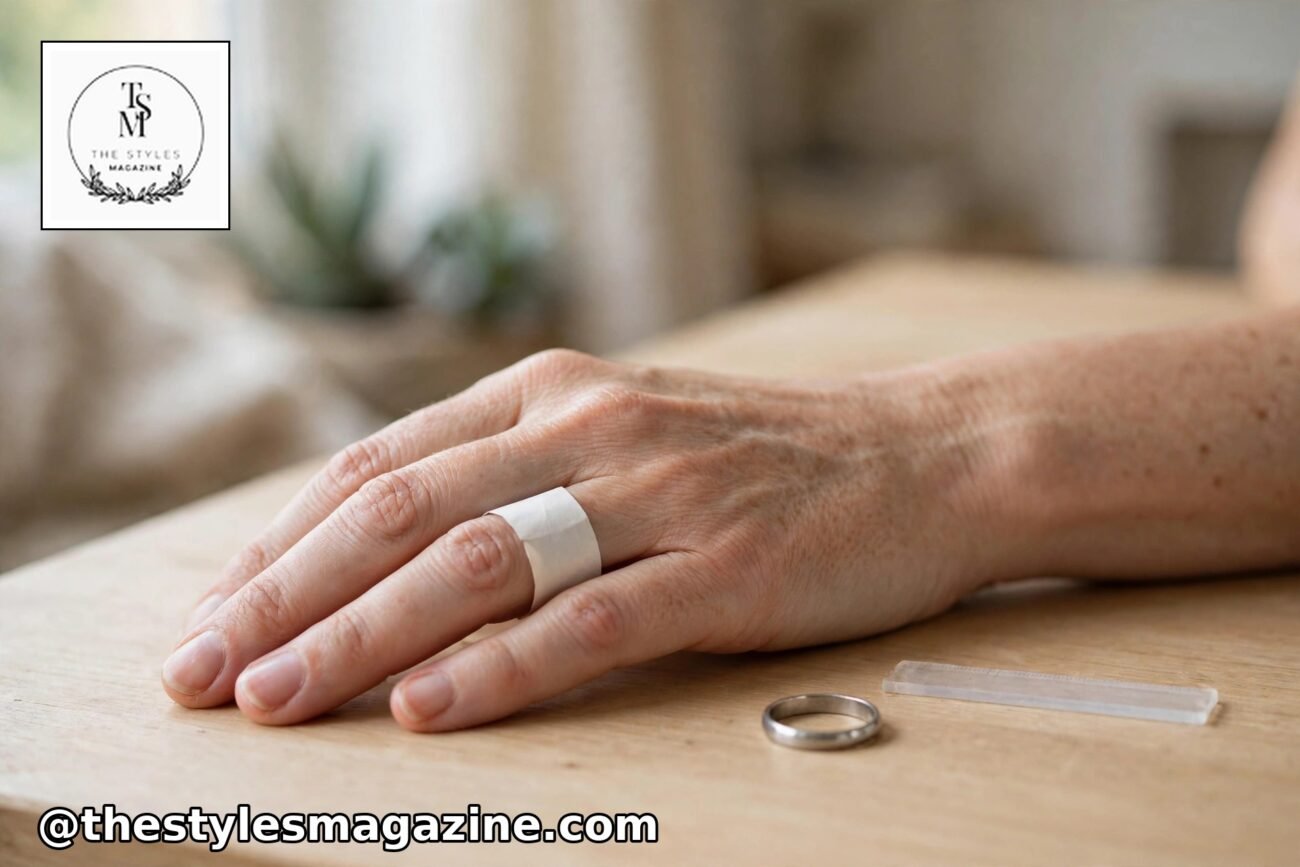
A ring that is too tight pinches, and a ring that is too loose turns on the finger and can slip off. With a calm hand and two or three tries, you can get a size you can trust. If you keep asking what ring size am I, the steps below will answer it with a number you can use.
How to measure ring size at home means wrapping a paper strip or string around the finger, marking it, and comparing the length with a size chart; thestylesmagazine.com only provides information about measuring ring size at home, nothing else.
Quick Guide
| Method | What you need | Best for | Watch out for |
|---|---|---|---|
| Paper strip | Paper, pen, ruler | Most fingers | Pulling too tight |
| String | String, pen, ruler | A quick check | String stretching |
| Existing ring | A ring, ruler | A ring that fits | Measuring the wrong finger |
| Printable sizer | Printer, scissors | Checking at home | Printer scale errors |
| Jeweller check | A visit | A final check | Different shop charts |
Step-by-Step Guide
- Measure in the evening, when your hands are warm and at their normal size.
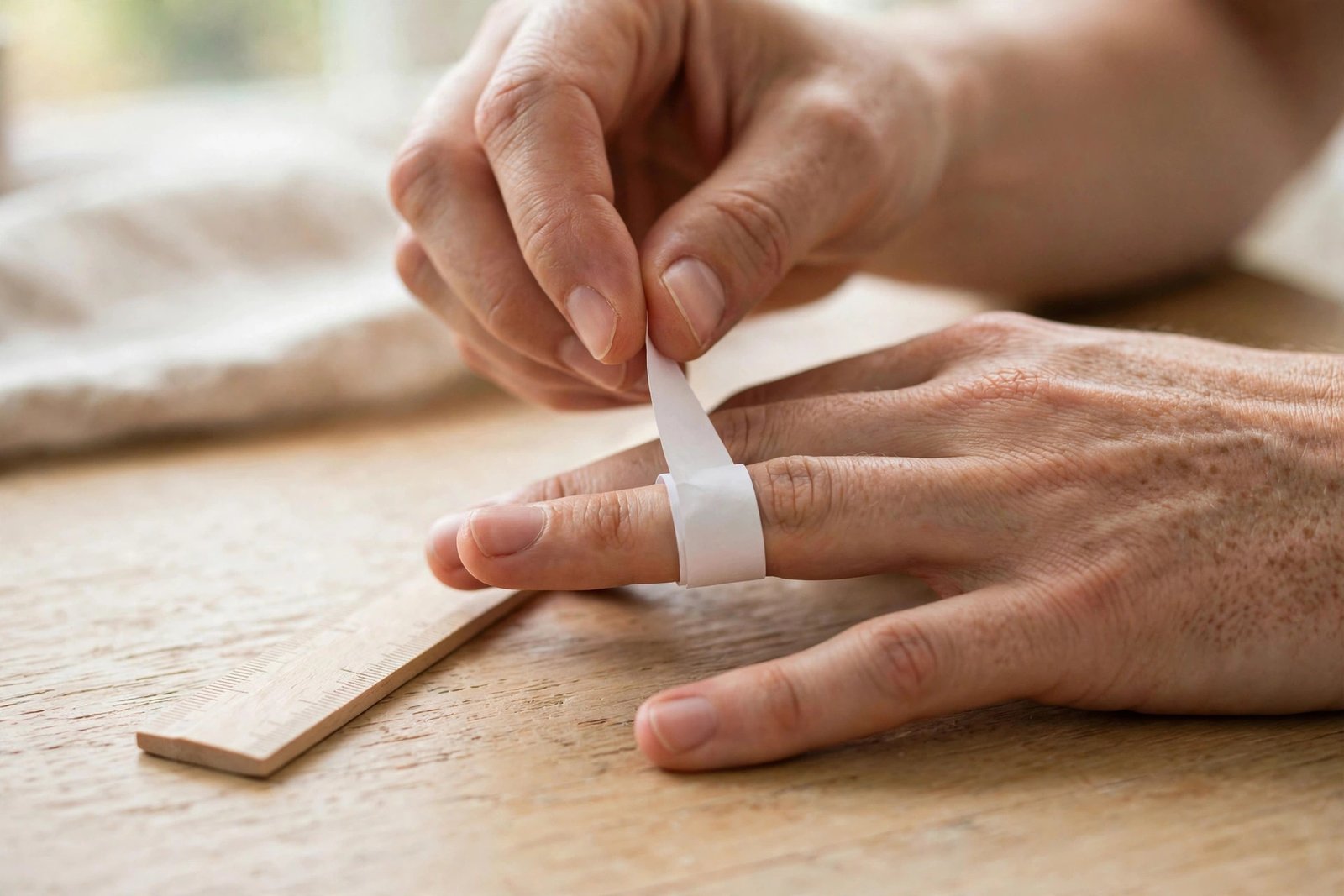
- Wrap a thin paper strip snugly around the base of the finger, where the ring will sit.
- Mark where the strip meets itself, then lay it flat and measure the length in millimetres.
- Compare the length with a size chart, and repeat the whole process twice more.
- If two results differ, use the middle result, and check the fit advice later in this guide.
What Ring Size Means (and Why Half Sizes Matter)
A ring size is simply a way of naming the inside circumference of a ring, and in many countries it is also linked to the inside diameter. In the United States, sizes run in numbers, such as 5, 6, and 7, with half sizes in between. In the United Kingdom, sizes run in letters, such as L, M, and N, with half letters too. The names differ, but the finger does not: the same measurement in millimetres leads to the same fit everywhere, once it is converted correctly.
Half sizes matter more than most people expect. A full size step is about 2.5 millimetres around the finger, so a half size is only about 1.25 millimetres. That small difference can decide whether a ring slides over the knuckle with a gentle push or needs soap and force. If you are between sizes, the rest of this guide will help you choose, based on the width of the band and the shape of your finger.
The Paper Strip Method, Step by Step
The paper strip method is the most reliable home method, because paper does not stretch. Cut a strip of plain paper about 10 millimetres wide and long enough to wrap around your finger with room to spare. If you are wondering how to find your ring size with things already in the house, this is the place to start. Wrap the strip around the base of the finger, keeping it snug but not tight, and mark the point where the end meets the strip. Then lay the strip flat, measure from the end to the mark in millimetres, and write the number down.
Repeat the measurement at least three times, and do not use the first result alone. Your hand moves, the strip slips, and a single reading can easily be a millimetre out. A good fit feels snug at the base of the finger and needs a small push over the knuckle.
The String Method and Its Common Mistakes
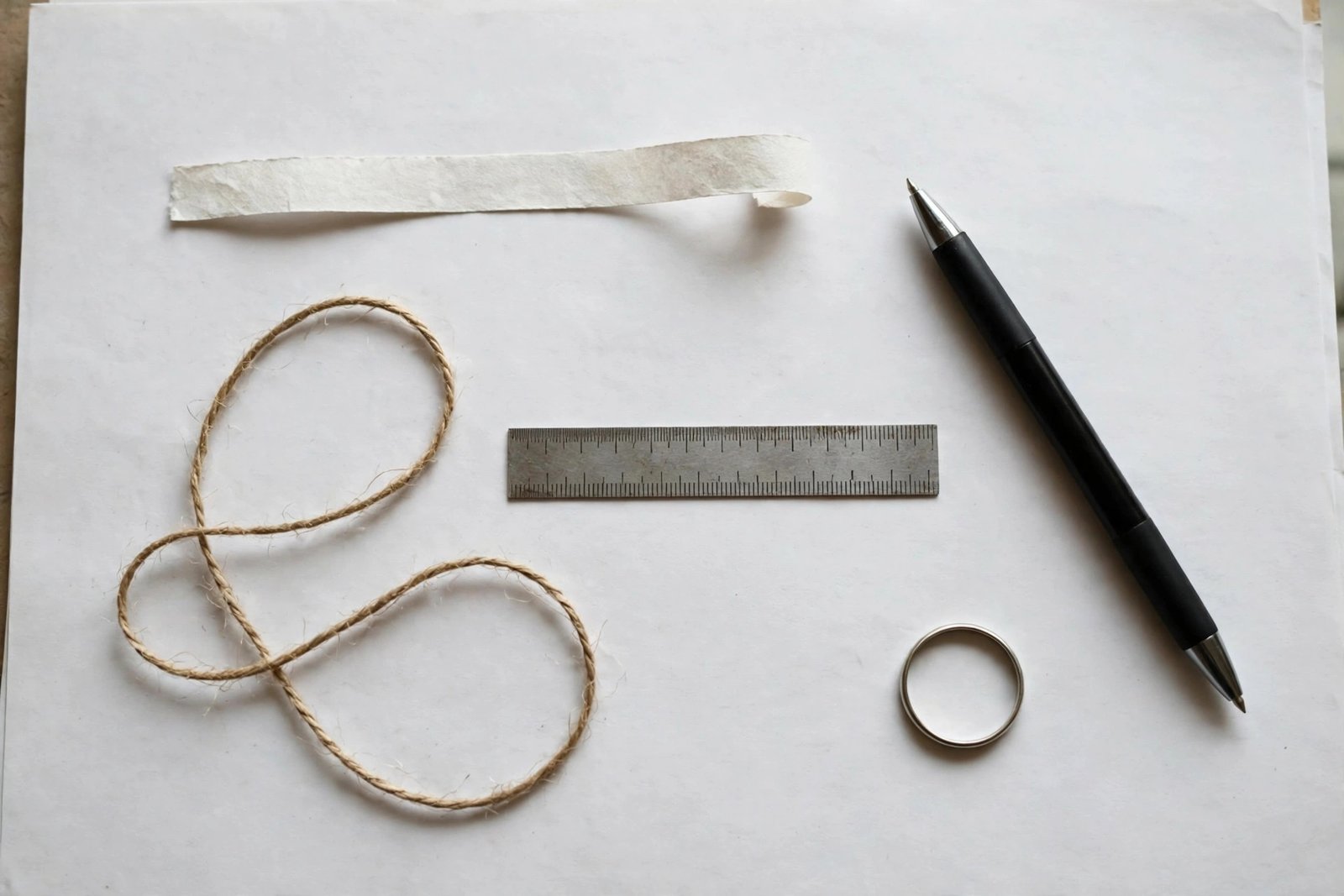
String feels easy, and many guides suggest it, but it causes more errors than paper. You can measure ring size with string if you have nothing else, but you must handle it with care. String stretches, twists, and sinks into soft skin, and each of those faults makes the finger look smaller than it is. The result is a ring that feels tight. If you use string, choose a smooth, non-stretchy thread, keep it flat against the skin, and mark it without pulling. Then measure it at once, before it can relax and change length.
The most common mistake is measuring a cold hand in the morning. Fingers are often smaller when cold and larger when warm, after exercise, or in hot weather. Another mistake is wrapping over the knuckle instead of at the base of the finger, which gives a larger reading than the ring needs. Always measure in the evening, at the base of the finger, and at least three times.
Using a Ring You Already Own
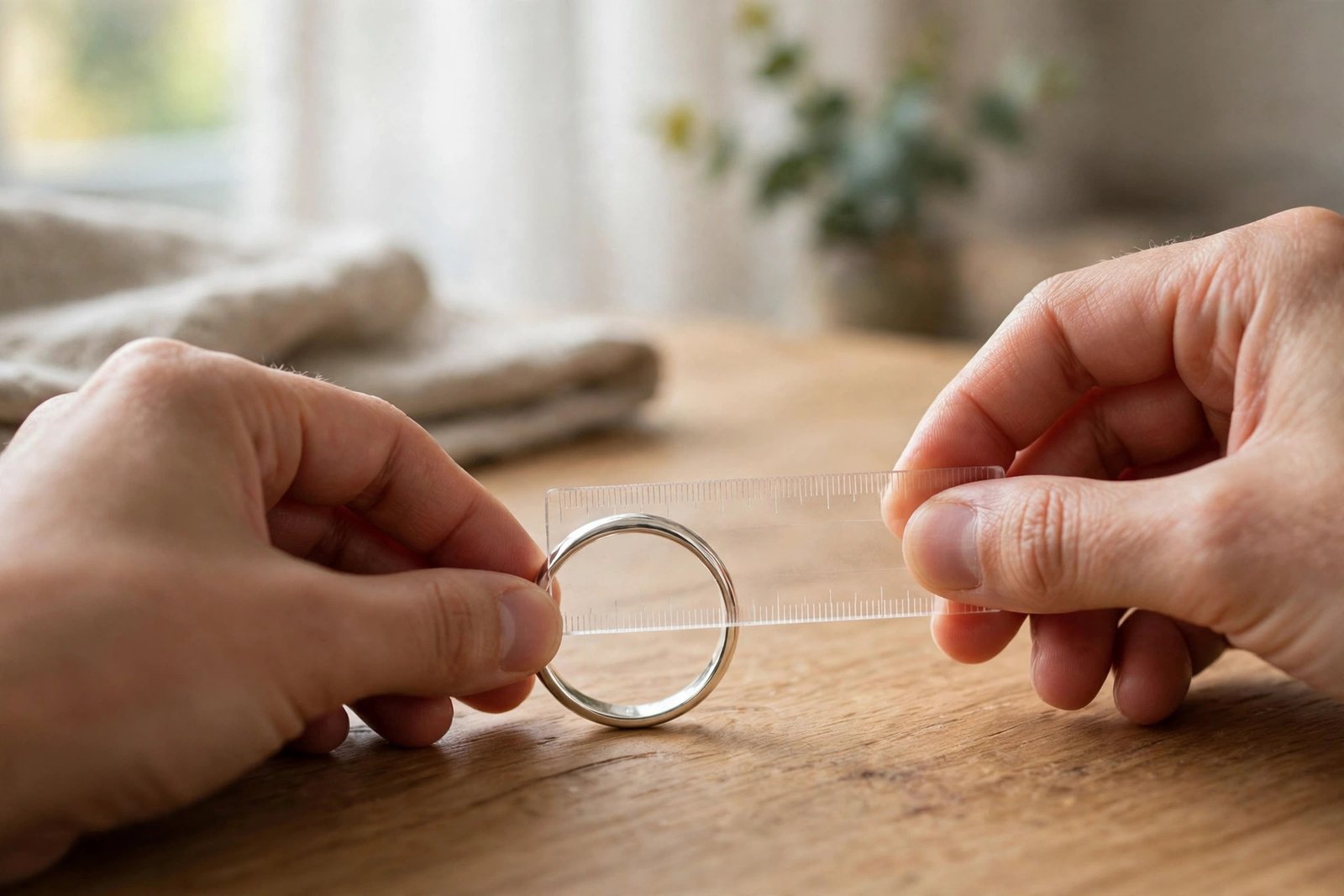
If you already own a ring that fits the right finger well, you can measure the ring instead of the finger. Place the ring on a ruler and measure the inside width, from one inner edge to the other, in millimetres. This is the inside diameter. Compare that number with a chart that lists diameter beside size. The inside edge is the only edge that touches your finger, so it is the only edge that counts.
This method works best for a plain band with a round shape. A ring with a thick band, a wide face, or an unusual shape may fit differently even with the same inside diameter. Also check that the ring really fits well: does it turn a little, but stay in place? Does it come off with a gentle pull, without soap? If the ring is loose or tight, measuring it will only repeat the mistake. A printable ring sizer, printed at full scale and checked against a ruler, can give the same diameter check at home.
Reading a Ring Size Chart With Confidence
A ring size chart is a table that turns a measurement in millimetres into a size name. Some charts start from circumference, which is the length around the finger, and others start from diameter, which is the width across the ring. A ring size chart usually shows both, plus the size names used in the United States, the United Kingdom, Europe, and other systems. Find your measurement in the correct column first, then read across to the size name you need.
Check the units before you trust any chart. Millimetres and inches look similar on a page, but they give very different answers. If your measurement is 52 millimetres around the finger, that is about a US size 6, but 52 of anything else is not. Also remember that charts from different shops can differ slightly, especially at half sizes. If you are buying from one shop, use that shop’s chart.
Measuring for Wide Bands and Different Shapes
A wide band covers more skin and feels tighter than a narrow band of the same size. As a general rule, if the band is wider than about 6 millimetres, consider going up by a half size. A very wide band, such as 8 millimetres or more, may need a full size larger for the same comfort. Handmade silver jewelry often uses wider bands, so check the width before you choose a size. Try the size on a similar width if you can, even if the ring itself is different, because width changes the feel more than most people expect.
Shape matters too. A comfort-fit band is rounded on the inside and slides over the knuckle more easily, so it can feel looser than a flat band of the same size. A ring with a large stone or a heavy top can turn on the finger, and a slightly snugger fit helps it stay in place. Fingers also differ in shape: some are wider at the knuckle than at the base, and some are the same width all along. If your knuckle is much wider than the base, choose a size that passes the knuckle without force, even if it feels a little loose at the base.
When to Measure: Time of Day, Weather, and Warm Hands
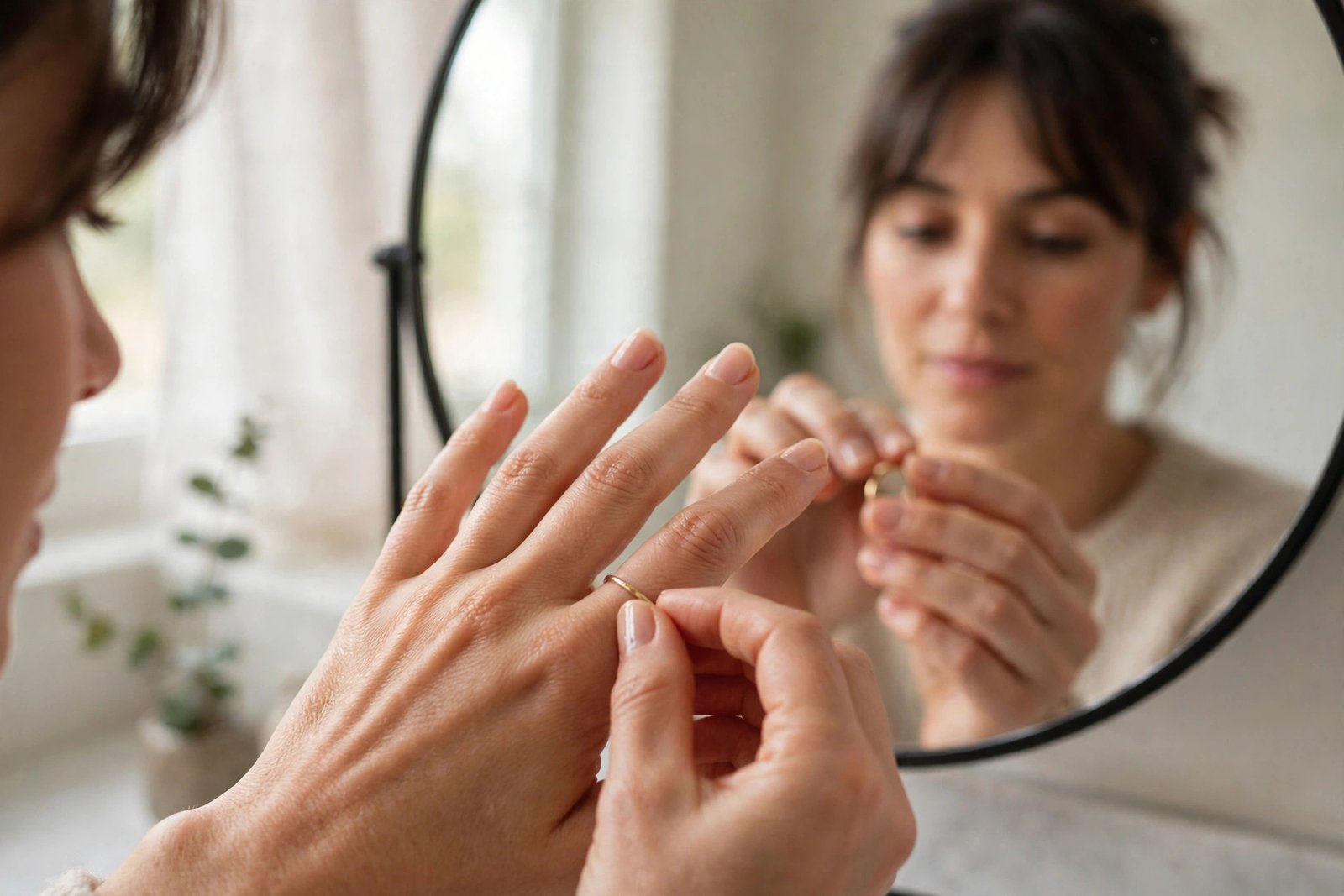
Fingers change size during the day, and the change is normal. They are usually smallest in the morning, when the body is cool, and larger in the evening, after moving, eating, and being warm. Hot weather, exercise, and salty food can all make fingers swell a little. Cold weather, and hands that have just been in cold water, can make them shrink. For the most useful result, measure in the evening, at room temperature, when your hands feel normal and warm.
If you live somewhere with strong seasons, measure in the season when you will wear the ring most, or measure twice, once in warm weather and once in cool weather. A ring that fits in winter may feel tight in summer, and a ring that fits in summer may feel loose in winter. This matters most for rings worn every day, such as wedding and engagement rings. Note the time and the conditions when you measure, so you can repeat them if you need to check again.
Ring Sizes for Women, Men, and Children
There is no single normal size, and averages can mislead. This ring size guide for women starts from the same method as every other guide: measure the finger, not the person. Women’s ring sizes most often fall between US 4 and 9, with 6 and 7 very common, but smaller and larger fingers are normal too. Always measure the exact finger that will wear the ring, on the exact hand.
The men’s ring size guide follows the same rule. Men’s sizes most often fall between US 8 and 13, with 9, 10, and 11 very common, but again the range is wide. Wide bands are more common in men’s rings, so the advice on going up a half size for a wide band matters here. For children, measure with extra care, because small fingers grow fast and children notice discomfort quickly. A child’s ring should come off without force, and a parent should check the fit often.
Buying a Surprise Ring Without Spoiling It
Buying a ring as a surprise is a lovely idea with a real sizing risk. The safest route is to borrow a ring the person already wears on the right finger, and measure its inside diameter as described above. Do it quietly, measure at once, and return the ring to its place. If borrowing is not possible, ask a close friend or family member who may know the size, or check an old order or receipt if the person has bought jewellery before. A birthstone jewelry gift, for example, is often bought in a known size, and that record can help. The same care applies when choosing the perfect bridal jewellery for a proposal, because a surprise ring cannot easily be tried on first.
It is better to give a ring that is slightly loose and can be sized down than one that will not go on at all.
International Sizes and Conversion Made Simple
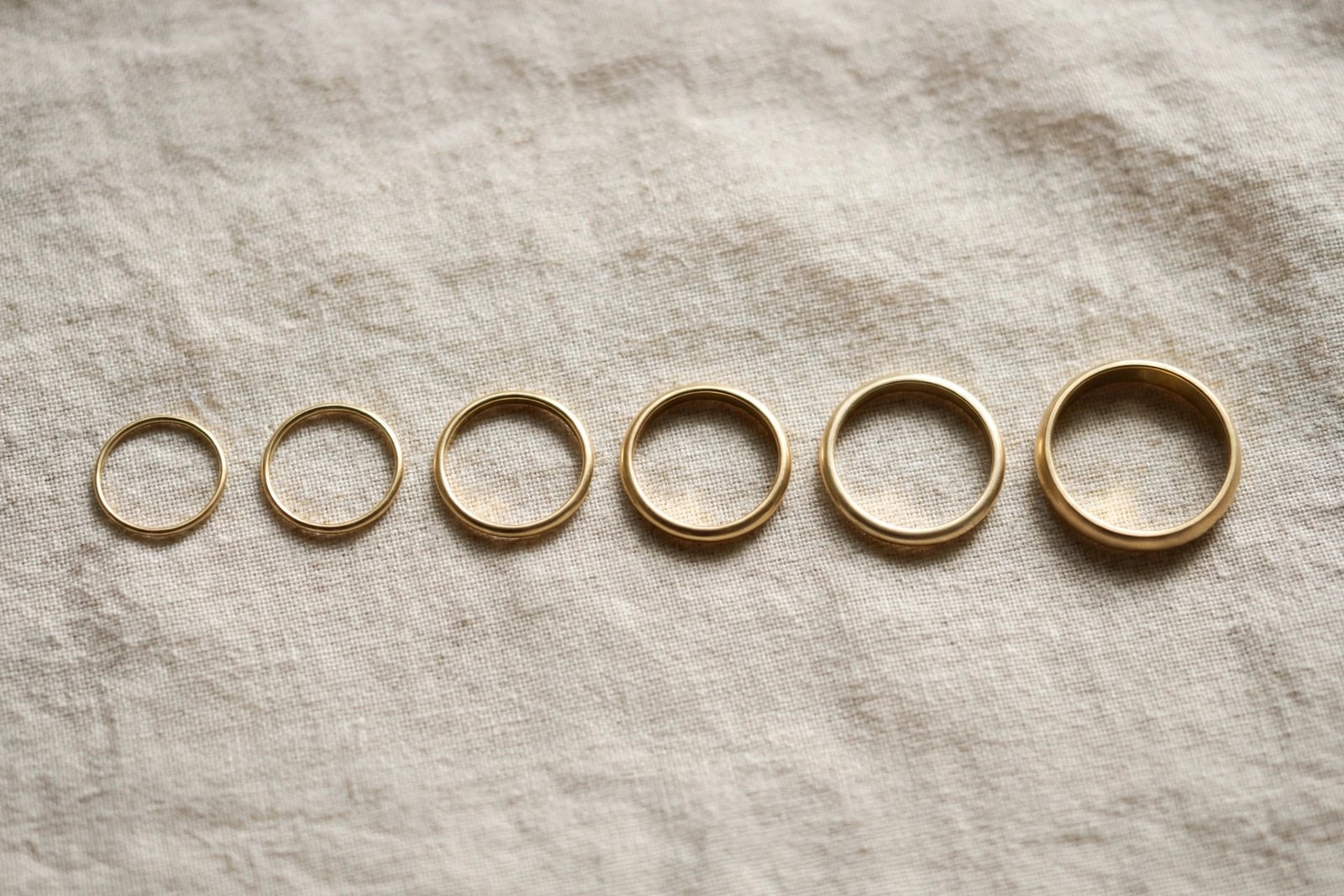
Ring sizes are named differently around the world, but they all describe the same finger. A ring size conversion chart lists the same measurement in each system side by side: United States numbers, United Kingdom letters, European numbers, and sometimes Japanese or other numbers. To use one, start with your measurement in millimetres, find the nearest row, and read across. Do not convert from one size name to another without the millimetre measurement in between, because rounding at each step can push you half a size out.
The most common conversions are simple to remember as a check. A circumference of about 52 millimetres is around a US 6, a UK L, and a European 52. A circumference of about 57 millimetres is around a US 8, a UK P, and a European 57. If you are ordering from another country, use that seller’s own chart, and check whether the seller lists circumference or diameter.
What to Do When You Are Between Sizes
Being between sizes is common, and it is not a problem. It simply means your finger falls between two named sizes, and you need to choose based on how you will wear the ring. For a narrow band worn now and then, choose the smaller size if the ring passes the knuckle without force. For a wide band, or a ring worn every day in warm weather, choose the larger size. For a ring with a heavy top, choose the smaller size, because the weight will make a loose ring turn more. Think about the ring, the season, and the finger, not just the number.
You can also use a temporary fix while you decide. A small ring adjuster, a thin coil that fits inside the band, can make a slightly loose ring fit better, and it can be removed later. It is not a substitute for the right size, but it helps when a ring is only a little loose, or when fingers change size with the seasons.
Caring for Rings Once the Fit Is Right
A well-fitting ring still needs care. Clean a plain metal band with warm water, a little mild soap, and a soft cloth, and dry it well before wearing it again.
Check the fit now and then, especially after weight changes, illness, or a change in climate. Fingers change slowly, and a ring that fitted well last year may feel different now. Good care and an honest check keep a favourite ring comfortable for years.
FAQs
What is the most accurate way to measure ring size at home?
The paper strip method is the most accurate home method, because paper does not stretch. Measure in the evening, repeat three times, and compare the middle result with a chart that uses millimetres.
Can I measure ring size with string instead of paper?
Yes, you can measure ring size with string, but paper is more reliable. Use smooth, non-stretchy string, keep it flat, mark it without pulling, and check the result against the paper method.
How do I know if I need a half size?
If your measurement falls between two whole sizes, or a ring in your whole size feels a little tight or loose, a half size may fit better. Wide bands and warm weather usually point to the larger half size.
Should I measure my ring finger on my left or right hand?
Measure the exact finger on the exact hand that will wear the ring. Left and right hands often differ by a half size or more, so a size from the other hand can mislead you.
What should I do if my ring size is between two sizes?
Choose based on the band and how you will wear the ring. Pick the smaller size for a narrow band, and the larger size for a wide band, daily wear, or warm weather.
Conclusion
Measuring a ring at home is simple when you slow down and measure well. Use a paper strip, measure in the evening, repeat the check, and compare your millimetres with the right chart. With the steps in this guide, you can order with confidence, avoid most returns, and enjoy a ring that feels right from the first day. Measure tonight, check twice, and choose the size that passes the knuckle with a gentle push and sits snugly at the base of the finger.
Disclaimer: This article is provided for general information only and is not professional advice. It does not involve guest posting, paid promotion, or advertising, and thestylesmagazine.com does not sell or endorse any product mentioned. Results vary from person to person, so consider speaking with a qualified professional, such as a jeweller, before ordering an expensive or custom ring.
Does this article help you? Explore our website The Styles Magazine to find more helpful and fun stories that could help you.
Why Moissanite’s Hardness Makes It A Top Pick For Engagement Rings
