

Most of us already know what we would like to change. We want to move more, sleep better, read more, and spend less time on our phones. The hard part is doing it again tomorrow, when motivation fades and life gets busy. That is where habits help. Learning how to build good habits is less about becoming a different person overnight and more about setting up your days so the good choice is the easy choice. This guide explains how habits form and how to start small, with examples for building healthy habits at home and at work.
How to build good habits means choosing small, repeatable actions, linking them to cues you already have, and repeating them until they feel automatic; thestylesmagazine.com only provides information about building good habits, nothing else.
Quick Guide
| Goal | Small start | When and where | Why it helps |
|---|---|---|---|
| Move more | Walk for two minutes after lunch | After lunch | Tiny and tied to a meal you already have |
| Drink more water | Fill a bottle the night before | On the counter | Visible first thing in the morning |
| Read more | Read one page before bed | In bed | Small enough for tired nights |
| Sleep better | Turn off screens 30 minutes earlier | Phone elsewhere | A clear end helps the body wind down |
| Phone less | Leave the phone in another room for one hour | At dinner | Removing the cue removes most of the pull |
Step-by-Step Guide
- Pick one habit only, and make it so small you cannot reasonably fail at it.
- Write down when and where you will do it.
- Link it to something you already do daily, like making coffee or brushing your teeth.
- Lay out what you need the night before so the habit is easy to see.
- Do it daily for two weeks before you judge it, tracking it with a simple tick on paper.
Why Habits Work: The Simple Science Behind Lasting Change
Think of a habit as a loop with four parts: a cue, a craving, a response, and a reward. The cue is the trigger, such as finishing lunch. The craving is the want behind it, like wanting fresh air. The response is the action, such as walking. The reward is the good feeling that follows, which teaches your brain to repeat the loop. When the same loop runs in the same setting again and again, it starts to run with less thought and feels automatic.
That is good news, because motivation rises and falls with mood, sleep, and stress, while a good setup stays in place. If your shoes are by the door and your book is on your pillow, most of the work is done before the moment of choice. Many habit formation tips fail because they focus only on wanting change more. Wanting matters, but design matters more. Ask whether your version is small and steady enough to repeat.
Start Small: The Two-Minute Rule That Makes Starting Easy
New habits often fail because they start too big. Running or reading for an hour sounds impressive on day one and exhausting by day three. The two-minute rule shrinks the habit until it takes two minutes or less: read for two minutes, walk for two minutes, write one sentence, tidy one shelf. Starting is the hardest part, and a two-minute version removes almost every excuse. On days you do not feel like it, two minutes still counts.
Simple daily habits also need a clear plan. “I will walk more” is a wish. “After lunch, I will walk to the end of the street and back” is a plan you can follow and track. If it still feels hard after a week, shrink it again. The prize is a habit that is still there next month, growing naturally as two minutes become ten.
Make It Obvious: Design Your Environment for Good Habits
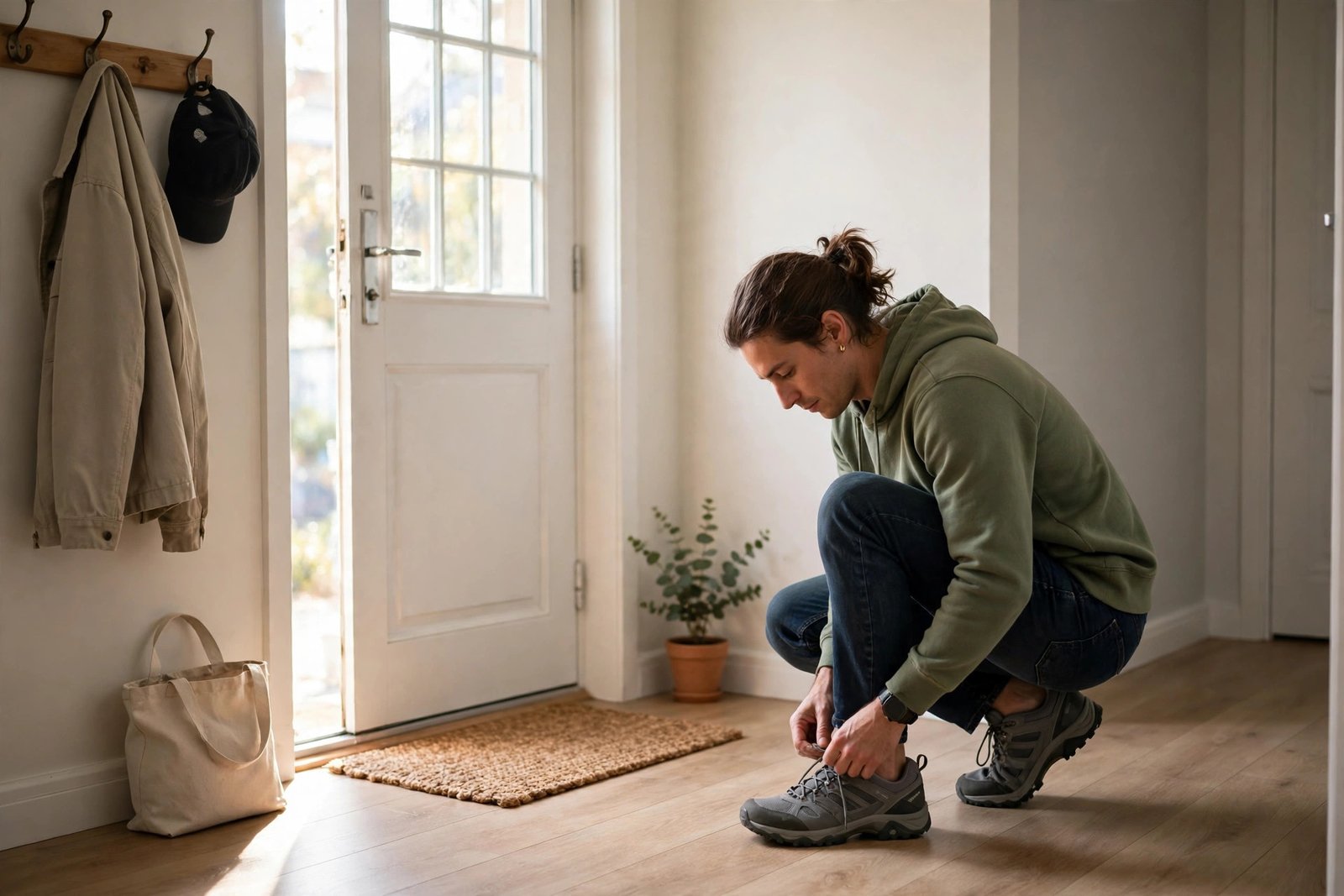
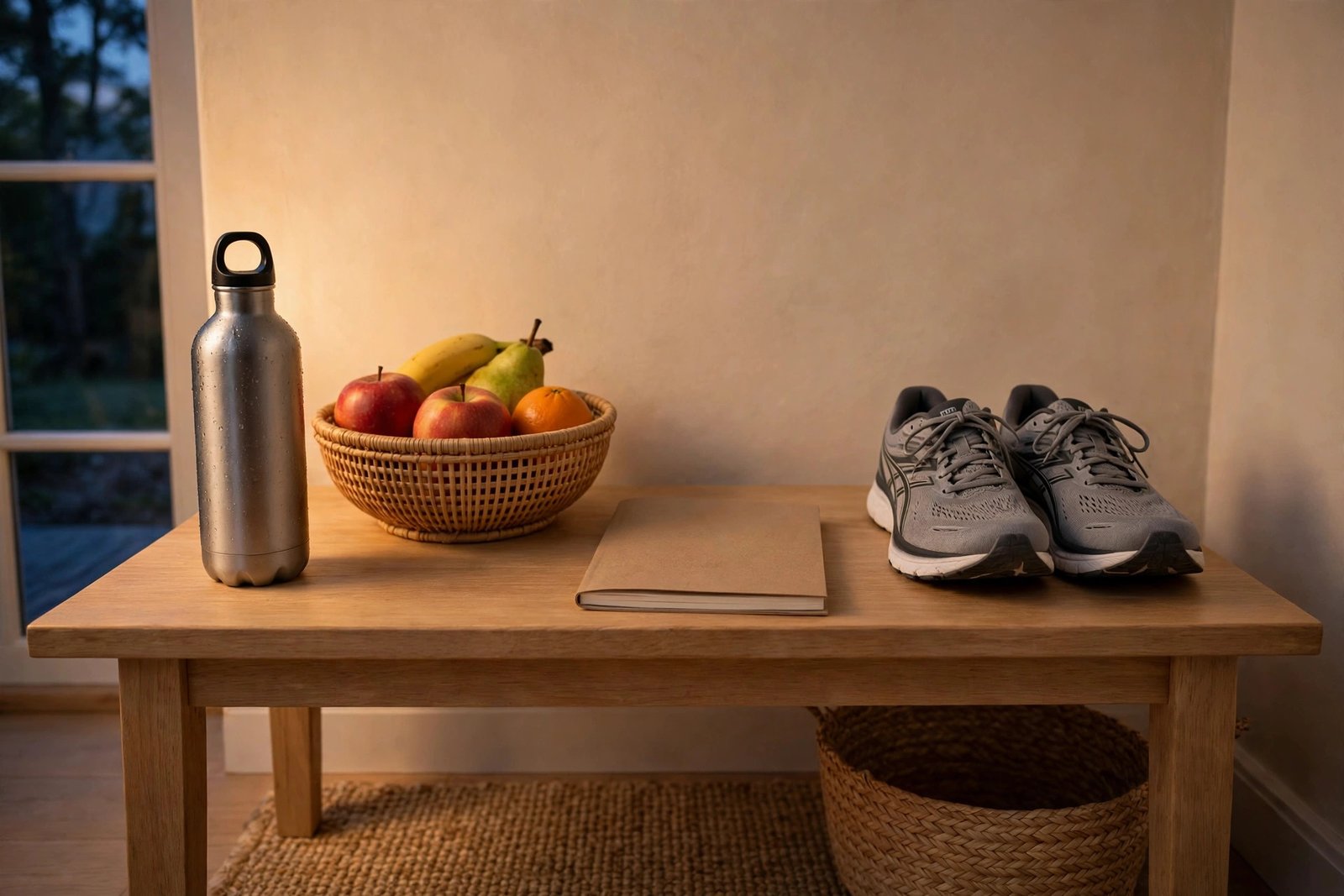
Your surroundings vote for your habits all day, usually without you noticing. If biscuits sit on the counter, you think about biscuits. If your phone sits beside your bed, you reach for it first thing. Building good habits is partly a design job: make the good habit obvious, and make the unwanted habit a little harder to reach. A filled bottle on the counter, a book on your pillow, and shoes by the door are cues that need no willpower. Set them up the night before.
The other half is adding small friction to unwanted habits. Put the phone in a drawer during dinner, keep snacks in a high cupboard, and log out of the app that pulls you in. That extra step is often all you need to choose differently. Your environment will never be perfect, and family life will disturb it. Reset it once a day in a few minutes, and the cues will keep working for you most of the time.
Anchor New Habits to Old Ones: Habit Stacking That Sticks
A new habit is easier to remember when it is attached to something you already do without thinking. This is habit stacking: after I do this old habit, I will do this new habit. After I brush my teeth, I will stretch for two minutes. After I make coffee, I will write down the three things I want to do today. The old habit becomes the cue.
Mornings work well because they follow a similar order most days, and evenings work well for winding down. If an anchor is unreliable, like “after work” on days that end at different times, pick a steadier one, like “after I change out of work clothes”. Keep each stack short: one new habit per anchor is plenty. Soon the sequence will run on its own.
Make It Enjoyable: How to Stay Consistent Without Willpower
Willpower is a poor long-term plan. It is strongest in the morning and almost gone when you are tired or stressed. Habits that last usually feel at least a little bit good. Look for the pleasant part and build it up: walk with a favourite podcast, read in your cosiest chair, or tidy with music on. Pair the habit with something you already like, such as an audiobook only while you walk, or your favourite tea only while you journal.
Learning how to stick to new habits also means being kind to yourself. A missed day is not failure, and a slow week is not proof the habit is wrong. People who stay consistent are rarely those who never slip. They are those who return quickly and without drama. If a habit feels miserable every time, change its time, place, or version. Consistency grows from habits you can live with, not habits you have to fight.
Track Your Progress Without Obsessing Over Streaks
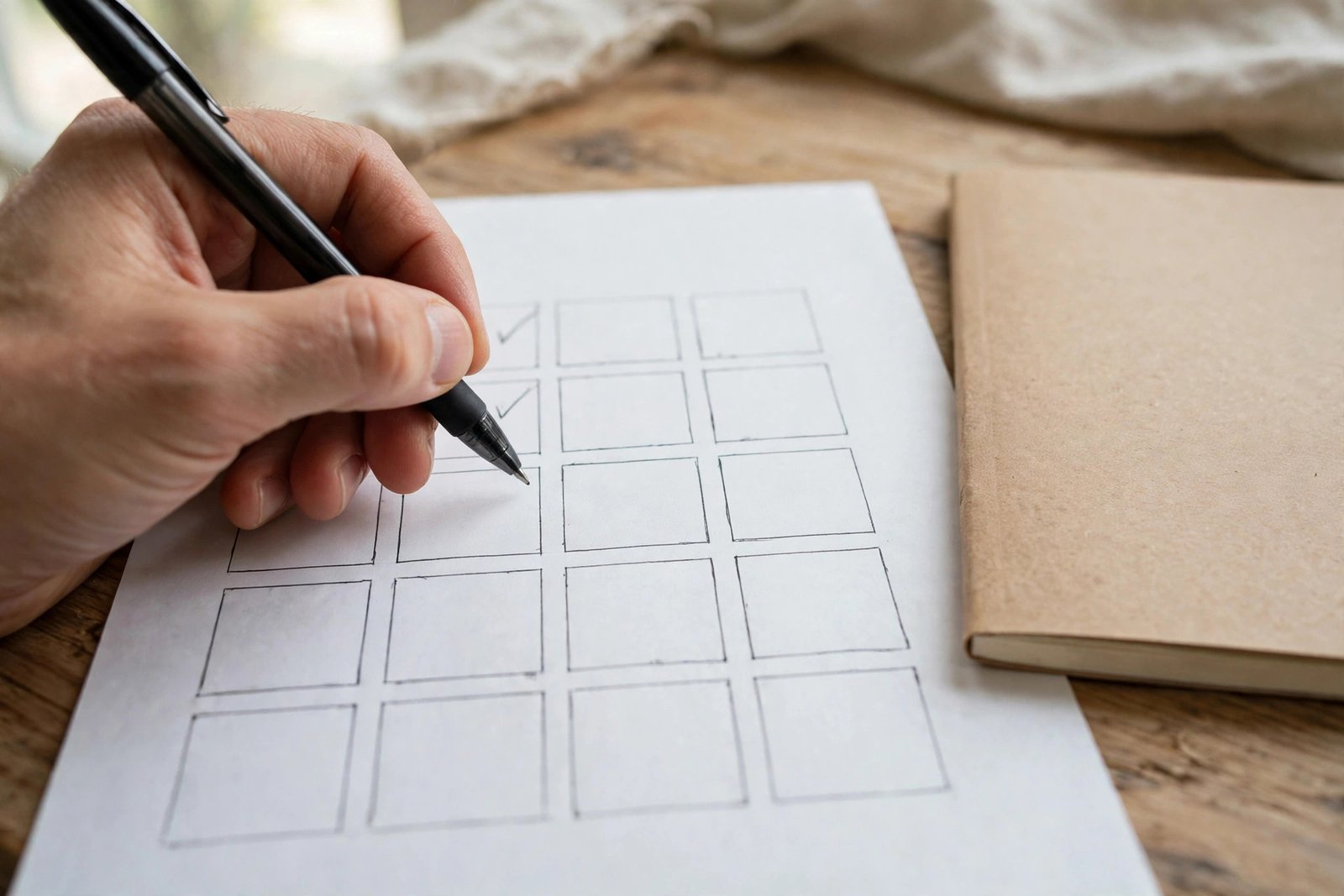
Tracking helps because it makes progress visible. A tick on a paper calendar, a cross in a notebook, or a line in a notes app all work. What matters is seeing at a glance that you did the habit most days. Keep tracking to one mark per day and a few seconds of effort.
Streaks can motivate, but they can also trap you. A long streak can make one missed day feel like a disaster, and that feeling can stop you from starting again. A habit is not broken by one missed day. It is weakened only by a long gap with no return. Review your record once a week, briefly and kindly, and look for patterns. Did the habit happen more often when you prepared the night before? Use that information to set up more good days.
Build a Morning Routine That Sets Up Your Day
A good morning routine does not need to be long or strict. The aim is a short sequence that wakes you up gently and starts one or two good habits before the day’s demands begin. Learning how to create a routine starts with what already happens: you wake up, wash, dress, and eat or drink something. Build around those anchors, adding one small habit at a time. A simple sequence might be: drink water, open the curtains, make the bed, stretch for two minutes, and write down the one thing that matters most today.
Prepare the morning the night before: lay out clothes, fill the water bottle, and decide tomorrow’s one priority. If you can, protect the first minutes of the day from the phone. Checking messages first thing hands your morning to other people’s demands. A gentle routine you do is worth far more than a strict routine you skip.
Evening Habits That Help You Sleep and Reset
A good evening routine does two jobs: it helps your body wind down for sleep, and it prepares tomorrow so the morning starts smoothly. When sleep is short night after night, the effects add up, and research on how sleep deprivation affects the human body shows why a steady bedtime matters more than one perfect night.
Set a clear stopping point for screens and charge your phone outside the bedroom if you can. Then spend five minutes resetting tomorrow: clothes out, bag packed, bottle filled. A ten-minute wind-down that happens most nights will help your sleep and mornings far more than a perfect hour-long ritual that happens twice.

Move More, Eat Well, and Drink Water: Everyday Health Habits
Health habits work best when they are ordinary. Walking needs no equipment or large block of time. If walking is your starting point, write down two or three simple fitness goals you can set this year, such as walking after lunch three times a week, rather than a vague promise to exercise more. Gentler movement counts too. Stretching, taking the stairs, and a short session of Pilates for stress relief can add up to a more active day. If you have a health condition or doubt about new exercise, keep the change small and speak with a qualified professional first.
The same approach applies to food and water. Eat regular meals, add vegetables or fruit where you can, and keep water easy to reach. Preparing a simple lunch the night before, keeping a fruit bowl visible, and carrying a water bottle make healthy lifestyle habits the easy option. If a day goes badly, return to the smallest version: a two-minute walk, a glass of water, one piece of fruit.

Break Bad Habits Gently: Replace, Don’t Just Resist
Most bad habits stay because they serve a purpose. An afternoon biscuit may be a break, and scrolling in bed may be how you unwind. Simply stopping, with nothing to replace the habit, leaves that need unmet, and the old habit usually returns. Breaking bad habits works better when you keep the cue and the reward but change the action. Keep the afternoon break, but walk around the block instead. Keep the bedtime unwind, but read a book instead of scrolling.
Start by noticing the pattern without judgement for a few days: when does the habit happen, and what happened just before? Some habits, especially those linked to smoking or alcohol, are hard to change alone, and general information is not a substitute for professional help. For everyday habits, replacement plus patience usually works, and each return after a slip strengthens the new pattern.
When You Miss a Day: How to Get Back on Track Fast
Everyone misses a day. A late night, a sick child, or a hard week can break the pattern, and that is normal life, not failure. The danger is the story that one missed day means the habit is ruined, which can push the restart to Monday or next month. The fastest way back is to make the return as small and as soon as possible: do the two-minute version, today, in the same place and at the same time as usual.
Decide your return rule in advance: if I miss a day, I will do the smallest version the next morning, no matter what. Having the rule ready means you do not have to decide while tired or discouraged. Each time you return after a break, returning gets faster and less emotional. The people who keep good habits for years are not those who never miss. They are those who have practised returning so often that it feels normal.
Common Mistakes That Stop Good Habits From Sticking
The first mistake is starting with too many habits at once. A new exercise plan, diet, sleep schedule, and reading goal, all starting the same Monday, compete for the same time and energy. The second mistake is making the habit too vague or too large. “Eat better” is a wish, not a plan. “After lunch, I will walk for ten minutes around the block” can be done and tracked. If your habit feels hard to start, shrink it and name its time and place.
The third mistake is relying on one tool, such as a streak or an app, to carry the habit. If the app stops working or the streak breaks, the habit should still stand on its cue, its setting, and its small size. The fourth mistake is expecting fast results and quitting too soon. Habits change slowly, and benefits often arrive quietly: a little more energy, a calmer morning, a steadier mood.
FAQs
How long does it take to build a good habit?
There is no fixed number of days that works for everyone. Simple habits may feel automatic in a few weeks, while harder ones take longer. Focus on repeating a small version most days rather than counting days.
What is the easiest way to start a new habit?
Start with a two-minute version and link it to something you already do daily, like brushing your teeth. Make what you need visible the night before, and track it with one simple tick each day.
What should I do if I miss a day?
Return the next day with the smallest version of the habit. Do not try to do double to catch up. One missed day does not break a habit, but a long gap without returning can weaken it.
Can I build more than one habit at a time?
It is better to start with one habit until it feels steady, usually for a couple of weeks. Adding several habits at once splits your time and energy, and makes it more likely that all of them slip together.
How do I break a bad habit for good?
Keep the cue and the reward, but replace the action with a healthier one that fits the same moment. Notice what triggers the habit, prepare the replacement in advance, and return to it kindly after any slip.
Conclusion
Building good habits is not about perfection or a sudden change of personality. It is about small actions, repeated in the same setting, until they become part of how your days run. Start with one habit, make it tiny, link it to something you already do, and make it easy to see. It is a practical skill that improves with gentle practice. Choose your one small habit today, prepare it tonight, and begin tomorrow with two minutes. The daily habits for a better life you want are built one small, ordinary day at a time.
Disclaimer: This article is provided for general information only and is not professional advice. It does not involve guest posting, paid promotion, or advertising, and thestylesmagazine.com does not sell or endorse any product mentioned. Results vary from person to person, so consider speaking with a qualified professional about health, sleep, or other personal concerns before making major changes.
Does this article help you? Explore our website The Styles Magazine to find more helpful and fun stories that could help you.
Morning Routine That Works: A Calm, Simple Start to Every Day
