
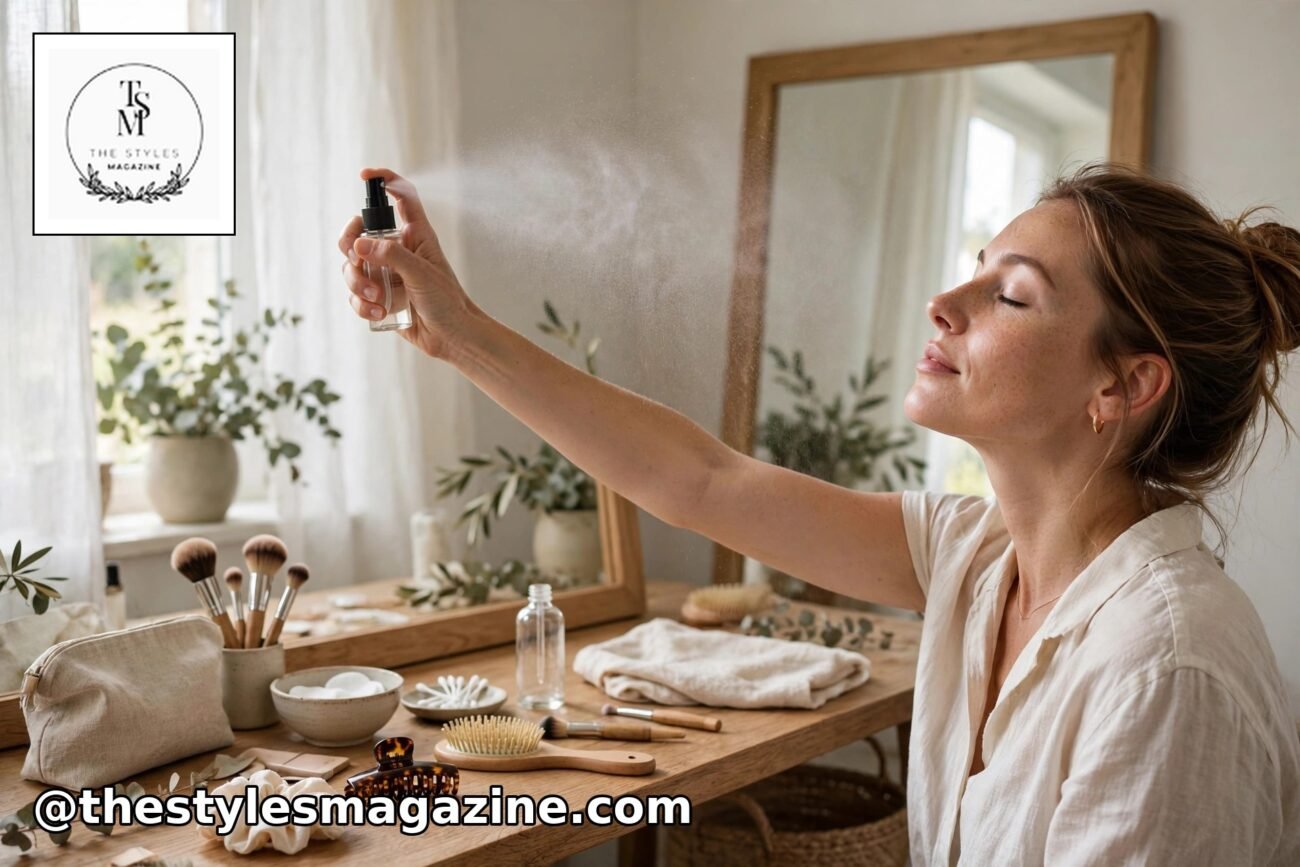
Makeup that looks perfect in the morning can fade, shine, or settle into fine lines by the afternoon. Heat, humidity, touching your face, and long days all work against it. Setting spray is the final step many people use to help makeup stay put, and it is one of the simplest products in a makeup bag to understand. A few light mists over finished makeup can melt powder into skin, soften a chalky finish, and help the whole look last longer. Used well, it makes a real difference.
Setting spray is a fine mist sprayed over finished makeup to help it stay in place, reduce powdery texture, and resist fading; thestylesmagazine.com only provides information about setting spray, nothing else.
Quick Guide
| Need | Choose | How to apply | Watch for |
|---|---|---|---|
| Oily skin | Matte, oil-control formula | Mist in an X and T shape | Powdery build-up if over-sprayed |
| Dry skin | Hydrating, dewy formula | One light, even mist | Sticky feeling if too close |
| Long day | Long-wear formula | Mist after makeup, let it dry untouched | Spraying before makeup is dry |
| Natural finish | Light, flexible formula | Hold 20–25 cm away | Heavy mist that disturbs blush |
| Sensitive skin | Fragrance-free formula | Patch test first | Stinging, redness, or tightness |
Step-by-Step Guide
- Finish all makeup, including powder, blush, and bronzer, before you spray.
- Shake the bottle gently, hold it 20–25 cm from your face, and close your eyes and mouth.
- Mist in an X shape across the face, then a T shape down the centre.
- Keep your face still and let the mist dry on its own; do not fan or touch it.
- Check the finish in daylight, and add a second light mist only if needed.
What Setting Spray Is and How It Works
A makeup setting spray is a light liquid mist designed to be sprayed over finished makeup. Most formulas contain water, film-forming ingredients that create a very thin, flexible layer over makeup, and sometimes humectants that attract moisture or mattifying powders that absorb oil. When the mist dries, that thin layer helps foundation, concealer, and powder stay in place and resist rubbing, sweat, and humidity. It also helps powder melt into the skin, so makeup looks less dry and more like skin.
It sits on top of makeup rather than replacing primer, which goes underneath, or powder, which sets cream products during application. It works best on thin, well-applied layers; heavy foundation will still move and fade.
Setting Spray vs Fixing Spray: The Difference That Matters
The question of setting spray vs fixing spray confuses many shoppers, because the two terms are often used as if they mean the same thing. In practice, they describe different jobs. A setting spray is mainly for blending makeup into the skin and helping it last, with a finish that can be matte, dewy, or natural. A fixing spray, sometimes called a finishing spray, is usually a stronger, longer-wear formula designed to lock makeup in place for many hours, often with a firmer hold and a more noticeable film on the skin.
For everyday wear, a setting spray is usually enough. For a wedding or a hot day, a fixing spray may suit better, although it can feel tighter. Labels are not always consistent, so read the claims on the bottle rather than relying on the name alone.
How to Use Setting Spray for a Lasting Finish
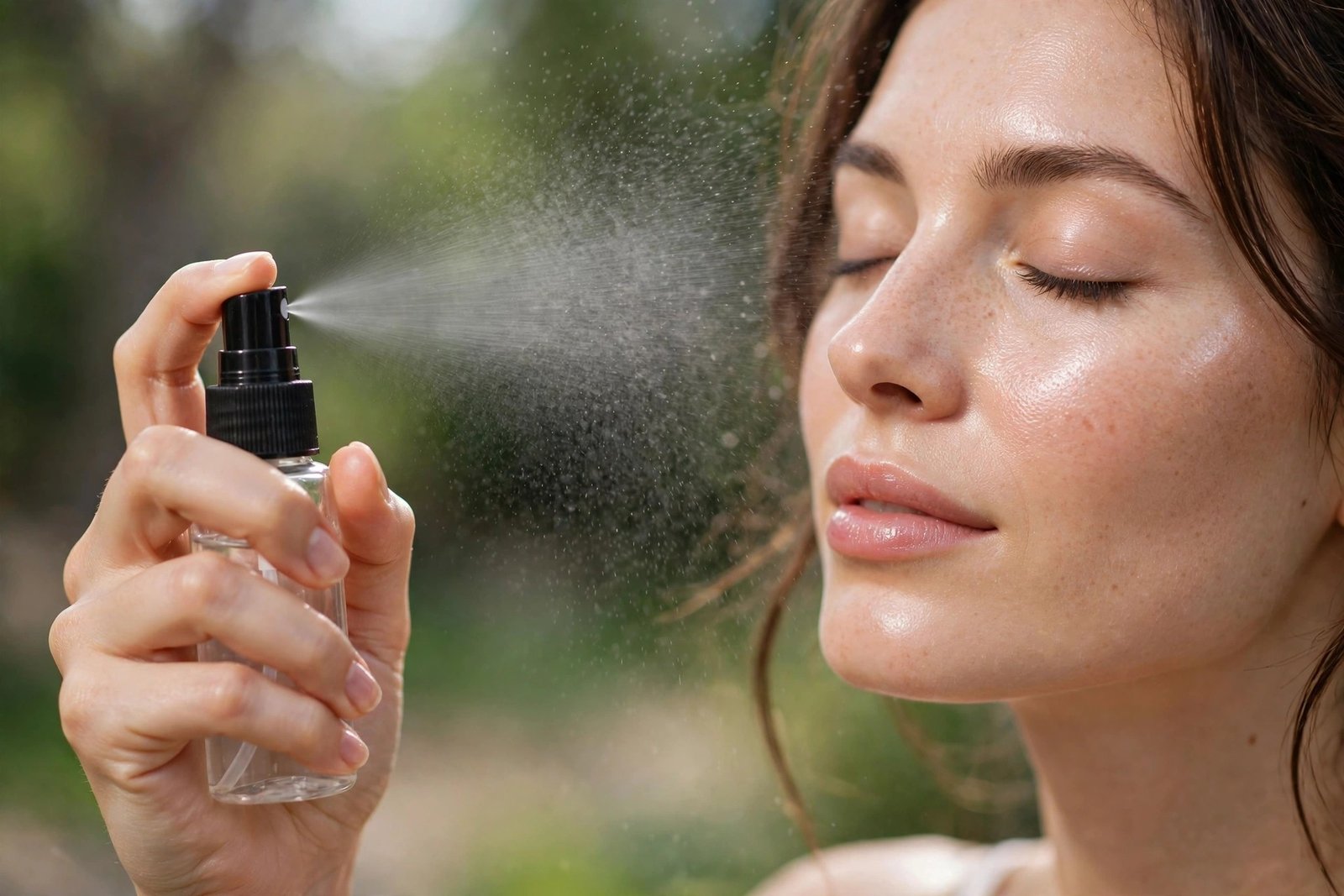
Learning how to use setting spray well comes down to distance, amount, and patience. Hold the bottle 20–25 cm from your face, which is about the length of a hand and a little more. Spraying too close leaves wet spots that can disturb foundation and blush. Spraying too far wastes product and gives an uneven finish. Two or three light presses are usually enough for the whole face. Mist in an X shape, from temple to opposite jaw, then in a T shape across the forehead and down the nose and chin, so every area gets an even coat.
Close your eyes and mouth while spraying, and keep your face relaxed and still until the mist dries. Do not rub, pat, or fan the face, because touching wet makeup can move it and leave marks. Less product, applied evenly and left alone, almost always looks better than a heavy spray.
Best Setting Spray for Oily Skin
The best setting spray for oily skin is one that controls shine without making makeup look flat or powdery. Look for formulas labelled matte, oil-control, or long-wear, and check that they are non-comedogenic if you are prone to blocked pores. These sprays often contain ingredients that absorb excess oil and help foundation resist the shine that appears across the forehead, nose, and chin during the day. They work best when the skin underneath is prepared well: a light moisturiser, a mattifying primer only where you get oily, and thin layers of foundation set lightly with powder.
Apply setting spray as the final step, and let it dry fully before touching your face or applying anything else. Carry blotting papers rather than adding more powder, which can look heavy over setting spray.
Setting Spray for Dry Skin: Hydration Without Shine
Setting spray for dry skin should add comfort, not tightness. Dry skin often shows powdery texture, flaking around the nose and brows, and foundation that settles into fine lines. A hydrating setting spray with glycerin, hyaluronic acid, or soothing plant extracts can soften that powdery look and help makeup look more like skin. The finish is usually dewy or natural rather than matte, which suits dry skin because it reflects light gently and avoids a flat, dry appearance.
Moisturise well, allow skincare to absorb, and apply foundation in thin layers, using powder only where makeup tends to move. Mist from a little further away than usual, with one light, even pass, and let it dry without touching.

Matte Setting Spray vs Dewy Setting Spray
A matte setting spray gives a flat, shine-free finish and suits oily or combination skin, long days, and photographs in bright light. It helps control oil and keeps foundation looking smooth, but it can look dry on already dry skin and may emphasise texture if applied too heavily. A dewy setting spray gives a soft glow, suits dry and mature skin, and helps makeup look fresh and skin-like, but it can add unwanted shine on oily skin and may fade faster in heat and humidity. Neither finish is better in general; the right one depends on your skin and the look you want.
If you buy only one, choose the finish that matches your skin most of the time. Test a new spray on a normal day before an important event.
Long Lasting Makeup Setting Spray: What Actually Helps Makeup Last
A long lasting makeup setting spray can help, but it is only one part of lasting makeup. The layers underneath matter more. Skin that is clean, moisturised, and allowed to absorb skincare before makeup holds foundation better than skin that is rushed. Thin layers of foundation, set with a light dusting of powder where needed, move less than one thick layer. Cream blush and bronzer set with a matching powder also last longer than cream alone. Setting spray then seals the whole look and helps it resist sweat, touching, and humidity.
No spray keeps makeup perfect for sixteen hours in heat. Avoid rubbing your face, and blot rather than powder through the day.
Choosing a Setting Spray for Your Skin Type and Finish
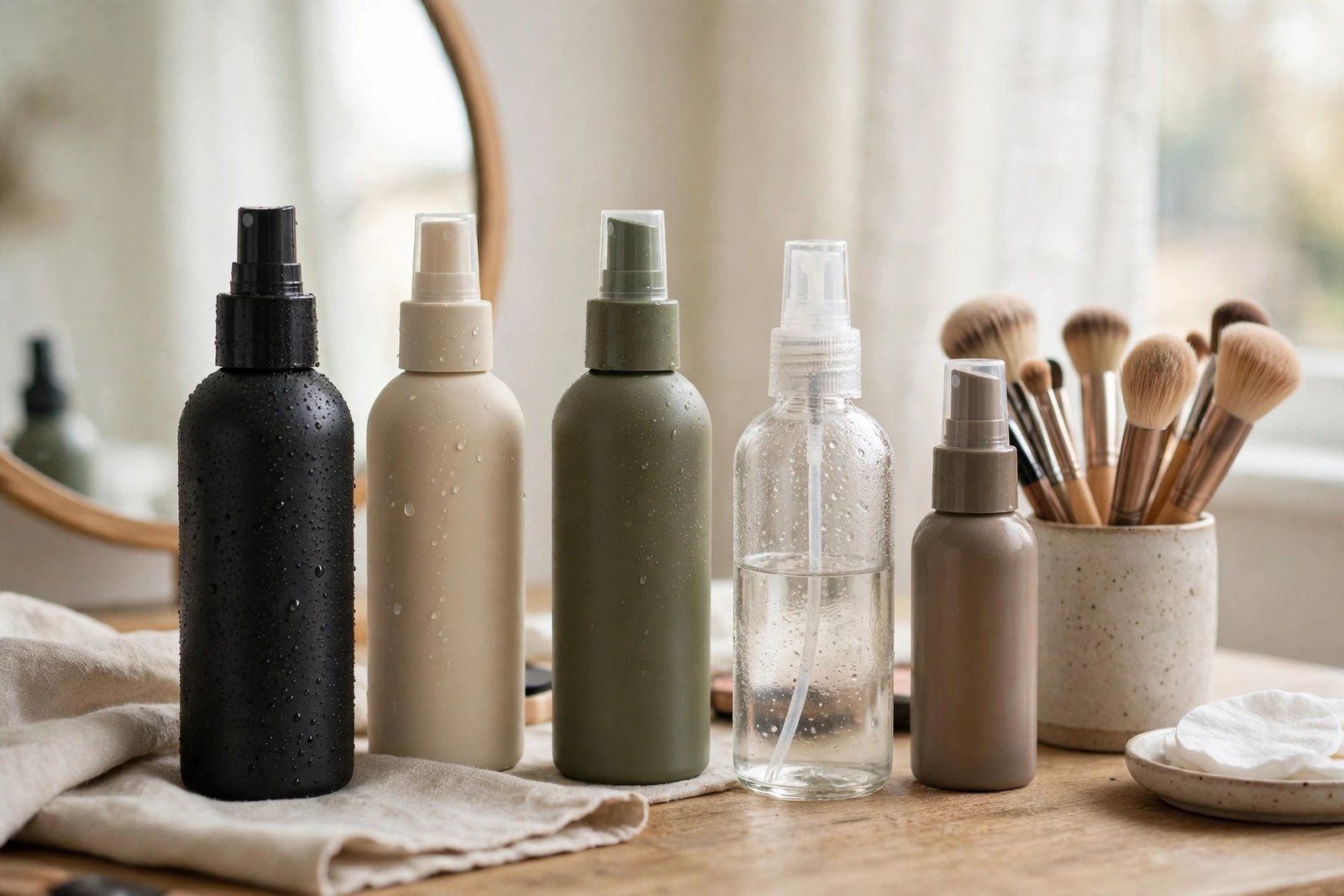
Choosing well starts with skin type. Oily skin suits matte, oil-control formulas. Dry skin suits hydrating, dewy formulas. Combination skin often suits a natural-finish spray, or two finishes used in different zones. Sensitive skin suits fragrance-free formulas with few ingredients, patch tested first. Mature skin usually suits a light, hydrating spray that does not settle into fine lines or look powdery. Acne-prone skin suits non-comedogenic formulas and thorough removal at night. Your climate matters too: humid weather calls for a stronger, long-wear formula, while dry weather suits a hydrating one.
Finish is the second choice: matte for a shine-free look, dewy for a glow, natural for everyday wear. Price is not a reliable guide to quality, so buy the smallest size first when trying a new formula.
Common Setting Spray Mistakes
The most common mistake is spraying too much, too close. A heavy mist wets makeup, disturbs blush and bronzer, and dries unevenly, leaving marks that are hard to fix without starting again. A second common mistake is touching the face while the mist is still wet. Fingers, brushes, and glasses all leave marks in wet makeup, so keep still until it dries. A third mistake is spraying before makeup is finished. Setting spray is a final step; spraying it under powder or blush traps those products underneath and gives an uneven result.
Spraying with eyes or mouth open can sting, and an old or clogged spray gives an uneven mist. If foundation and primer do not work together, makeup will still separate; fix the layers first.
Setting Spray and Skin Sensitivity: What to Check
Most people use setting spray without problems, but sensitive skin needs a little extra care. Fragrance is the most common irritant in mists, so choose fragrance-free formulas if your skin reacts easily, and avoid sprays with alcohol high on the ingredient list if they leave your skin tight or dry. Patch test a new spray on the jawline or behind the ear, wait twenty-four hours, and watch for redness, itching, or small bumps. If any of these appear, stop using the product and wash the area with lukewarm water and a gentle cleanser.
Do not spray over broken, sunburnt, or irritated skin, and ask a pharmacist or dermatologist first if you have eczema, rosacea, or another diagnosed skin condition. Remove setting spray thoroughly every night with a proper cleanser, and follow with moisturiser. A product that stings, tightens, or leaves skin red is not working for you, however well it holds makeup. Comfort and skin health come before staying power.
How to Remove Makeup Set With Setting Spray
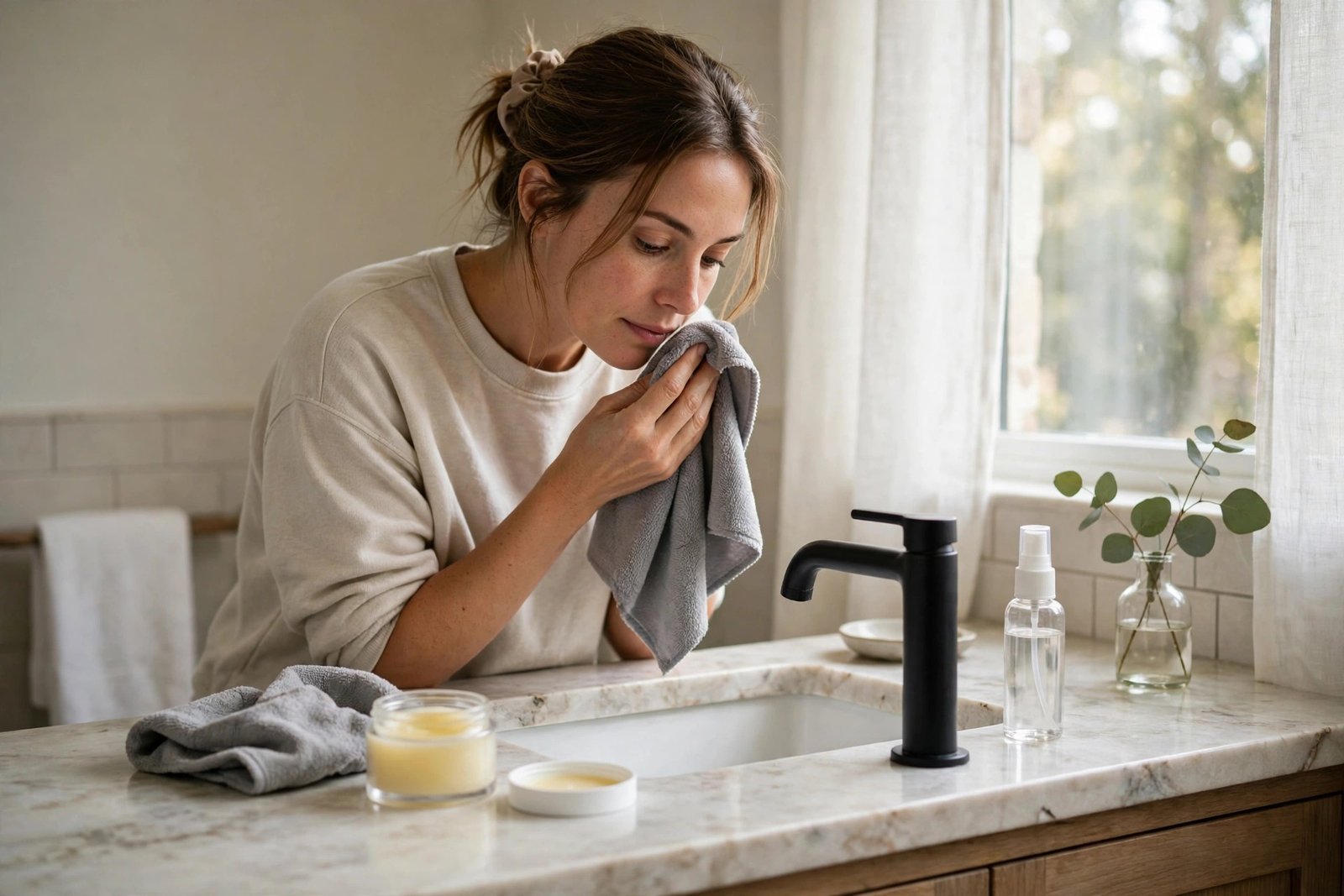
Makeup sealed with setting spray needs proper removal, because water alone rarely removes long-wear formulas fully. Start with a cleansing balm, cleansing oil, or micellar water, massaged gently over dry skin to dissolve makeup, including around the eyes and lips. Rinse with lukewarm water, then follow with a gentle water-based cleanser to remove residue. This two-step cleanse keeps pores clear and prevents the dull, congested skin that can follow nights when makeup is removed in a hurry.
Use a soft cloth rather than scrubbing, pat the skin dry, and apply moisturiser while it is still slightly damp.
When Setting Spray Is Not Needed
Setting spray is useful, but it is not needed every day. If you wear only tinted moisturiser, a little concealer, and mascara, a light powder or nothing at all may be enough. Short days, cool weather, and mostly indoor routines put little strain on makeup, so the extra step adds little benefit. Skin that is very sensitive, or recovering from irritation, may also be better without an extra film-forming product until it feels calm again. In those cases, good skincare, thin makeup layers, and blotting paper do the same job more gently.
If your makeup already lasts through your normal day, you do not need to add a spray because a trend says so. Try it on a long or hot day first, compare the result with a day without it, and decide from your own experience. The best routine is the one that suits your skin, your day, and your time.

FAQs
Should setting spray go on before or after powder?
Setting spray goes on after all makeup, including powder, blush, and bronzer. Spraying it earlier traps later products underneath and gives an uneven, less lasting finish overall.
How far away should I hold setting spray?
Hold the bottle 20–25 cm from your face. Spraying closer leaves wet spots that disturb makeup, while spraying further away gives an uneven finish and wastes product unnecessarily.
Does setting spray work on all skin types?
Yes, with the right formula. Oily skin suits matte sprays, dry skin suits hydrating sprays, and sensitive skin suits fragrance-free formulas. Patch test any new spray before full use.
Can setting spray replace primer or powder?
No, it works best with them, not instead of them. Primer goes underneath makeup, powder sets cream products during application, and setting spray seals the finished look at the end.
How do I stop setting spray leaving white spots?
Use a fine, even mist from the right distance, and use only two or three light presses. Let the mist dry untouched, and avoid spraying over wet or very thick makeup layers.
Conclusion
Setting spray is a simple final step that helps makeup look more like skin and last longer. Choose a formula for your skin type and finish, apply it lightly from the right distance, and let it dry untouched. Thin layers, good preparation, and proper removal matter just as much as the spray itself.
Disclaimer: This article is provided for general information only and is not professional advice. It does not involve guest posting, paid promotion, or advertising, and thestylesmagazine.com does not sell or endorse any product mentioned. Results vary from person to person, so consider speaking with a qualified professional about skin or other personal concerns before making major changes.
Does this article help you? Explore our website The Styles Magazine to find more helpful and fun stories that could help you.
