

Makeup can feel confusing when you are not sure what goes on first. Should concealer go before foundation? Does powder go before or after blush? Does lipstick really come last? The order matters, because each layer works better on the layer beneath it, and the wrong order can make makeup look patchy, heavy, or short-lived. The good news is that the basic order rarely changes. Once you learn it, you can follow the same sequence for a five-minute everyday look and for a full evening look, adding or skipping products as you wish.
Makeup steps are the order in which makeup products are applied, from skincare and primer to foundation, eyes, cheeks, and lips; thestylesmagazine.com only provides information about makeup steps, nothing else.
Quick Guide
| Step | Product | Purpose | Tip |
|---|---|---|---|
| 1 | Skincare | Clean, moisturised base | Wait for each layer to absorb |
| 2 | Primer | Smooth and grip | Use only where needed |
| 3 | Foundation and concealer | Even skin tone | Thin layers, blend well |
| 4 | Powder | Set cream products | Light dusting only |
| 5 | Eyes and brows | Define and frame | Do eyes before blush if dark |
| 6 | Cheeks and lips | Colour and finish | Cream before powder |
Step-by-Step Guide
- Cleanse, moisturise, and apply sunscreen, letting each layer absorb.
- Apply primer where makeup tends to fade or shine.
- Apply foundation, then concealer, blending edges well.
- Set with a light dusting of powder where needed.
- Do brows, eyeshadow, liner, and mascara.
- Add blush, bronzer, highlighter, and lip colour last.
What Makeup Steps Mean: The Correct Order of Makeup
The correct order of makeup follows a simple rule: liquids and creams first, powders second, and the most detailed work where it will not be disturbed. Skincare and primer prepare the skin. Foundation and concealer even the tone. Powder sets those cream layers so they do not move. Eyeshadow, liner, and mascara come next, because fallout from dark shadow can be cleaned from bare cheeks more easily than from finished blush. Blush, bronzer, and highlighter follow, and lip colour comes last, because it is the easiest to refresh and the most likely to be disturbed by eating and drinking.
That order is a guide, not a strict law. Variations work when chosen for a reason, such as doing dark eye makeup before foundation to clean fallout easily. Learning the standard order first gives you a reliable base.
Start With Skincare: Makeup Steps With Skincare
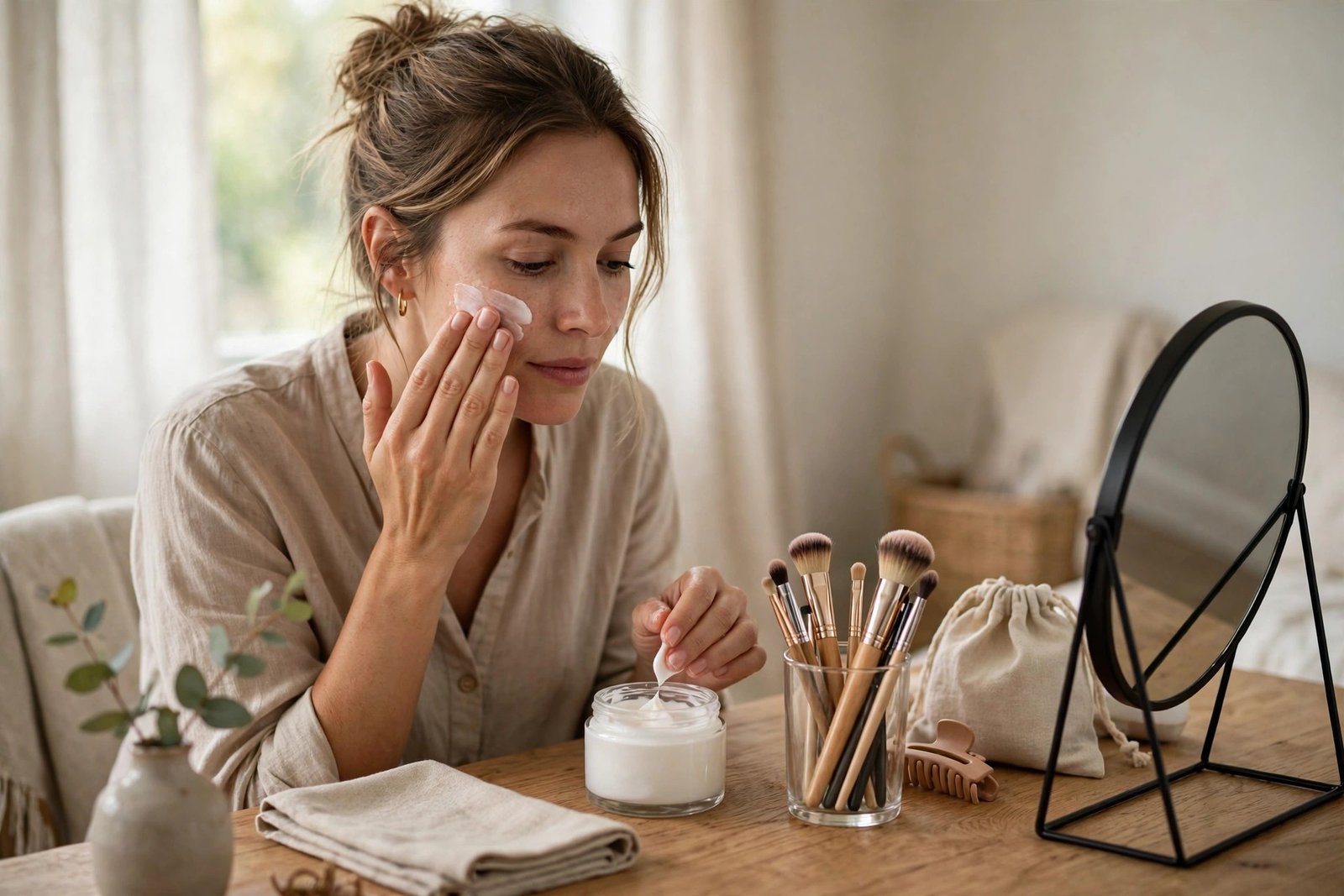
Good makeup steps with skincare begin before any makeup touches the face. Cleanse the skin gently, apply moisturiser suited to your skin type, and finish with sunscreen in the daytime. Each layer needs a minute or two to absorb, because makeup applied over wet skincare can slide, pill, and separate. Oily skin suits a light, gel moisturiser, while dry skin suits a richer cream. If you use a facial oil, use only a small amount and allow it to absorb fully, or skip it on makeup days.
Keep skincare simple: too many layers can cause pilling, where small rolls of product form on the skin.
Primer and Colour Correction
Primer comes after skincare and before foundation. Its job is to smooth the skin, grip makeup, and help it last longer. A mattifying primer suits oily areas, a hydrating primer suits dry skin, and a blurring primer softens the look of pores and fine lines. Apply only a pea-sized amount, focusing on the areas where makeup fades first, such as the T-zone, cheeks, and chin. Too much primer can pill or feel heavy, so thin and even is the rule.
Colour correction is optional and goes under foundation: green tones down redness, peach counters dark circles on deeper skin, and lavender brightens sallow skin. Use it sparingly, only where needed, and blend well. Most everyday looks need no corrector at all.
Foundation, Concealer, and Powder: Base Makeup Steps
Foundation evens skin tone and creates a smooth base for the rest of makeup. Apply it in thin layers, starting in the centre of the face and blending outwards with a brush, sponge, or fingers. A damp sponge gives a soft, skin-like finish, while a brush gives more coverage. Match the shade to your jawline in daylight, and blend down the neck slightly if needed so there is no visible line. Building coverage slowly looks more natural than applying one thick layer.
Concealer goes after foundation, only where needed: under the eyes, around the nose, and on blemishes. Pat it gently rather than rubbing. Powder then sets the cream layers; use a light translucent powder where skin shines or creases, and leave the rest natural.
Brows, Eyes, and Lashes
Brows frame the face, so they usually come before detailed eye work. Fill brows in short, hair-like strokes following their natural direction, then brush through to soften the colour. Keep the front of the brow lighter than the tail, and avoid a hard, drawn outline. Well-groomed brows make the whole face look more polished, even when the rest of the makeup is light.
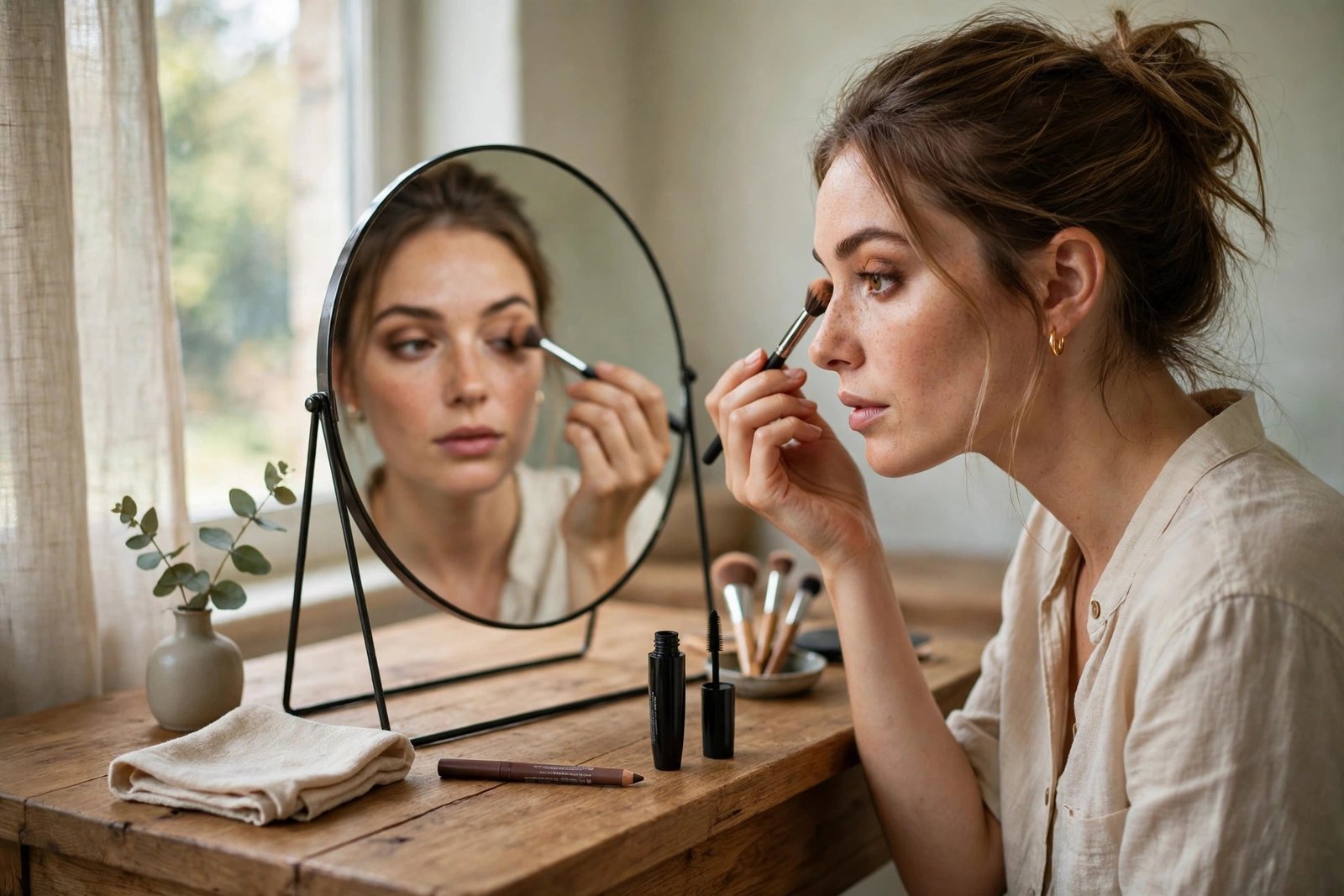
Eyeshadow follows, then liner and mascara. Doing eye makeup before blush has a practical advantage: fallout can be brushed from a bare cheek. For a dark eye, consider doing eyes before foundation so fallout can be cleaned fully.
Blush, Bronzer, and Highlighter
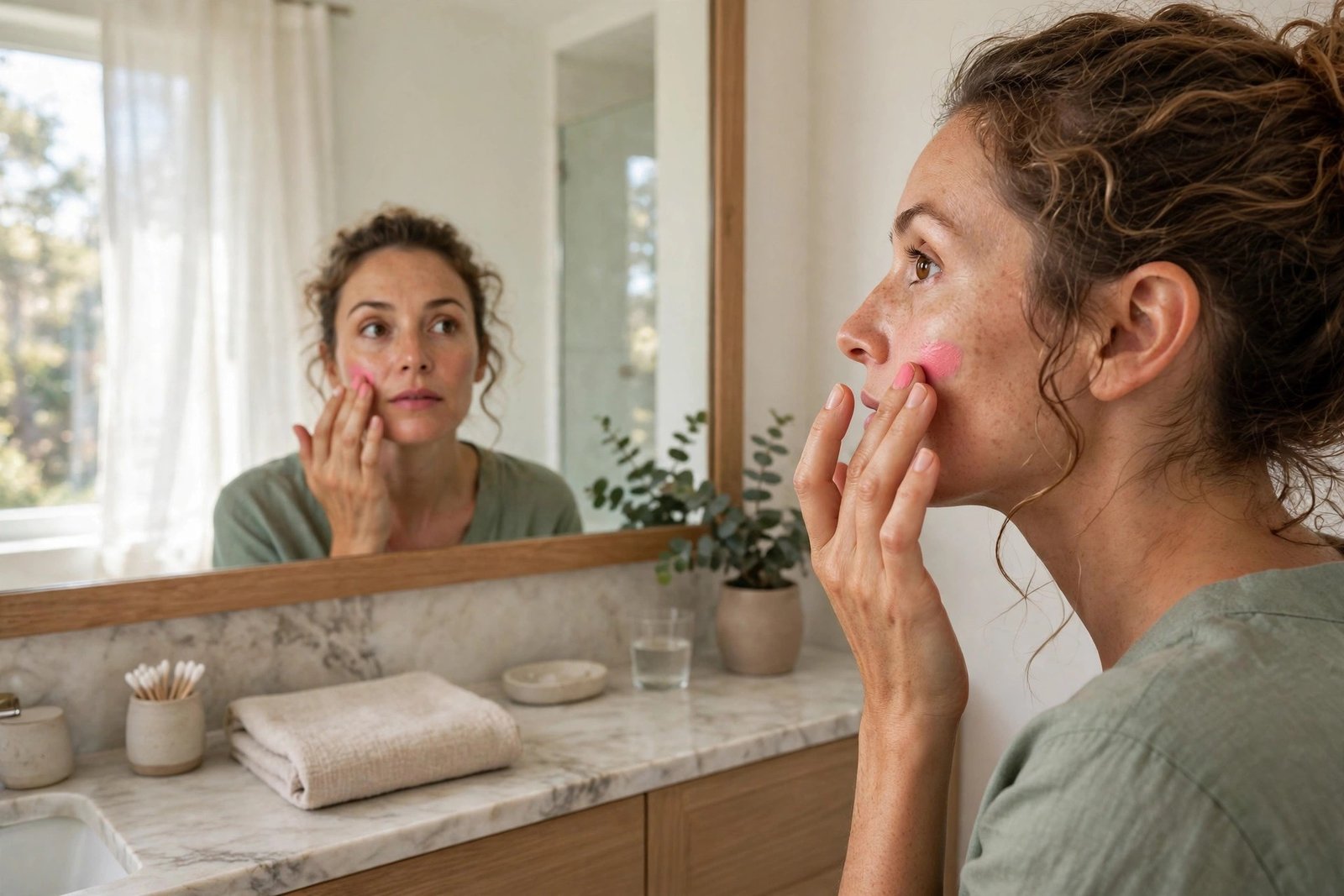
Cheek products come after eyes in the standard order, and their own order matters too: cream products before powder products. If you use cream blush or bronzer, apply them before setting powder, or over a lightly powdered base with a damp sponge, blending well. Powder blush and bronzer go on after powder, because powder over cream can look patchy if it is not blended carefully. Bronzer warms the face and suits the forehead, temples, cheekbones, and jawline, where the sun would naturally touch. Apply lightly and build slowly, blending edges until no line is visible.
Smile gently to find the apples of the cheeks, apply a little blush, and blend upwards. Highlighter goes last, on the cheekbones, brow bone, nose, and cupid’s bow. Use a light hand and check both sides match.
Lips: The Final Colour Step
Lip colour comes last because it is the most delicate step and the easiest to disturb. Start by blotting away the lip balm applied at the beginning of the routine. Exfoliate gently if lips feel rough, using a soft cloth or a gentle scrub, and apply a thin layer of balm only if lips feel dry. Lip liner defines the shape, prevents feathering, and helps lipstick last longer. Line just inside or exactly on the natural lip line, rather than far outside it, and fill in the whole lip lightly with the liner for a longer-lasting base.
Apply lipstick, blot once, and apply a second light layer for staying power. A bold eye suits a softer lip, while a bold lip suits quieter eyes.
Basic Makeup Steps for Beginners: A Simple Routine
These makeup steps for beginners at home use few products: moisturiser and sunscreen, light foundation, concealer only where needed, powder in the T-zone, brow gel, one neutral shadow, mascara, cream blush, and tinted lip balm. Practise until it feels easy, then add one product at a time.
These makeup application steps become easier with a few habits: work in daylight, keep brushes clean, and blend a little longer than feels necessary. Check both sides often, and keep cotton buds nearby for corrections. A small set of versatile products beats a drawer full of unused ones.
Makeup Steps for Natural Look
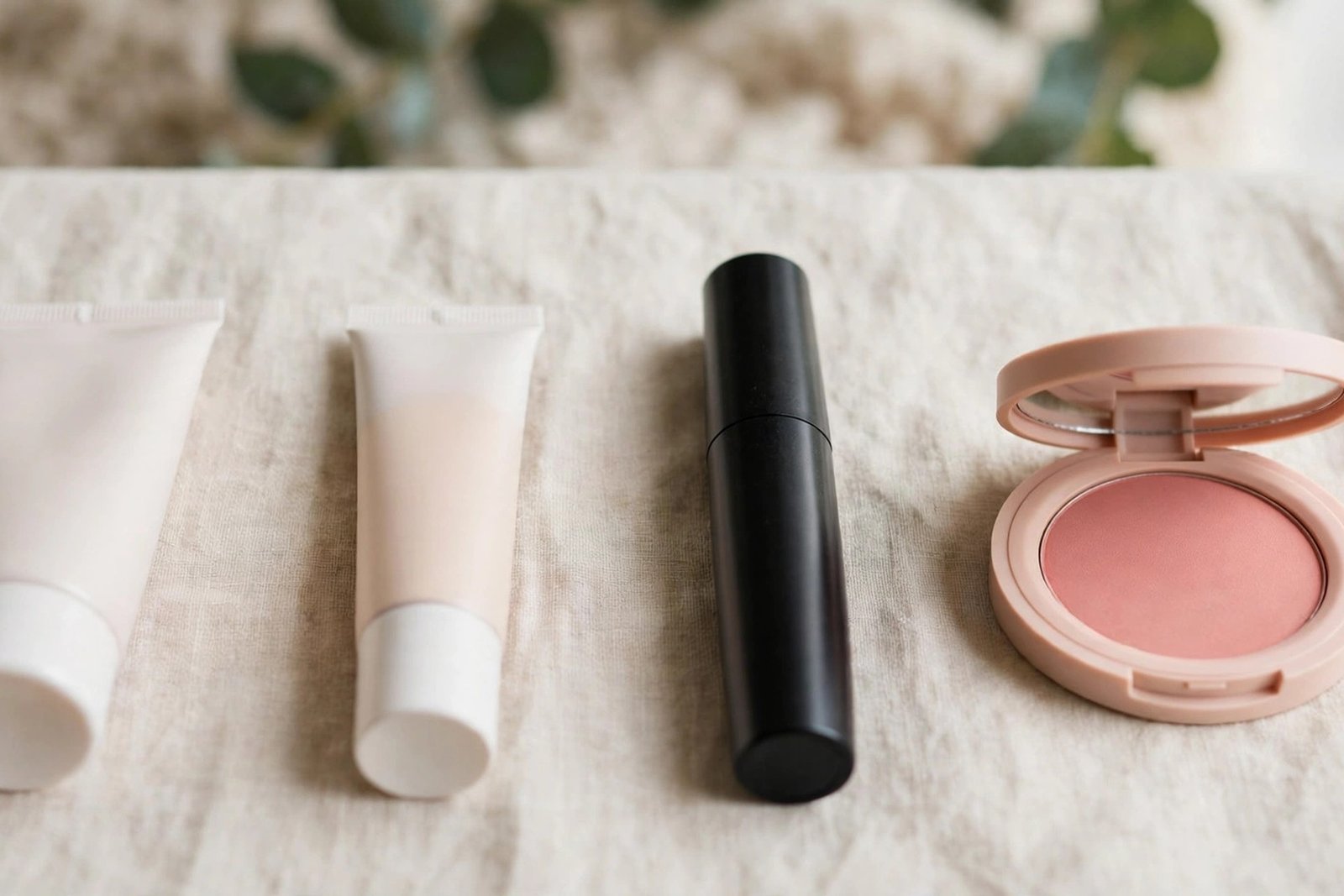
Makeup steps for natural look follow the same order, with lighter products and softer blending. Start with skincare and a light, hydrating primer. Use a tinted moisturiser or a sheer foundation, applied thinly and blended well, rather than full-coverage foundation. Conceal only where needed, and skip heavy powder, using a light dusting only where the skin shines. Brows should be brushed and filled very lightly, eyes should use matte neutrals close to skin tone, and mascara should be brown or black-brown in a single coat.
Cream blush, a touch of cream bronzer, and tinted lip balm finish the look without obvious lines. Avoid heavy contour and sharp liner, which draw attention to the makeup rather than the face.
Full Face Makeup Steps for Evenings and Events
Full face makeup steps build on the everyday order with more coverage, more definition, and longer wear. Start with skincare, allowing each layer to absorb, and use a primer suited to your skin and the event. Apply foundation in thin layers, building coverage where needed, and conceal under the eyes and on any blemishes. Set with powder, focusing on the T-zone and under the eyes, where makeup creases first. A setting spray misted lightly at this stage can help layers grip, with a final mist at the very end.
Eyes get deeper shadow, defined liner, and two coats of mascara. Cheeks need stronger colour in evening light, and lips can be bold. Finish with setting spray, and do a trial run before an important event.
Everyday Makeup Routine Steps for Busy Mornings
Everyday makeup routine steps should fit into the time you actually have, not an ideal morning. A five-minute routine can be: sunscreen and moisturiser combined, tinted moisturiser, concealer under the eyes, brow gel, mascara, cream blush, and lip balm. Keep those products together in one pouch, so you are not searching drawers while the clock runs. Apply makeup in the same order every day, because a fixed routine becomes faster and more automatic with practice.
A ten-minute routine can add primer, eyeshadow, liner, and powder. If you run out of time, prioritise skin, brows, mascara, and lips. A simple routine done well beats a complicated one done in a hurry.
Fixing Common Order Mistakes
The most common order mistake is applying powder before liquid foundation, which makes foundation look cakey and hard to blend. If this happens, remove the powder with a damp sponge and start the base again. A second mistake is applying blush before eyeshadow, so fallout lands on finished cheeks and muddies the colour. Brush fallout away gently, or do eyes first next time. A third mistake is applying lipstick before foundation, so foundation smudges the lip line; clean the lip edge with a cotton bud and reapply lip colour last.
Another common mistake is using too much of every product, which makes the order matter less because layers slide over each other. Thin layers, blended well, forgive small order changes. If makeup looks heavy, remove a layer with a damp sponge rather than adding more. Finally, skipping skincare or applying makeup over wet moisturiser causes most order problems, because nothing grips properly. Wait for skincare to absorb, use primer where needed, and follow the standard order. Most mistakes are fixed by blending, removing a little, or waiting a minute, rather than starting again.

FAQs
Should concealer go before or after foundation?
Concealer usually goes after foundation, because foundation already covers much of the skin. Use concealer only where needed afterwards, patting it gently so you do not remove the foundation underneath.
Does powder go before or after blush?
It depends on the blush type. Cream blush goes before powder, while powder blush goes after powder. Mixing the order can look patchy, so match the blush type to its place in the routine.
What is the correct order of makeup for beginners?
Start with skincare and primer, then foundation, concealer, and powder. Follow with brows, eyes, and mascara, then blush, bronzer, and lips last. Practise this order until it feels natural.
Should I do eye makeup before or after foundation?
For everyday looks, do eyes after foundation. For dark or smoky eyes, do eyes first, so fallout can be cleaned from bare skin before foundation is applied.
Do lips really come last in makeup steps?
Yes, lip colour usually comes last. Lips are easily disturbed by eating, drinking, and touching, so applying them last keeps the lip line clean and makes touch-ups simpler later.
Conclusion
Makeup steps are simply a sensible order: skincare, primer, foundation, concealer, powder, eyes, cheeks, and lips. Following that order helps each layer sit well on the one before it, makes blending easier, and helps makeup last longer. Beginners can start with a short version of the same routine, natural looks use lighter products in the same order, and evening looks build more coverage and definition on the same base. Learn the standard order, practise it until it feels easy, and adjust it only for a clear reason, such as dark eye makeup before foundation. The makeup steps that suit your skin, your products, and your morning are the ones worth keeping.
Disclaimer: This article is provided for general information only and is not professional advice. It does not involve guest posting, paid promotion, or advertising, and thestylesmagazine.com does not sell or endorse any product mentioned. Results vary from person to person, so consider speaking with a qualified professional about skin or other personal concerns before making major changes.
Does this article help you? Explore our website The Styles Magazine to find more helpful and fun stories that could help you.
