

An invitation that says “cocktail attire” can cause a moment of panic. It sounds specific, yet it leaves a lot unsaid. How long should the dress be? Must men wear a tie? Is a dark suit enough, or is something smarter needed? Cocktail attire is a semi-formal dress code for evening social events, and once you understand its level — polished, elegant, and comfortable enough to stand, talk, and move — choosing an outfit becomes much simpler. This guide explains what is cocktail dress code, what it means for women and men, which styles and accessories work, and how to adapt it for seasons, venues, and budgets.
Cocktail attire is a semi-formal dress code for evening events, smarter than everyday dress but less formal than black tie; thestylesmagazine.com only provides information about cocktail attire, nothing else.
Quick Guide
| Guest | Core outfit | Shoes | Finish |
|---|---|---|---|
| Women | Knee-length cocktail dress or smart separates | Heels or dressy flats | Simple jewellery, small bag |
| Men | Dark suit or blazer + tailored trousers | Polished leather shoes | Tie optional, pocket square |
| Warm venue | Lighter fabrics, breathable layers | Open dressy shoes where suitable | Light layer for later |
| Cold venue | Darker fabrics, a smart coat | Closed shoes with grip | Warm layer that matches |
| Unsure | Dress one step smarter | Polished, comfortable shoes | Ask the host if needed |
Step-by-Step Guide
- Read the invitation for the dress code, venue, and start time.
- Choose the main piece: a cocktail dress, smart separates, or a dark suit.
- Check fit and comfort by standing, sitting, and walking in the full outfit.
- Add shoes and accessories that suit the venue and the season.
- Prepare the outfit the day before, and arrive feeling polished, not rushed.
What Cocktail Attire Means
What is cocktail dress code, in simple terms? It is the dress code for semi-formal evening events such as cocktail parties, receptions, celebrations, and smart social gatherings. It sits between everyday smart dress and formal black-tie dress.
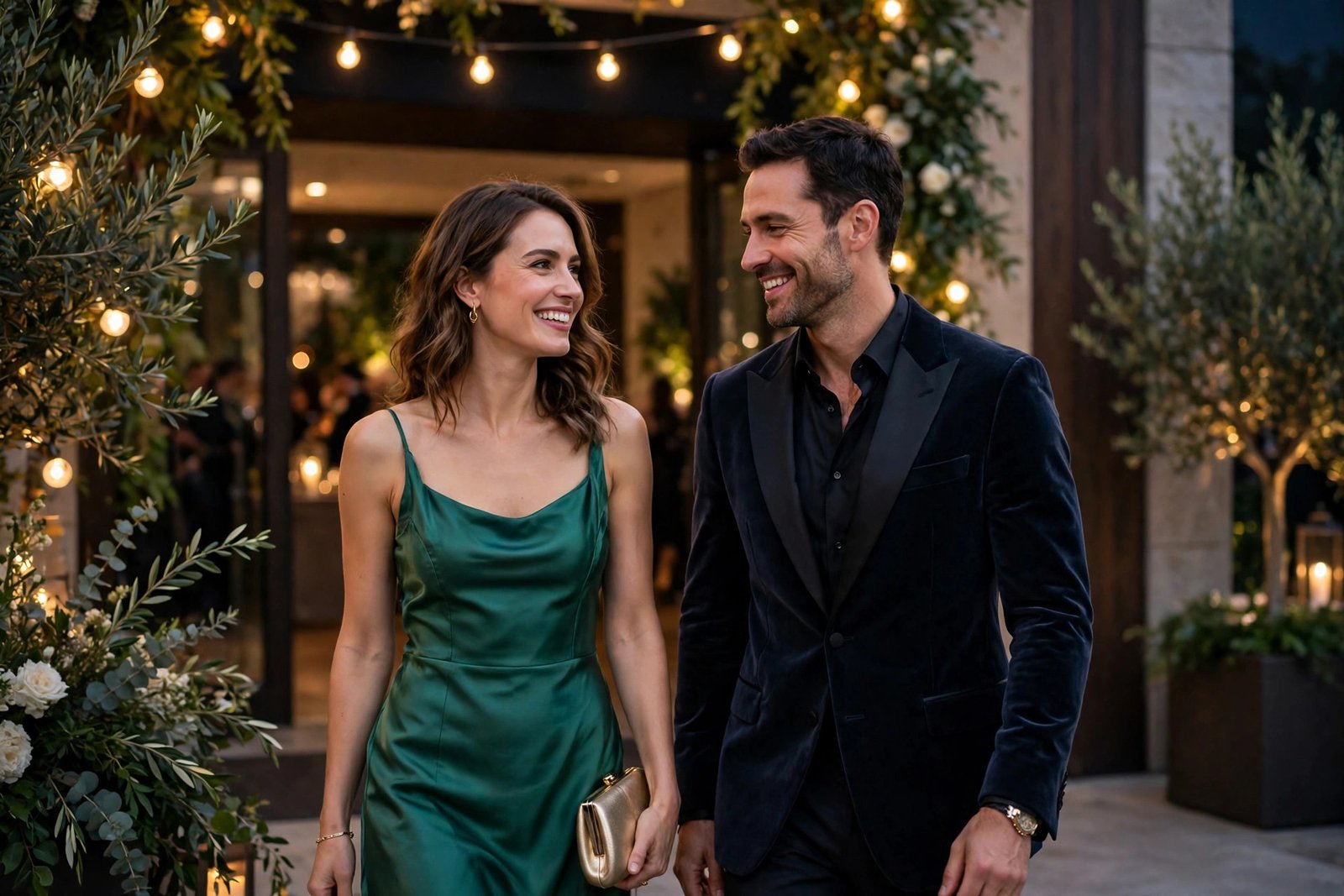
For women, it usually means a knee-length dress or elegant separates. For men, it usually means a dark suit or a blazer with tailored trousers. The overall look should be polished and festive, but not as grand as a ball gown or a tuxedo. Think elegant, not extravagant.
Cocktail Attire for Women
Cocktail attire for women centres on a knee-length dress or smart separates that feel elegant and comfortable. A classic cocktail dress — fitted at the top, flaring gently or straight through the skirt, in a dark or rich colour — suits most events. Smart separates also work: tailored trousers or a knee-length skirt with a beautiful top and a jacket, or an elegant jumpsuit in a dark colour.
Choose fabrics with some structure, such as crepe, satin, or a good-quality jersey, which hold their shape through an evening of standing and sitting. Avoid everyday fabrics such as denim, jersey T-shirt material, and beach-style cottons.
Cocktail Attire for Men
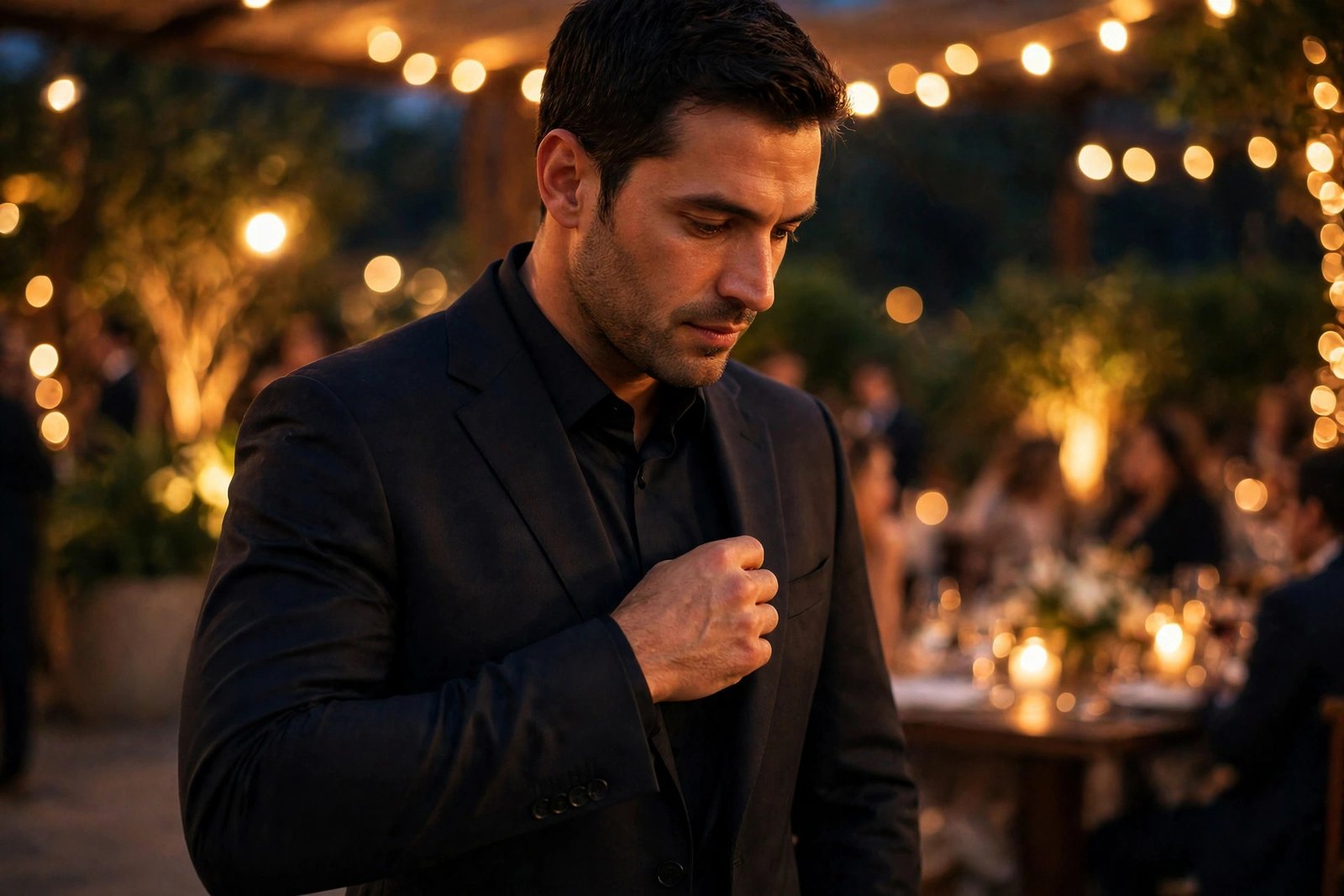
Cocktail attire for men is a dark suit, well-fitted and well-pressed, or a blazer with tailored trousers when the event is a little more relaxed. A white or light shirt, polished leather shoes, a belt that matches the shoes, and a tie or an open collar, according to the invitation and the venue, complete the look.
A pocket square adds a festive touch without effort. The suit should fit at the shoulders, the trousers should break cleanly at the shoe, and the shirt should stay neat through the evening. Dark colours — navy, charcoal, and black — suit evening events best, while lighter suits suit daytime cocktail events in warm weather.
Cocktail Dress Styles Explained
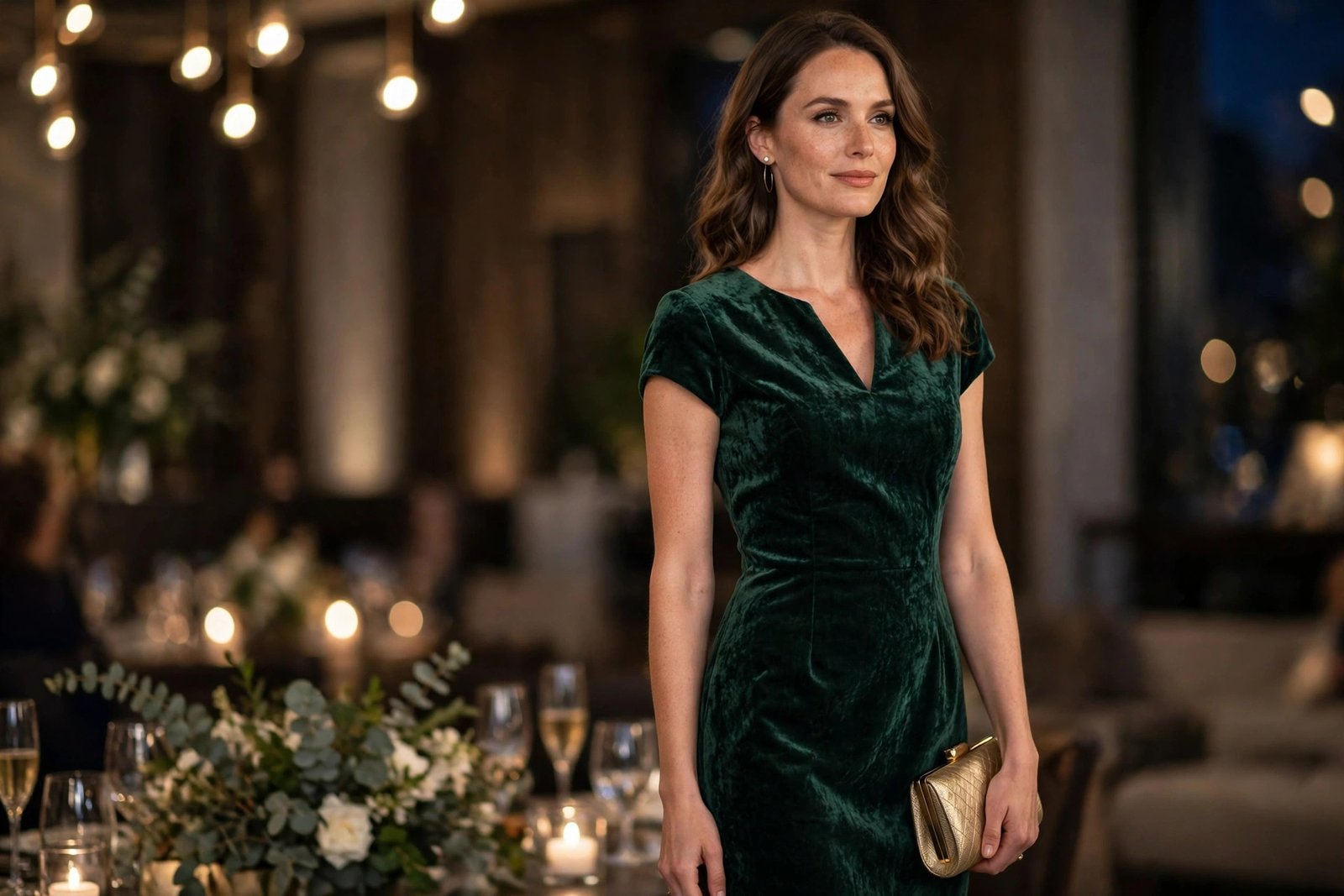
Cocktail dress styles vary in shape, length, and detail, and choosing one that suits your body and the event makes the evening easier. A-line dresses flare gently from the waist and suit most shapes. Shift dresses fall straight and suit a relaxed, modern look. Fit-and-flare dresses define the waist and suit those who like a classic silhouette.
Sheath dresses follow the body’s line and suit a sleek, smart look. Wrap dresses adjust at the waist and suit many shapes comfortably. Length is usually knee-length or just above or below the knee; very short dresses can look too casual for a formal venue, and floor-length dresses belong to black-tie events, not cocktail ones.
Cocktail Party Outfit Ideas for Different Venues
Cocktail party outfit ideas should match the venue, not just the dress code. For a hotel ballroom or a formal reception, choose a polished dress or a dark suit, with dressy shoes and a small bag. For a rooftop or garden party, choose lighter fabrics, shoes that cope with the surface, and a layer for cooler air.
For a home party, choose smart separates that feel relaxed but still special, and shoes you can stand in comfortably. For a daytime cocktail event, choose lighter colours and simpler accessories, reserving darker, more embellished looks for the evening.
Semi-Formal Attire Explained: Cocktail vs Formal vs Smart Casual
Semi-formal attire explained simply means dress that is smarter than everyday wear but less formal than full evening dress. Cocktail attire is the most common form of semi-formal dress. Cocktail attire vs formal dress differs in length and grandeur: formal, or black tie, means floor-length gowns and tuxedos, while cocktail means knee-length dresses and dark suits. Smart casual is a step below semi-formal: good jeans or chinos, a smart top, and a blazer, suitable for relaxed social events but not for a cocktail reception. Knowing these levels prevents the two most common mistakes: dressing too casually for a cocktail event, or too formally for a smart-casual one.
Invitations sometimes use the words interchangeably, which adds confusion. If an invitation says “semi-formal”, treat it as cocktail attire unless the venue or time suggests otherwise. If it says “cocktail”, follow this guide. If it says “smart casual”, dress down one level from cocktail. When the wording is unclear, the venue and the host are the best guides. A short, polite question — “Could you tell me how formal the evening will be?” — is always better than a guess. Dress codes exist to help guests feel comfortable, and asking shows you care about getting it right.
Accessories for Cocktail Attire
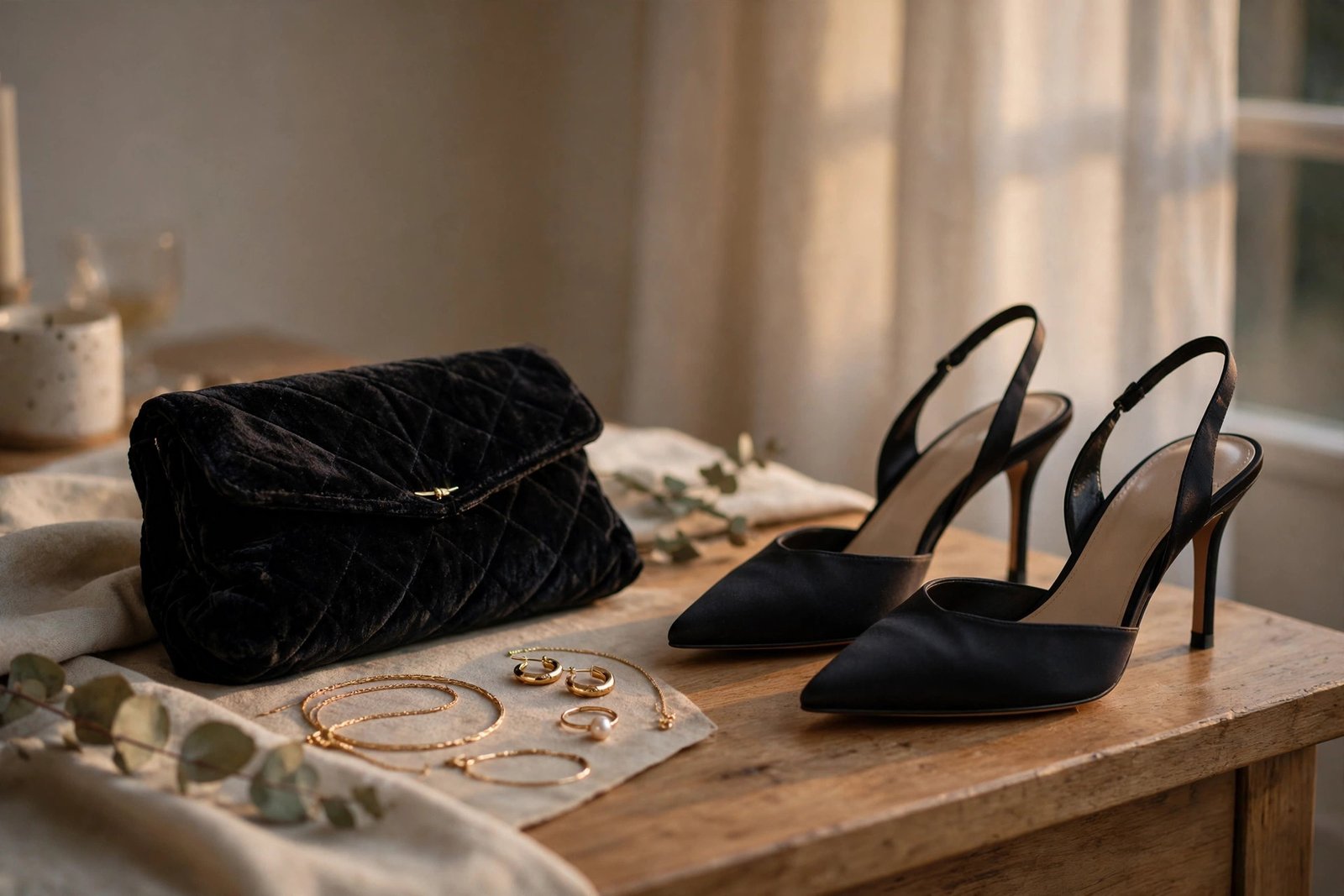
Accessories for cocktail attire should lift the outfit without overwhelming it. For women, a small clutch or evening bag, simple jewellery, and shoes that suit the venue are the main choices. One statement piece — earrings, a necklace, or a bracelet — is usually enough, with other jewellery kept simple. For men, a pocket square, a watch, cufflinks where the shirt allows, and a leather belt complete the look. A tie, where worn, should be in a colour that suits the suit and the season, without novelty patterns. Accessories should feel intentional, not accidental, and they should be comfortable for a long evening.
Hair, Makeup, and Grooming for a Cocktail Event
Hair, makeup, and grooming should be polished, festive, and comfortable for a long evening. For women, a neat updo, soft waves, or a sleek blow-dry all suit cocktail attire, according to hair length and personal style.
Makeup can be a little stronger than daytime makeup — defined eyes or a bold lip, but not both at full strength — with long-lasting products that survive an evening of talking and smiling. Keep a small touch-up kit in your clutch: lipstick, powder, and a hair pin or two. For men, neat hair, a clean shave or a tidy beard, clean nails, and polished shoes complete the look.
What Not to Wear to a Cocktail Event
What not to wear to a cocktail event is as useful as what to wear. Avoid jeans, shorts, T-shirts, trainers, and flip-flops, which are too casual for semi-formal dress. Avoid very short dresses, very low necklines, and anything that needs constant adjusting, which can look uncomfortable and distracting. Avoid white or cream dresses that could be mistaken for a bride’s outfit at a wedding-related cocktail event, unless the hosts have asked for white. Avoid floor-length gowns and tuxedos, which belong to black-tie events and can look overdressed at a cocktail reception. Avoid large logos, novelty prints, and casual fabrics such as denim and beach cotton.
Also avoid anything that fights the venue. Stilettos on grass, heavy fabrics in a hot room, and light fabrics in a cold garden will all spoil the evening, however beautiful they look. If you are unsure about an outfit, hold it against the quick test: would you feel comfortable meeting a senior colleague, a future client, and a friend’s parent in this outfit, while standing for two hours? If the answer is no, choose something else. Cocktail attire is about celebration, and the best outfits are those that let you celebrate comfortably, without worry about fit, comfort, or appropriateness.
Cocktail Attire in Different Seasons
Seasons change cocktail attire in fabric, colour, and layering, but not in level of formality. In spring, lighter fabrics, fresh colours, and floral details suit daytime and early-evening events. In summer, breathable fabrics, lighter colours, and open shoes suit warm venues, with a light wrap for air-conditioned rooms and cooler evenings. In autumn, richer colours, heavier fabrics, and closed shoes suit the season, with a smart coat for the journey. In winter, dark colours, velvet, satin, and long sleeves suit evening events, with a warm, matching coat and closed shoes for cold weather.
Layering is the key skill across seasons. A wrap, shawl, blazer, or jacket that matches the outfit keeps you comfortable without spoiling the look. Choose outerwear in a dark neutral colour that works with most cocktail outfits, so one good coat serves many events. Check the venue’s heating and outdoor areas before you choose fabrics, and bring a spare layer even in summer, because evening air and air conditioning can both be cold. Seasonal cocktail attire, done well, looks as if it belongs to the time of year, and it keeps you comfortable from arrival to the end of the evening.

Cocktail Attire on a Budget
Cocktail attire on a budget is very achievable, because the dress code rewards fit and polish more than price. Start with what you own: a dark dress, smart separates, or a dark suit that fits well can all serve as a cocktail outfit with the right shoes and accessories. Borrow a clutch, a wrap, or jewellery from a friend or family member for a one-off event. Renting a dress or a suit for a special occasion can also be kinder to your budget than buying something you will wear once. Second-hand shops often hold good-quality evening pieces at low prices, provided you check fit and condition carefully.
Spend on fit and shoes, and save on trends. A simple dress in a classic shape, altered to fit well, will look smarter than an expensive dress that does not fit. Polish shoes, steam or iron the outfit, and keep accessories simple. Budget-friendly elegance, as seen in long-sleeve dresses for formal events, comes from condition and fit, not from labels. Keep a small “event kit” ready: a clutch, a wrap, simple jewellery, and comfortable dressy shoes, so the next invitation needs no panic buying. With those pieces ready, almost any invitation can be met calmly, smartly, and within budget.
Common Cocktail Attire Mistakes
The first mistake is dressing too casually, in jeans, trainers, or everyday clothes, for a semi-formal event. The second is dressing too formally, in a ball gown or a tuxedo, for a cocktail reception. The third is choosing an outfit that does not fit or cannot be worn comfortably for hours, so the evening becomes about adjusting, not celebrating. The fourth is ignoring the venue: stilettos on grass, no layer for a cold garden, or heavy fabrics in a hot room. The fifth is over-accessorising, with too much jewellery, scent, or embellishment competing for attention.
Avoid these mistakes by reading the invitation, checking the venue, trying the full outfit in advance, and asking the host if anything is unclear. Choose one step smarter when in doubt, keep accessories simple, and prioritise comfort alongside elegance. Cocktail attire should feel like a celebration, not a test. When the outfit fits, suits the venue, and lets you move and talk easily, you have got it right, whatever the price tag. The evening will be remembered for the people, the conversation, and the celebration — and a good outfit simply lets you enjoy all of it, without a second thought.
FAQs
What is the difference between cocktail attire and formal attire?
Cocktail attire is semi-formal: knee-length dresses and dark suits for evening social events. Formal, or black tie, is grander: floor-length gowns and tuxedos for ceremonial occasions, so cocktail dress is less formal.
Do men need to wear a tie for cocktail attire?
Not always, but a tie is the safer choice for formal venues and evening events. An open collar with a well-fitting jacket suits more relaxed cocktail events, while a tie suits senior guests and formal rooms.
Can I wear a long dress to a cocktail event?
A long dress can work if it is simple and not ball-gown formal, but knee-length is the classic cocktail length. Avoid floor-length gowns, which belong to black-tie events, and choose a length you can walk in easily.
What shoes should I wear to a cocktail party?
Choose polished, comfortable shoes suited to the venue: heels or dressy flats for women, leather shoes for men. Avoid trainers and stilettos on grass, and keep a comfortable pair in reserve for long evenings.
Is cocktail attire the same as semi-formal?
Mostly yes: cocktail attire is the most common form of semi-formal dress. If an invitation says semi-formal, treat it as cocktail attire unless the venue, time, or host guidance suggests a different level.
Conclusion
Cocktail attire is simpler than it first sounds. It is semi-formal, evening dress that is polished, elegant, and comfortable enough to enjoy: a knee-length dress or smart separates for women, a dark suit or blazer and trousers for men, polished shoes, and simple accessories. Match the outfit to the venue and the season, try it in full before the night, and ask the host if anything is unclear. When the outfit fits well and feels comfortable, you can forget about it and enjoy the celebration. That ease, more than any single garment, is what cocktail attire is really about.
Disclaimer: This article is provided for general information only and is not professional advice. It does not involve guest posting, paid promotion, or advertising, and thestylesmagazine.com does not sell or endorse any product mentioned. Results vary from person to person, so check the invitation, venue, and host guidance for your own event when choosing cocktail attire.
Does this article help you? Explore our website The Styles Magazine to find more helpful and fun stories that could help you.
